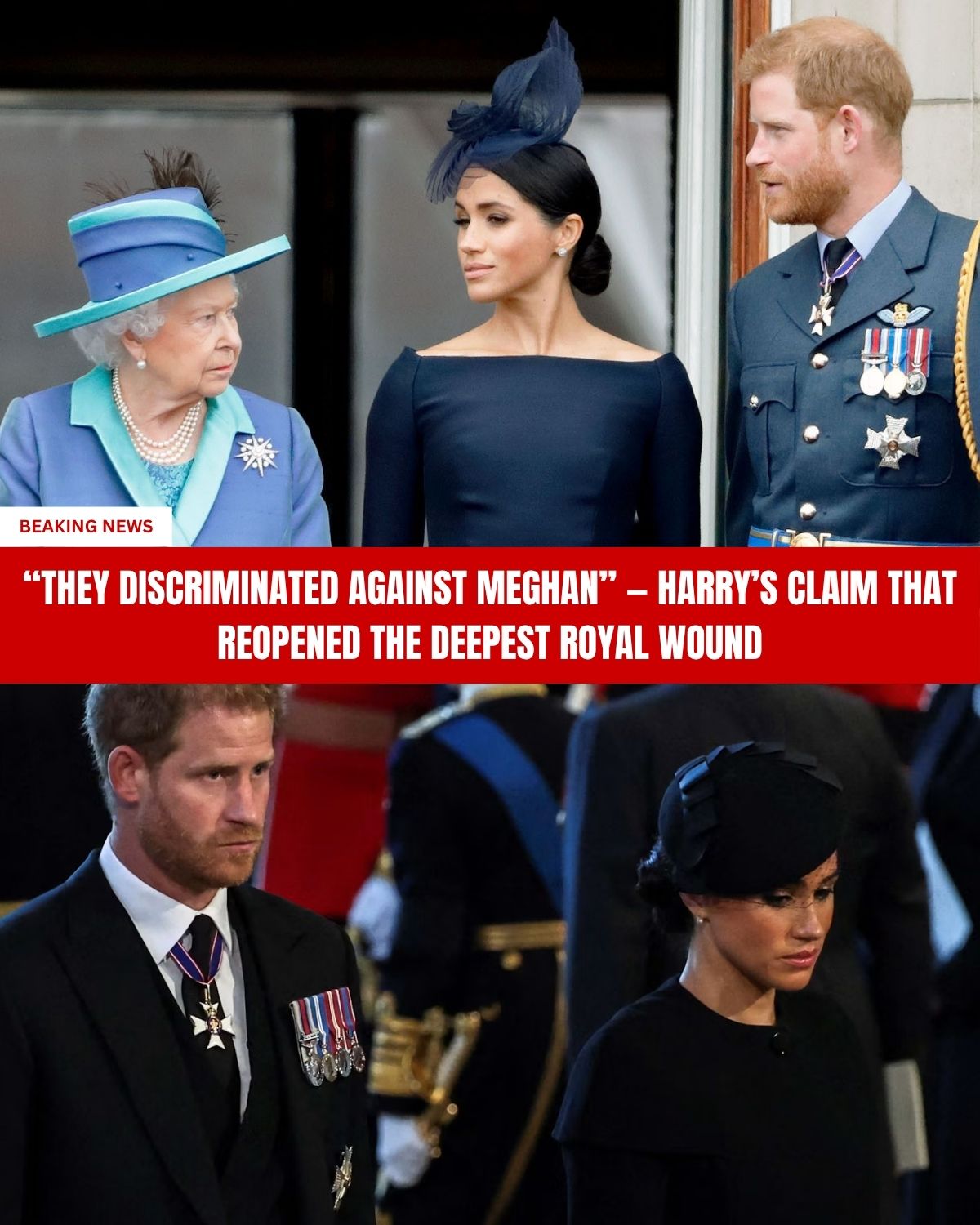
Prince Harry has never hidden his anger toward the institution he grew up inside.
But in his most explosive set of claims to date, he has gone further than ever before — alleging that Meghan Markle was treated differently by the Royal Family in a way that he describes as “cold, unfair, and influenced by unconscious bias that could easily become racism.”
It is a statement that has reignited one of the most sensitive debates in modern royal history.
And once again, it has split opinion in Britain: between those who see Harry exposing an uncomfortable truth — and those who believe he is escalating a narrative that the Palace strongly rejects.

The Core of Harry’s Accusation
Harry’s argument, expressed across multiple interviews and his memoir Spare, is not simply that Meghan faced negative press.
It is something more structural.
He claims that Meghan was not supported in the same way as other senior royals, that her struggles were downplayed inside the institution, and that when she was targeted by sections of the British media, the response from the Palace was either slow, cautious, or absent.
In Harry’s framing, this created a dangerous imbalance:
- Meghan faced intense public scrutiny from the moment she joined the Royal Family
- Harry believed internal support mechanisms did not match the level of external pressure
- He argues that certain members of the family were “protected” more effectively than others
- And he suggests that unconscious bias played a role in how situations were handled
It is important to note: these are Harry’s allegations and interpretations of events, not independently verified conclusions.
The Most Explosive Element: Racism and “Unconscious Bias”
The most controversial aspect of Harry and Meghan’s narrative relates to claims of unconscious bias within the Royal Family.
This issue first became globally known during Meghan’s 2021 interview with Oprah Winfrey, where the couple discussed concerns about how their future child might be perceived and treated.
Harry later expanded on this theme, arguing that institutional culture inside the monarchy can reflect outdated attitudes and assumptions — not necessarily overt racism, but subtle bias that influences decision-making.
This distinction is critical in understanding why the debate is so polarised.
To Harry and Meghan’s supporters, “unconscious bias” is a serious structural issue — one that modern institutions are expected to confront.
To their critics, the accusation is too broad, too difficult to prove, and unfairly damaging to individuals who are not publicly identified.
What the Palace Has Said
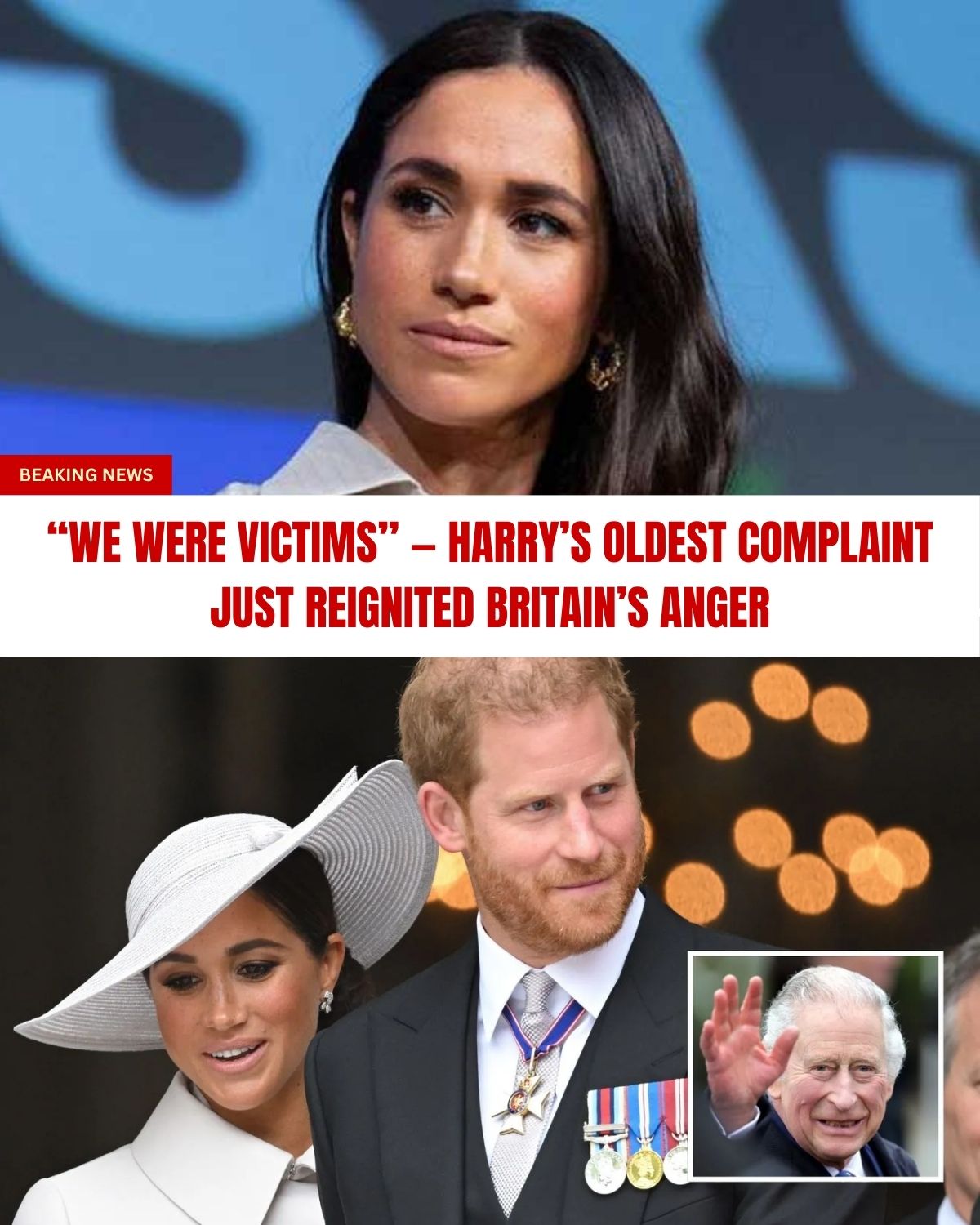
Buckingham Palace has consistently rejected or carefully distanced itself from these claims.
Following the Oprah interview, the Palace issued a carefully worded response stating that while recollections may vary, the matters raised would be addressed privately within the family.
That phrase — “recollections may vary” — became one of the most analysed statements in modern royal communication.
It did not directly accuse Harry or Meghan of lying.
But it also did not accept their version of events.
Instead, it reinforced the monarchy’s traditional position: internal matters remain private, and public disputes are not the preferred method of resolution.
The William Comparison — Why It Intensifies Everything
One of the most sensitive parts of Harry’s wider argument is his comparison between how he and Meghan were treated versus Prince William.
Harry has suggested that William, as the future King, received stronger institutional protection — particularly when dealing with media pressure or internal family issues.
This claim is central to the Sussex narrative, but it is also where criticism becomes strongest.
From a constitutional perspective, William is not just a senior royal. He is the heir to the throne. His public stability is directly linked to the stability of the monarchy itself.
That creates a structural imbalance that exists regardless of personal feelings:
- The heir is treated as strategically essential
- The “spare” has historically had a more flexible role
- Media strategy often reflects long-term institutional risk management
Harry interprets this as unfair treatment.
Royal defenders interpret it as institutional logic.
The Media Factor: A Shared But Uneven Battlefield
Another key layer in Harry’s argument is the role of the British press.
Harry has repeatedly described the tabloid ecosystem as aggressive, intrusive, and in some cases destructive — drawing direct comparisons between Meghan’s experience and what he believes contributed to the death of Princess Diana.
In this framing, the Palace is not only an institution — it is also a gatekeeper that historically maintained a complicated relationship with the press.
Critics of Harry argue that while media pressure on Meghan was real, the Royal Family has limited direct control over editorial decisions, especially in a highly competitive press environment.
Supporters of Harry counter that the Palace does exercise influence through briefings, access, and relationships with journalists — meaning silence or selective engagement can shape narratives significantly.
Why This Accusation Hits So Hard in Britain
The reason Harry’s “discrimination” claim triggers such strong reactions is not only because of what is being said — but because of what it implies.
If Harry is correct, it suggests:
- Structural inequality inside the Royal Family
- Uneven protection between members of the institution
- Failure to properly support a biracial duchess under intense media scrutiny
If Harry is wrong or overstating the case, it suggests:
- A breakdown in trust between him and the institution
- A pattern of escalating public accusations against his own family
- And the transformation of private grievances into global controversy
In both interpretations, the damage is significant — but the direction of blame changes entirely.
The “Institution vs Individual” Problem
At the core of this conflict is a deeper question that the monarchy has never fully had to answer in public:
Is the Royal Family a personal family — or a functioning state institution?
Harry’s argument treats it as a family first.
The Palace operates as an institution first.
That difference shapes everything:
- A family prioritises emotional fairness
- An institution prioritises hierarchy, continuity, and public stability
From Harry’s perspective, Meghan deserved equal emotional support.
From the institutional perspective, roles are not equal — they are defined by constitutional importance.
What Makes This Firestorm Different
What makes Harry’s latest accusations particularly explosive is not just the content — but the accumulation.
Over the past several years, the Sussexes have:
- Given a high-profile Oprah interview
- Released a global Netflix documentary
- Published a bestselling memoir (Spare)
- And continued public commentary about royal life
Each layer adds context to the previous one — but also increases fatigue among critics who feel the story has been repeatedly relitigated.
For supporters, this is accountability.
For critics, it is escalation.
The Final Question: Truth or Narrative?
At the heart of this entire controversy lies a question that still has no definitive answer:
Is Harry revealing an uncomfortable institutional truth that the Royal Family is unwilling to publicly confront?
Or is he constructing a narrative of exclusion and bias that cannot be fully verified but continues to define his post-royal identity?
What is undeniable is this:
Harry’s claim has ensured that the debate about Meghan’s treatment inside the Royal Family is no longer a private matter.
It is now a permanent public argument — one that resurfaces every time a new interview, book, or comment reopens the fault line.
And that is why this story does not end.
Because in the world of the modern monarchy, nothing disappears anymore.
It only evolves into the next headline.