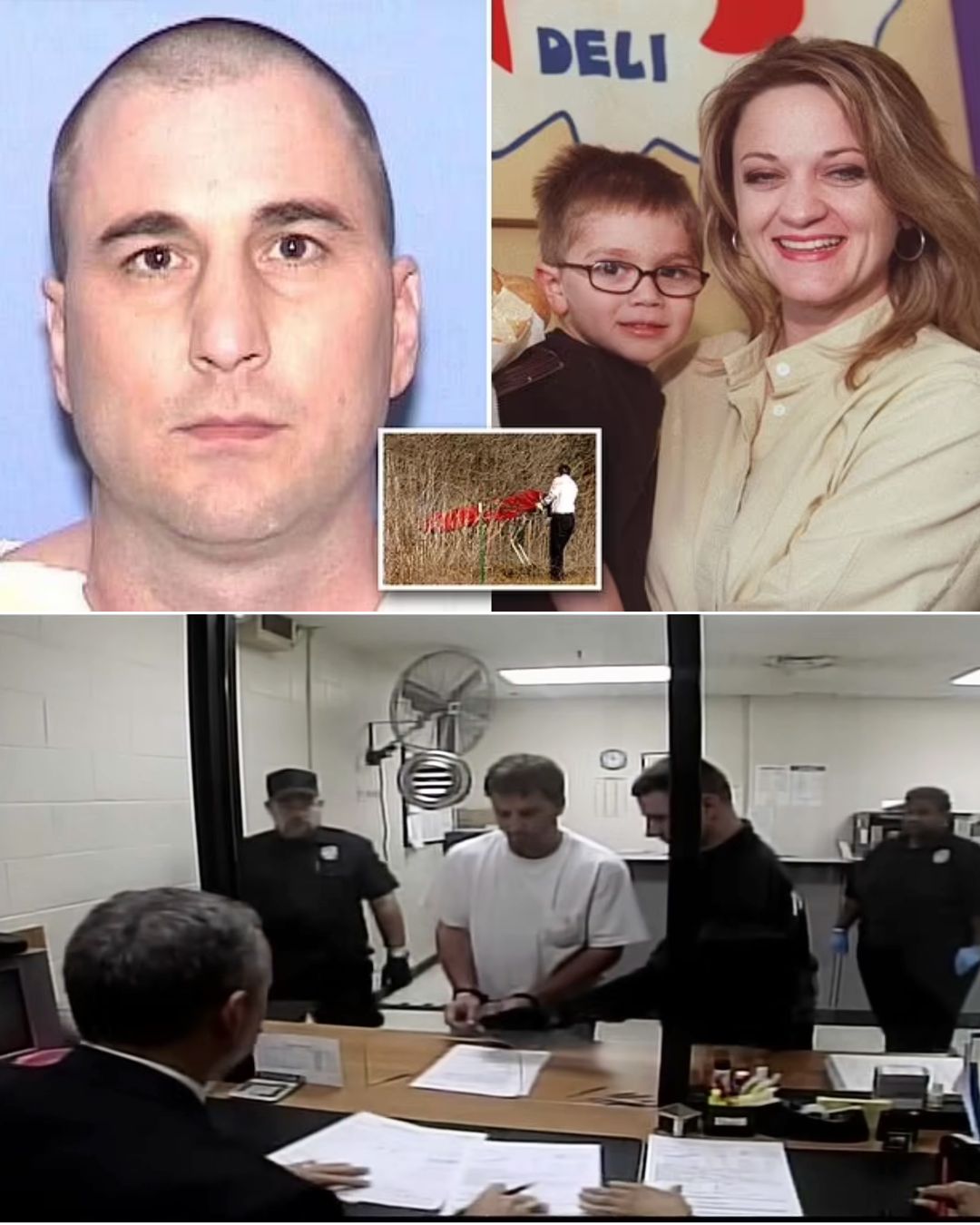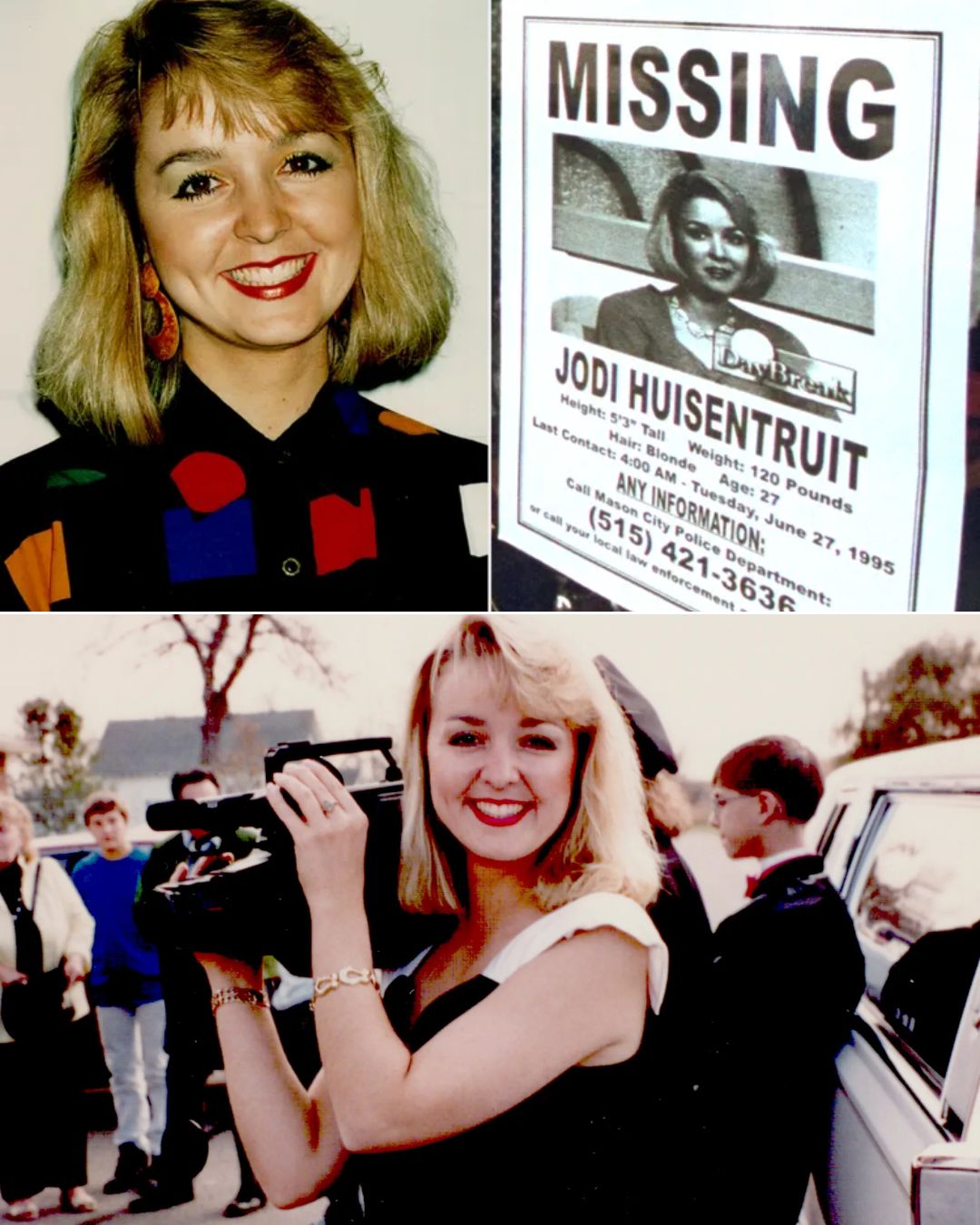
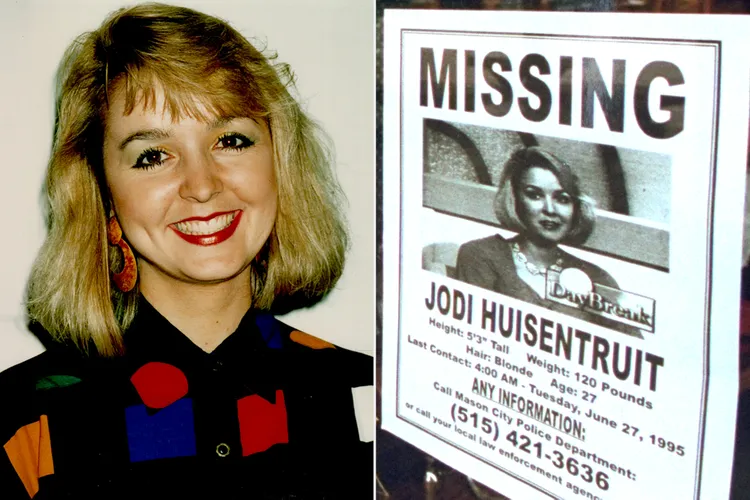
More than three decades after Iowa news anchor Jodi Huisentruit disappeared before her morning broadcast, her case remains one of America’s most haunting unsolved mysteries.
On June 27, 1995, Huisentruit was scheduled to anchor the morning news at KIMT-TV in Mason City, Iowa. But when she failed to arrive at work, a producer called her apartment around 4 a.m. Huisentruit answered and said she had overslept. She told the producer she would be there soon.
She never made it.
By 6 a.m., staff at the station became concerned and contacted police. When officers arrived at her apartment complex, they found her red Mazda Miata still in the parking lot. Nearby, investigators discovered disturbing signs that something had happened just as Huisentruit appeared to be leaving for work.
Her car keys were found bent on the ground near the vehicle. Personal items, including earrings, high heels, a blow dryer and hair spray, were scattered across the parking lot. Authorities also found a partial palm print on the car.
The scene quickly shifted the investigation from a missing-person search to a suspected abduction.
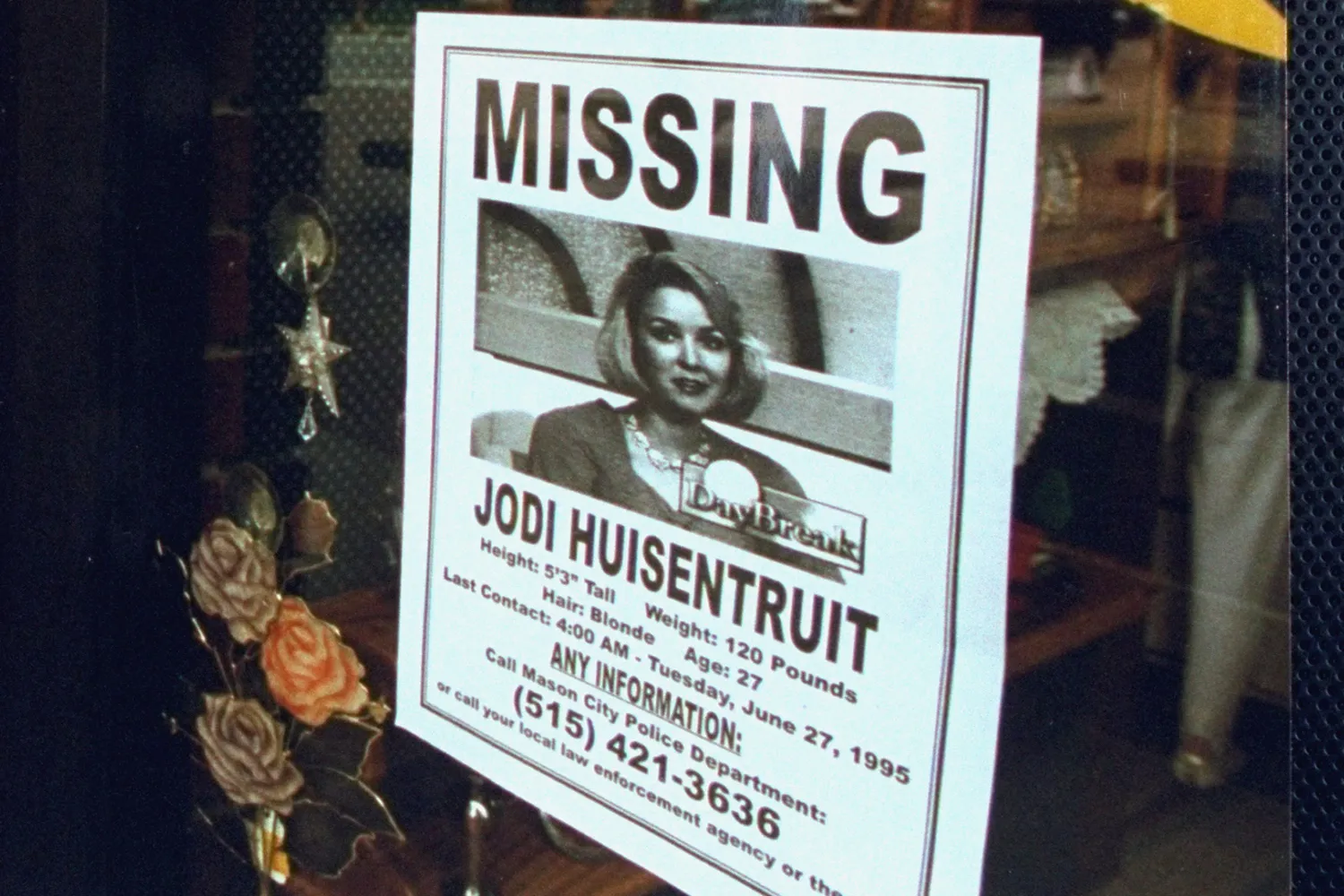
For police, the evidence suggested Huisentruit may have been confronted near her vehicle in the early morning darkness. Her apartment complex had no security cameras, leaving investigators with few visual clues and no clear image of who may have been waiting for her.
Before her disappearance, Huisentruit had reportedly expressed concerns about her safety. In October 1994, she filed a police report saying a suspicious person in a newer white pickup truck had been following her. She also began taking self-defense classes.
The day before she vanished, Huisentruit played in a charity golf tournament at Mason City Country Club. Two people who played with her later recalled that she had mentioned receiving harassing phone calls and was considering changing her number.

Over the years, investigators reviewed many tips and looked into several persons of interest. One name often associated with the case was John Vansice, a friend of Huisentruit’s who said she visited his home the night before she disappeared to watch footage from a birthday party he had helped organize for her.
Vansice cooperated with investigators and provided DNA, fingerprints and palm prints after a court order. He was never charged and was never publicly named as a suspect. He maintained his innocence until his death in December 2024.
In 2025, a judge unsealed part of a 2017 search warrant involving GPS tracking on vehicles connected to Vansice. Police later indicated that the search did not produce useful information.
Then, in June 2026, private investigator Steve Ridge claimed he had identified a potential suspect after speaking with a woman who said she had been in a relationship with a man shortly after Huisentruit disappeared. According to Ridge, the woman alleged that during a moment of anger, the man denied involvement before eventually saying, “I did it.”
Ridge said he turned his findings over to the Iowa Division of Criminal Investigation and announced a $100,000 reward for information leading to Huisentruit’s remains.
Authorities have not publicly named a new suspect, and no one has been charged in connection with Huisentruit’s disappearance.

In 2001, Jodi Huisentruit was declared legally dead. She was 32.
Still, her case has never been closed. Mason City police and the Iowa Division of Criminal Investigation continue to seek information. The group FindJodi.com, created by journalists and former law enforcement officers, has also worked for years to keep attention on the case and encourage anyone with information to come forward.
For Huisentruit’s family, friends and former colleagues, the central question remains unchanged after more than 30 years:
Who was waiting for Jodi that morning — and why has the truth stayed hidden for so long?