Chapter 2
The letter arrived on a Tuesday, folded too neatly to bring anything good.
It came in a cream envelope with a law firm’s name pressed into the corner. The kind of envelope that did not shout. It simply waited on the kitchen table like a loaded gun.
Mom saw it before I did.
She was sitting in her blue recliner near the front window, a pale quilt over her knees, sunlight touching the silver in her hair. Her left hand still rested stiffly in her lap, but her right hand pointed at the envelope with the sharpness of a woman who had raised three children on one teacher’s salary and one mechanic’s paycheck.
“Open,” she said.
Her voice was better now. Not strong. Not smooth. But every word had weight.
I slid my finger under the flap.
Marlene stood by the sink, drying the same coffee mug for too long. Calvin was outside repairing the porch railing he had already repaired twice. Since Mom had come home, he had developed a strange relationship with tools. He fixed things that did not ask to be fixed.
Maybe because people were harder.
I unfolded the letter.
The first line made my stomach drop.
Notice of Intent to Pursue Damages.
Marlene stopped drying the mug.
“What does it say?”
I read silently first. Then again, slower.
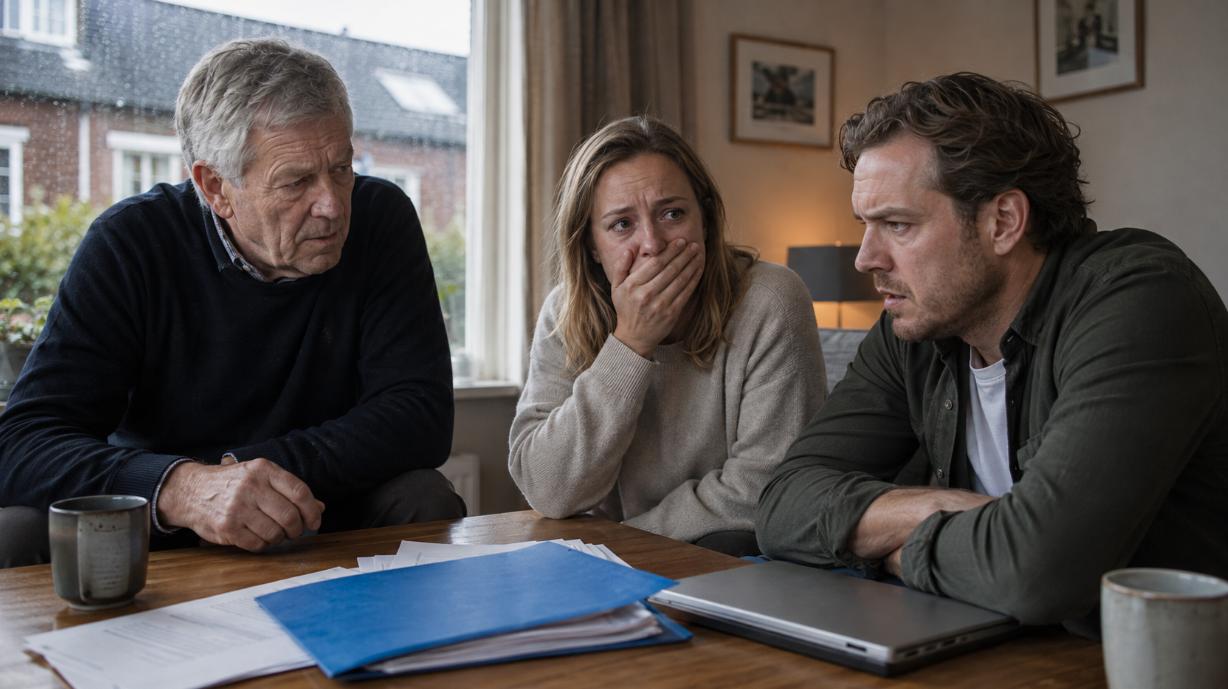
The buyer, a man named Russell Vance, was threatening legal action over the collapsed sale. He claimed financial loss, moving expenses, inspection costs, and “emotional distress caused by misrepresentation of seller authority.”
Mom’s face did not change.
Marlene whispered, “How much?”
I looked at the second page.
“Eighty-seven thousand dollars.”
The mug slipped from her hand and cracked in the sink.
Outside, Calvin’s hammer stopped.
A second later, the back door opened.
He stepped in with sawdust on his jacket and a look on his face that told me he had already guessed.
“What happened?”
I handed him the letter.
His eyes moved across the page. Once. Twice.
Then he laughed.
Not because it was funny.
Because the alternative was falling apart.
“Of course,” he said. “Of course he wants money.”
Marlene gripped the counter behind her.
“Calvin, this is because of the listing.”
“No,” he snapped. “This is because the buyer smells blood.”
“This is because we listed a house we had no right to sell.”
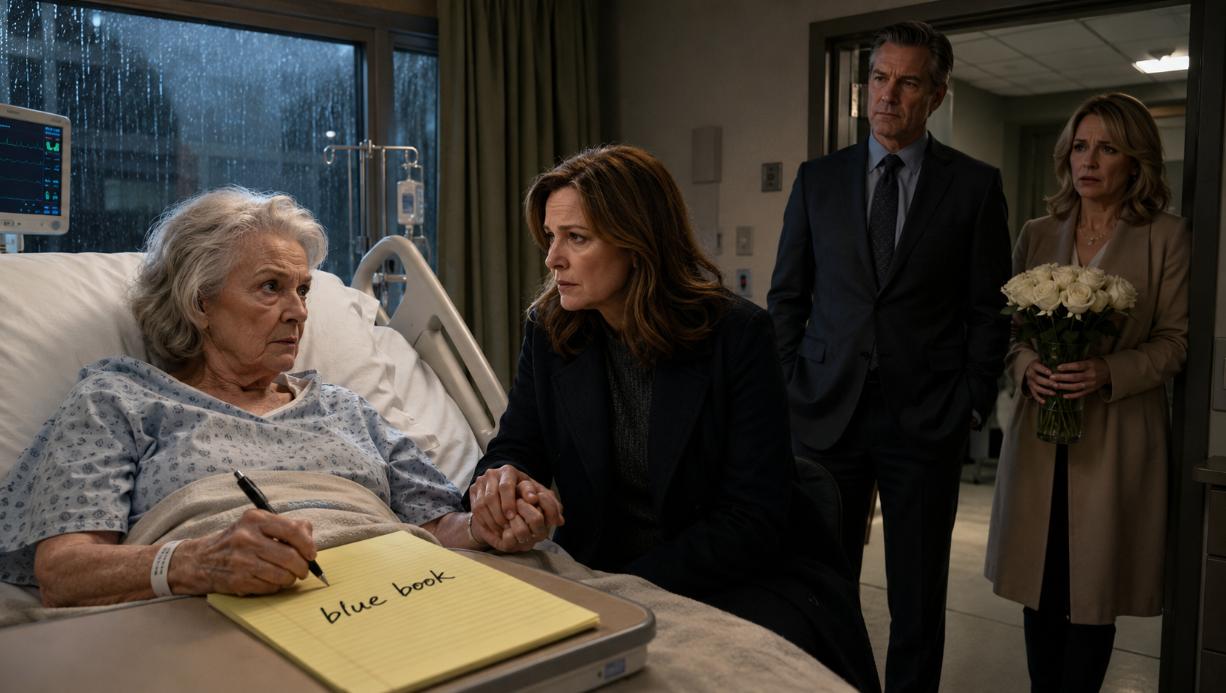
The words came from Mom.
Quiet.
Thin.
Final.
Calvin looked at her.
For a moment, his old anger rose. I saw it gather in his jaw, in the tightening of his shoulders, in the way his hand closed around the letter.
Then he looked at her left hand, curled and still.
The anger drained out of him.
He lowered his eyes.
“I know.”
That was new.
Marlene covered her face.
“I could lose my license.”
Nobody answered.
The refrigerator hummed. A car passed outside. Somewhere in the wall, old pipes clicked as heat moved through them.
The house had always been noisy when people went silent.
Mom reached for the yellow pad on the side table.
I gave it to her.
She wrote slowly.
C A L L H A R R I S
“I already will,” I said.
She tapped the pad again.
N O W
So I called him.
Samuel Harris answered like he had been waiting beside the phone.
“I received a copy this morning,” he said.
“You did?”
“Yes. Mr. Vance’s attorney sent one to my office. Sit tight.”
Sit tight.
I almost laughed. In our family, sitting tight had always meant waiting for the next person to disappoint you.
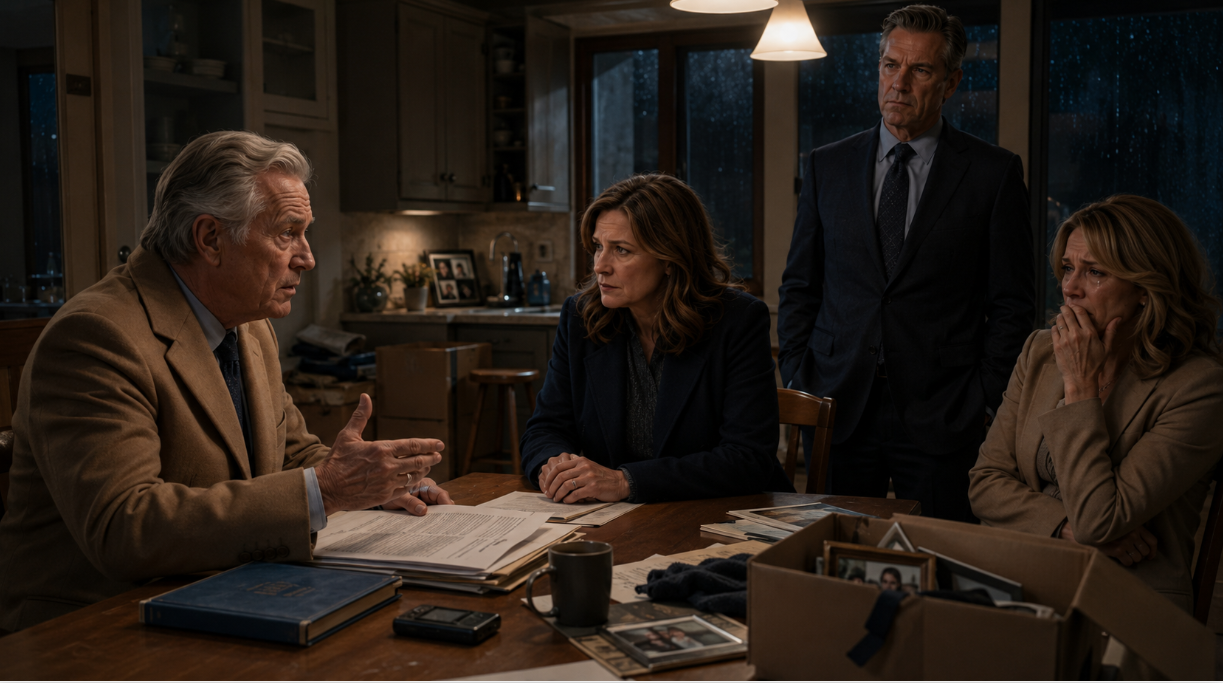
“What happens now?” I asked.
“We respond. We document. We do not panic.”
Marlene made a sound that was half sob, half choke.
Mr. Harris paused.
“Is Marlene there?”
“Yes.”
“Tell her not to speak to her broker without counsel.”
Marlene’s eyes widened.
“And Calvin?” he asked.
I looked at my brother.
He stood by the table, still holding the letter.
“Yes.”
Mr. Harris’s voice lowered.
“Tell Calvin this buyer may not be the biggest problem.”
The room seemed to tilt.
“What does that mean?”
There was a silence on the line.
Not hesitation.
Choice.
“It means I need to see you all in my office tomorrow morning. Bring the blue book.”
Calvin’s face went pale.
He had heard enough.
When I hung up, no one moved.
Then Mom looked at Calvin.
Not angry.
Worse.
Waiting.
He folded the letter with too much care.
“There’s something I didn’t tell you.”
Marlene turned toward him.
“What now?”
He rubbed both hands over his face. Without the suit, without the polished shoes, he looked less like the older brother who had tried to take charge of our lives and more like a man whose life had quietly taken charge of him.
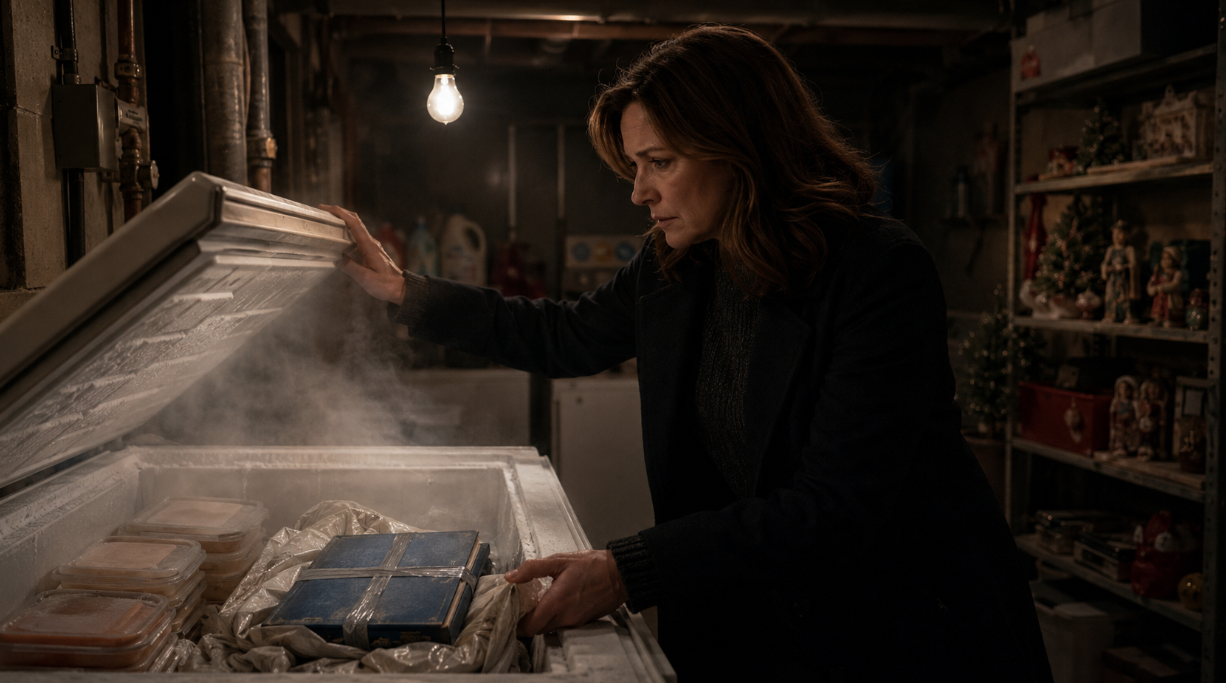
“I borrowed money.”
Marlene’s mouth tightened.
“We know that.”
“No,” he said. “Not from a bank.”
The room went cold.
Even the sunlight seemed to pull back from the floor.
Mom’s fingers curled around the quilt.
I said, “From who?”
Calvin stared at the kitchen table.
“Russell Vance.”
For a second, the name meant nothing.
Then it hit.
“The buyer?”
Calvin nodded once.
Marlene whispered, “Oh my God.”
I could hear my own heartbeat.
“You borrowed money from the man who tried to buy Mom’s house?”
“He offered bridge financing. Short-term. I was desperate.”
“How much?”
He did not answer.
Mom’s eyes sharpened.
“How much?” I asked again.
Calvin’s voice came out rough.
“One hundred and forty thousand.”
Marlene sat down hard.
The old house seemed to inhale around us.
Calvin kept talking because stopping would have been worse.
“He knew about the house. He knew Mom was sick. I said once the sale closed, I’d pay him back.”
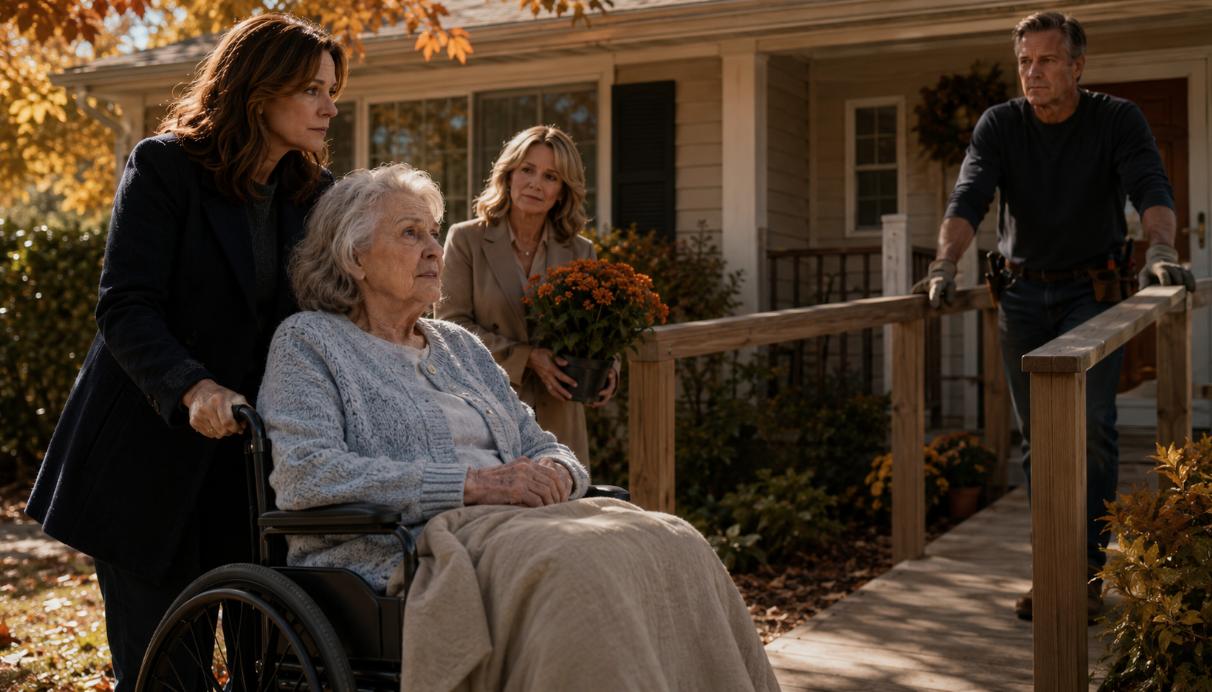
“You gave him Mom’s house as your exit plan,” I said.
He flinched.
“I thought I could fix it before anyone got hurt.”
Mom made a small sound from the recliner.
Not a cry.
Not a word.
Just air leaving a body that had finally heard enough.
Calvin stepped toward her.
“Mom—”
She lifted one finger.
Stop.
He stopped.
Her eyes filled, but no tears fell.
She reached for the pad again.
This time, her hand shook so badly I had to steady the page.
She wrote three words.
N O M O R E S E C R E T S
Calvin stared at the words.
Then, slowly, he nodded.
But secrets are strange things.
The moment one comes into the light, it casts a shadow.
And by morning, we learned Russell Vance had not only filed a claim.
He had also placed a lien notice against Calvin’s business.
And inside that notice was a copy of a document none of us had ever seen.
A document with Mom’s initials on every page.
Initials she could not possibly have written.
Chapter 3
The Signature in Blue Ink
Samuel Harris’s office sat above an old bank on Main Street, the kind with marble stairs worn smooth in the middle and brass elevator doors that opened like a stage curtain.
It smelled of paper, raincoats, and old wood.
Mom insisted on coming.
The doctor had advised against stress. Mom wrote one word on her pad.
L I F E
That ended the discussion.
So the four of us sat in Mr. Harris’s conference room under a painting of a gray New England harbor. Mom in her wheelchair. Me beside her. Marlene twisting a tissue into pieces. Calvin sitting alone at the far end of the table, as if distance could make guilt less visible.
Mr. Harris entered with a folder under one arm and a look I had come to recognize.
It was the look of a man carrying bad news carefully.
He placed the folder on the table.
“Mr. Vance claims Evelyn pledged the house as collateral through a private agreement signed six months ago.”
Mom’s eyes narrowed.
Marlene whispered, “That’s impossible.”
“Yes,” Mr. Harris said. “It is.”
He opened the folder and slid out a copy.
The document was five pages long.
At the bottom of each page were initials.
E.R.
On the last page was a full signature.
Evelyn Reeves.
Blue ink.
Too smooth.
Too young.
Too confident.
My mother stared at it.
Her mouth pressed into a thin line.
Then she made a sound that chilled me more than any scream could have.
She laughed.
Once.
Dry.
Insulted.
Mr. Harris looked at her over his glasses.
“I take it that is not your signature.”
Mom reached for her pad.
N E V E R
Calvin leaned forward, elbows on the table.
“I didn’t give him that.”
Marlene looked at him sharply.
“Why should we believe you?”
His face tightened.
“Because I’m telling the truth.”
“You told me Mom signed the power of attorney.”
“I lied about that.”
“Then forgive me if your truth needs a receipt.”
The words cut him. He deserved them. That did not make watching it easier.
Mr. Harris raised one hand.
“The issue now is not only who forged Evelyn’s signature. It is who had access to her documents, her handwriting, and enough knowledge of the house to create a convincing agreement.”
A slow silence spread across the table.
Access.
Handwriting.
Knowledge.
That narrowed the room.
Mom looked at each of us.
Calvin’s face hardened.
“You think one of us did this?”
Mr. Harris did not blink.
“I think someone did.”
Marlene stood suddenly.
“I need air.”
She walked to the window, pressing one hand against her chest.
Outside, Main Street moved through a gray morning. Cars hissed along wet pavement. A man in a red jacket struggled with an umbrella. Life continued rudely, as it always does when your own world stops.
Mom tapped the table.
We all looked at her.
She pointed at the signature.
Then at Marlene.
Marlene turned.
Her face went white.
“Mama?”
Mom lifted her shaking hand and pointed again.
Not accusing.
Asking.
Marlene’s lips parted.
“No. No, I didn’t forge anything.”
Calvin stood.
“Then why is she pointing at you?”
“Because I’m a realtor, Calvin. Because I had papers. Because I was stupid enough to believe you.” Her voice broke. “But I did not sign Mama’s name.”
Mom tapped the table harder.
Then she wrote.
N O T Y O U
Marlene froze.
Mom underlined the words.
N O T Y O U
Then she pointed at Marlene’s purse.
Marlene looked confused.
“My purse?”
Mom nodded.
Marlene brought it to the table and opened it with trembling hands.
“What am I looking for?”
Mom wrote one word.
C A R D
Marlene went still.
Slowly, she reached into the side pocket and pulled out a business card.
White. Minimal. Expensive.
Russell Vance
Vance Property Group
On the back was a handwritten number.
Mom pointed at the handwriting.
I leaned closer.
The numbers were written in blue ink.
The 7 had a slash through it.
The 2 curled at the bottom.
I had seen that handwriting before.
Not on Mom’s letters.
Not on Calvin’s checks.
On the inspection report lying in the blue book.
Mr. Harris took the card.
“Where did you get this?”
Marlene swallowed.
“From Russell. At the open house.”
“What open house?” I asked.
She closed her eyes.
The answer was already in the room before she said it.
“I held a private showing.”
Calvin stared at her.
“You told me you only showed it to Vance.”
“I did. But he brought someone.”
“Who?”
Marlene’s eyes opened.
“His assistant. A woman. Maybe thirty-five. Dark hair. She said she handled acquisitions.”
Mom’s breathing changed.
I heard it before I saw her face.
The color had drained from her cheeks.
“Mom?”
She gripped the arms of her wheelchair.
Her mouth worked.
No sound came.
Mr. Harris crouched beside her.
“Evelyn, do you know this woman?”
Mom’s eyes filled with a fear I had not seen even in the hospital.
Not fear of losing the house.
Older fear.
Buried fear.
She reached for the marker.
Her hand shook so hard the first letter tore the paper.
L
She stopped.
Tried again.
L Y D I A
The name sat on the page like a ghost.
Calvin frowned.
“Who’s Lydia?”
Marlene shook her head.
“I don’t know any Lydia.”
But I did.
Not well.
Not clearly.
A memory moved in the back of my mind.
I was seven years old, sitting on the stairs in my nightgown. Mom was crying in the kitchen. Dad was saying, “Evelyn, she can’t come here again.”
And a woman’s voice at the back door saying, “You don’t get to erase me.”
I had buried that memory so deep it felt like it belonged to someone else.
I looked at Mom.
“Lydia from before?”
Her eyes closed.
One tear slid down her cheek.
Mr. Harris became very still.
He knew.
Of course he knew.
Lawyers are keepers of other people’s locked rooms.
He stood and closed the folder.
“I think we should pause.”
“No,” Mom said.
The word was weak.
But it filled the room.
She looked at me.
Then at Calvin.
Then at Marlene.
Her children.
Her flawed, frightened, half-broken children.
She reached for the pad one more time.
This time, she wrote slowly.
Y O U R F A T H E R H A D A D A U G H T E R
The room disappeared beneath me.
Marlene’s tissue fell from her hand.
Calvin sat down as if his knees had failed.
Mom kept writing.
N O T M I N E
The marker slipped from her fingers.
No one picked it up.
Outside the window, a church bell began to ring noon.
Twelve slow notes.
Each one opening a door none of us knew had been built into our family.
Mr. Harris looked at the document again.
Then at the name on Marlene’s card.
Russell Vance.
Vance Property Group.
He exhaled quietly.
“Lydia’s married name,” he said, “was Vance.”
Mom closed her eyes.
And in that moment, I understood.
My siblings had tried to sell Mom’s house for money.
But someone else had come for revenge.