Five minutes after the judge ended my marriage, my father did not ask if I was okay.
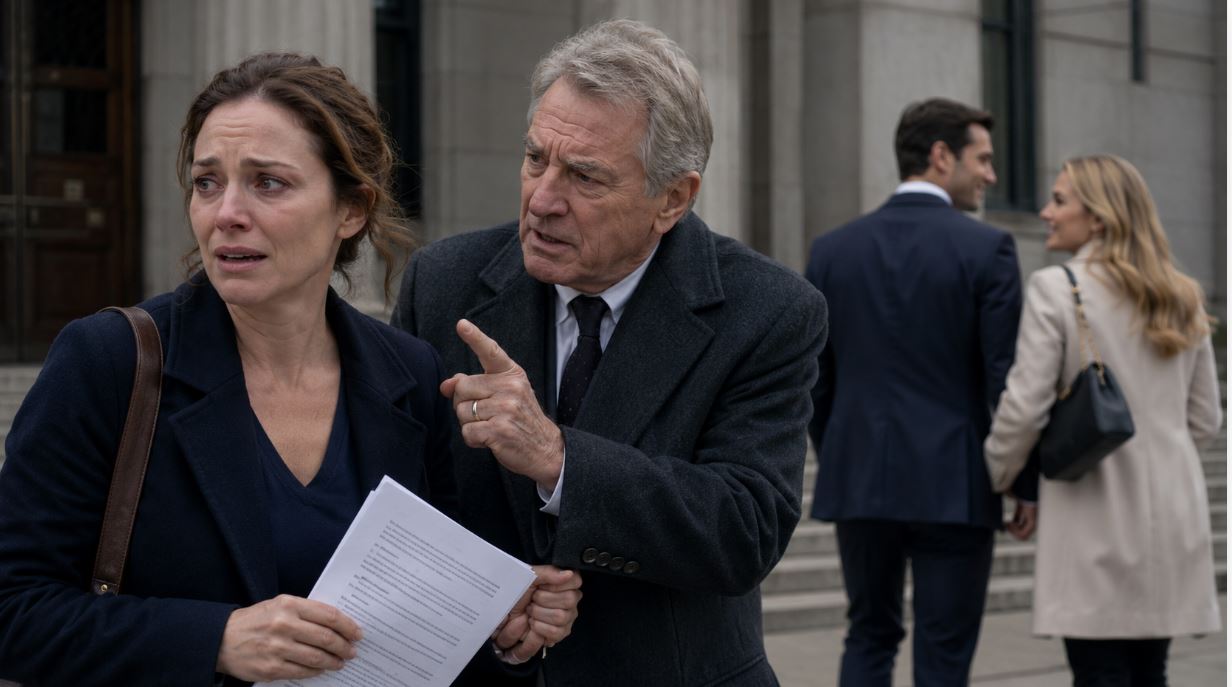
He caught my wrist outside the courtroom, looked straight into my swollen eyes, and said, “Change every PIN on every card. Right now.”
I almost laughed.
My divorce papers were still warm in my hand. My wedding ring had left a pale circle on my finger. Across the hallway, my ex-husband, Daniel, was walking away with the woman he had chosen over me.
Her name was Vanessa.
She was younger, polished, and smiling like the last twelve years of my life had been nothing more than an old coat Daniel had finally taken off.
“Dad,” I whispered, “I just need a minute.”
“No,” he said firmly. “You need your phone. You need every banking app open. And you need to do exactly what I say before that man gets into an elevator.”
That made me look at him.
My father was seventy-one years old. He was not dramatic. He did not panic. He had spent forty years working as a bank manager, the kind of man who balanced his checkbook with a pencil and still kept receipts in envelopes by month.
If he was scared, there was a reason.
“What did you see?” I asked.
His eyes moved toward Daniel.
“I saw your husband look too happy for a man who just lost half of what he thought he owned.”
I turned.
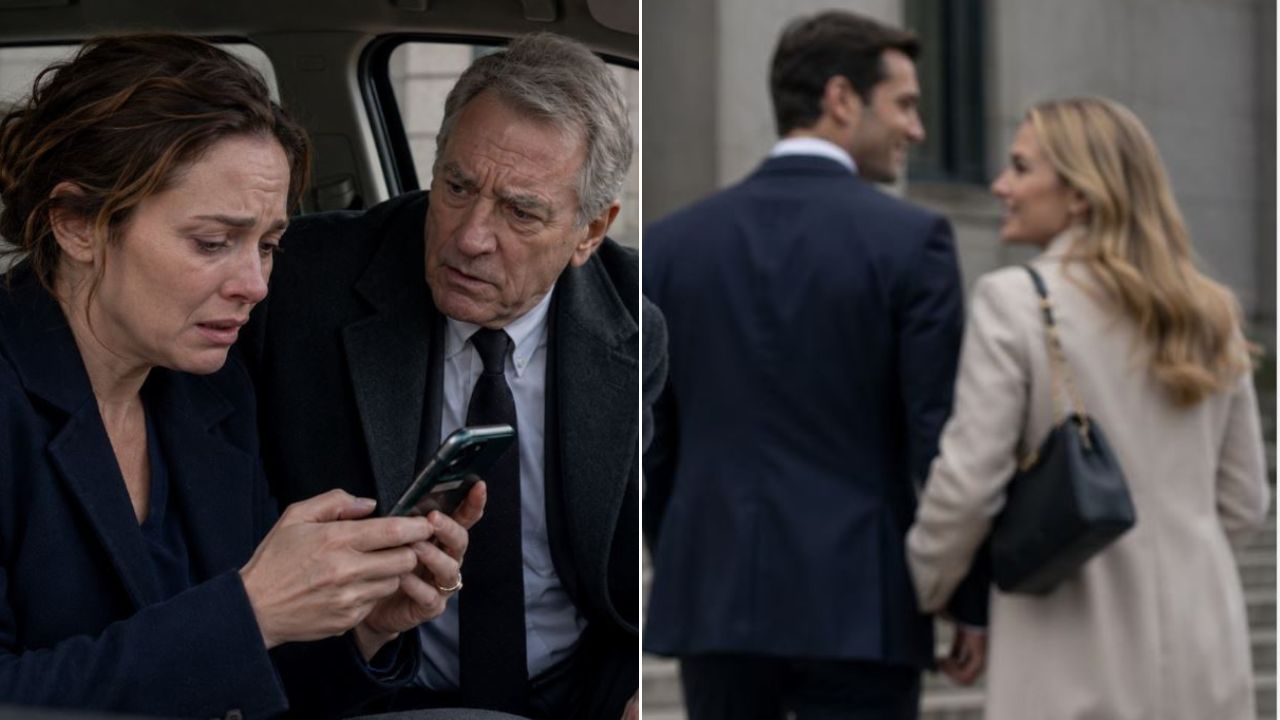
Daniel was near the elevators now. Vanessa had her hand on his arm. He was speaking into his phone, his back turned toward me.
My father lowered his voice.
“Open your banking app.”
“Dad—”
“Now, Rachel.”
I did it because of the way he said my name.
Not gently.
Not angrily.
Urgently.
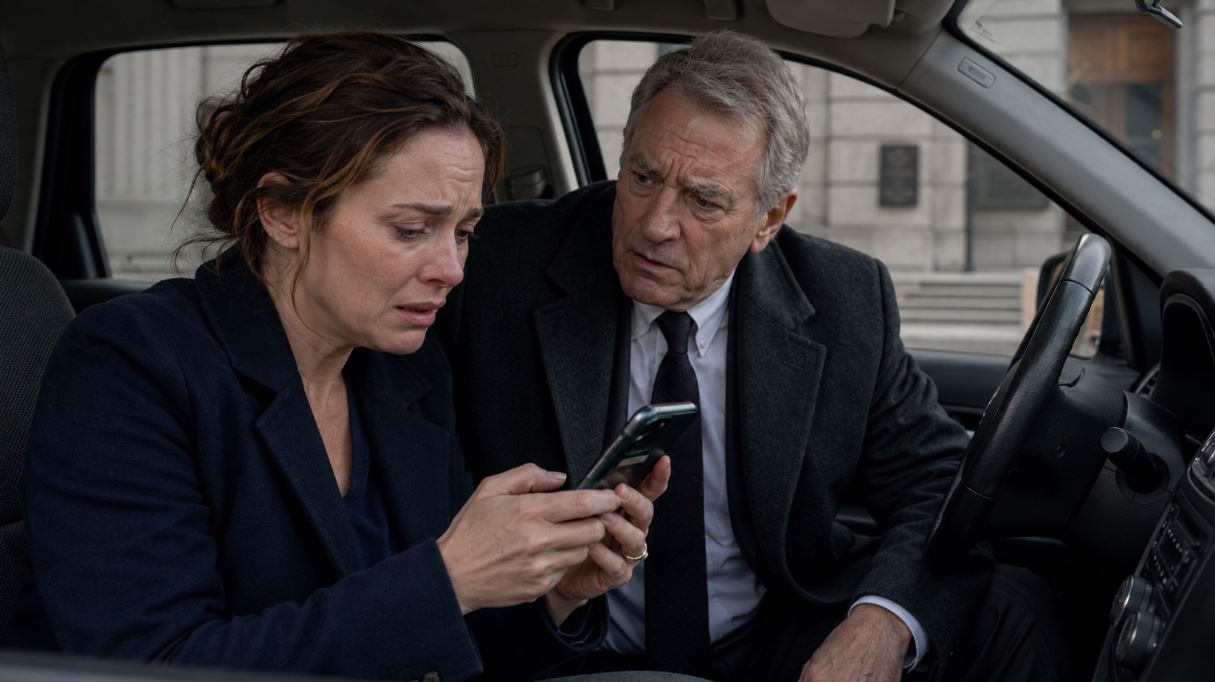
My hands were shaking so badly I almost typed the wrong password. The app opened.
Our joint account balance was still there.
$84,612.18.
That money was supposed to be divided according to the divorce settlement.
My own personal checking account was there too. My savings. My credit cards. Nothing looked wrong.
“I don’t see anything,” I said.
“Change every password anyway.”
“I don’t even know if he has access.”
My father stared at me.
“Rachel, he lived in your house for twelve years. He knows your birthday, your mother’s maiden name, your first dog’s name, where you keep old documents, and which PIN you use when you’re nervous.”
My stomach tightened.
Because he was right.
For years, Daniel had joked that I used the same four digits for everything.
The month and day we got married.
June 14.
I changed the PIN on my debit card first.
Then my credit cards.
Then my bank password.
Then my email password.
My father stood beside me the whole time, watching Daniel.
The elevator doors opened.
Daniel glanced back once.
Just once.
And when he saw me holding my phone, his smile disappeared.
It was fast.
So fast anyone else might have missed it.
But I saw it.
So did my father.
“Keep going,” Dad said.
My fingers moved faster.
I changed the password to my retirement account. Then the password to the small investment account my mother had left me. Then the login for my cloud storage, where I kept scans of old tax returns and mortgage papers.
Daniel stepped into the elevator.
Vanessa followed him.
Right before the doors closed, he looked at me again.
This time, he was not smiling at all.
That was the first moment I felt afraid.
Not heartbroken.
Not embarrassed.
Afraid.
“What is happening?” I asked my father.
He took my phone and checked the confirmation emails.
Then he handed it back.
“I don’t know yet,” he said. “But I know when a man is walking away from something and when a man is racing toward something.”
By the time we got to the parking garage, Daniel’s car was gone.
Vanessa’s too.
I sat in my father’s truck and finally let myself cry.
Not pretty crying.
Not quiet tears.
The kind of crying that comes from twelve years of pretending you are fine.
I cried because my marriage was over.
I cried because Daniel had not looked sad.
I cried because I had spent the last year begging for honesty from a man who had already given his truth to someone else.
Dad did not say much.
He just handed me a napkin from the glove box and waited.
After a while, I whispered, “Was I stupid?”
“No,” he said.
“You don’t have to lie.”
“I’m not.”
I looked out the window.
“I gave him everything.”
My father’s voice softened.
“That’s not stupidity, sweetheart. That’s marriage. The wrong person just took advantage of it.”
When we got to my house, I noticed something strange before I even opened the front door.
The garage light was on.
I had turned it off that morning.
Dad noticed too.
“Stay behind me,” he said.
“Dad, it’s my house.”
“And I’m still your father.”
We went inside.
The living room looked normal. Too normal.
The couch.
The framed photos.
The empty space on the wall where our wedding portrait had hung until two weeks earlier.
Then I heard it.
A soft beep from the hallway.
Dad froze.
“What was that?”
I walked toward the home office.
The door was cracked open.
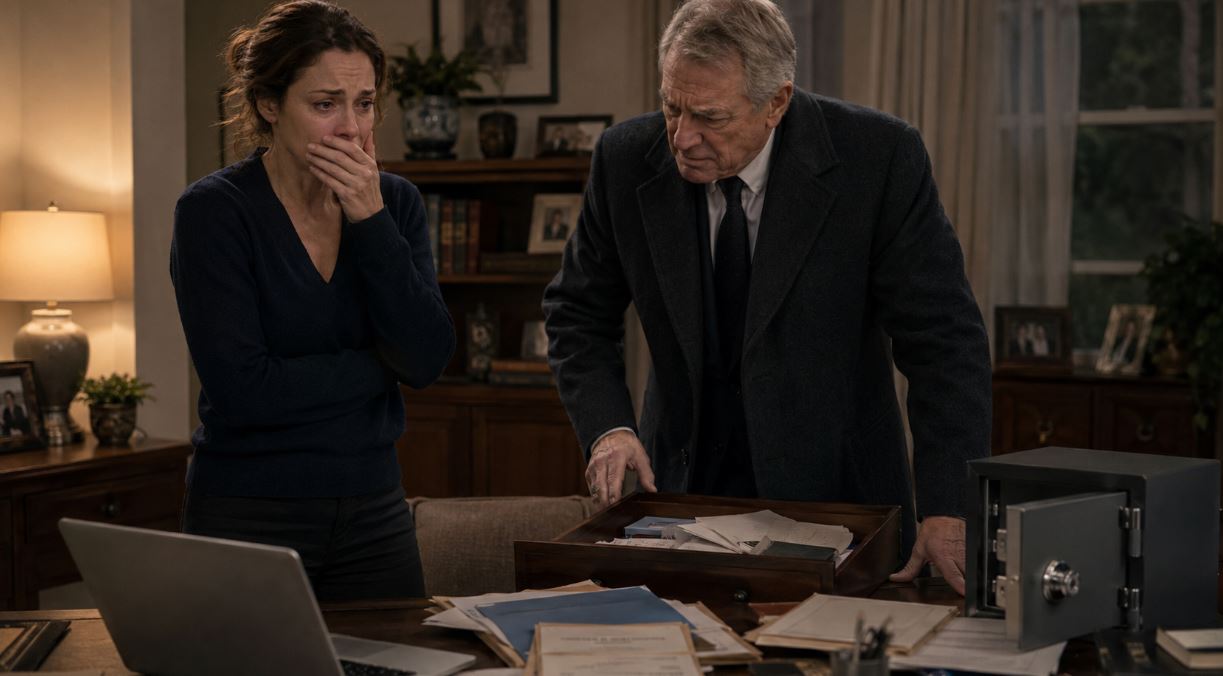
My laptop was on the desk.
Open.
The screen was asking for a password.
I stopped breathing.
“I shut that down before court,” I said.
Dad moved past me and looked at the desk.
The drawer under my printer was open.
Inside that drawer, I kept copies of old bank statements, insurance papers, my passport, and the title to my car.
Everything had been moved.
Not stolen.
Moved.
Like someone had searched through it in a hurry and tried to put it back.
Dad’s jaw tightened.
“Call the bank.”
“What?”
“Call them now.”
I called the fraud department first.
The woman on the phone asked me questions I barely understood. My father took over halfway through because I could not stop shaking.
Then she said something that made my knees weak.
“Ma’am, there was an attempted wire transfer from your joint account eighteen minutes ago.”
Eighteen minutes.
That meant Daniel had tried to move the money almost immediately after leaving the courthouse.
“How much?” Dad asked.
The woman paused.
“Eighty-four thousand dollars.”
All of it.
Every dollar.
The whole account.
I grabbed the edge of the desk.
The transfer had failed because my password had been changed minutes before the request went through.
My father closed his eyes.
For the first time that day, he looked old.
Then he looked furious.
“Freeze the account,” he said. “Now.”
The bank froze it.
Then my credit cards.
Then my personal accounts.
Then my father made me call my divorce attorney.
When I told her what happened, she was silent for several seconds.
Then she said, “Rachel, do not speak to Daniel. Do not answer calls. Do not answer texts. Send me everything.”
As if Daniel had heard her, my phone buzzed.
His name lit up the screen.
Daniel.
Then again.
Then again.
I stared at it.
My father said, “Don’t touch it.”
A text appeared.
Rachel, why did you change the passwords? We still have things to settle.
Then another.
You’re being emotional. Call me.
Then another.
Do not make this ugly.
I almost laughed.
Ugly.
That was the word he chose.
Not betrayal.
Not theft.
Not attempted wire transfer.
Ugly.
My father photographed every message with his own phone, like evidence in a crime scene.
Then he said, “Now we check the house.”
Room by room, we found the signs.
My file cabinet had been opened.
The envelope with my mother’s insurance paperwork had been moved.
A small safe in the bedroom closet had scratch marks near the lock.
The guest room closet was open.
The box where I kept old jewelry was on the floor.
Nothing valuable was missing, because I had moved most of it to my sister’s house the month before.
But Daniel had clearly come back.
Either before court or during court.
He had searched the house while I sat in a courtroom, trying to survive the end of my marriage.
That hurt more than the affair.
Maybe that sounds strange.
But betrayal of the heart is one kind of wound.
Betrayal of safety is another.
Daniel had not just stopped loving me.
He had treated my life like a house he could loot on his way out.
That evening, I sat at my kitchen table with my father, my attorney on speakerphone, and a legal pad full of notes.
My attorney asked if Daniel still had a key.
I said yes.
Dad stood up immediately.
“Where are you going?” I asked.
“To change the locks.”
“Dad, it’s late.”
He grabbed his jacket.
“Then I’ll work quietly.”
He changed both locks before midnight.
The next morning, the bank confirmed there had been more attempted activity.
Someone had tried to access my investment account.
Then my email.
Then a credit card.
All failed.
Because Dad had made me change everything before Daniel reached the elevator.
At 9:12 a.m., Daniel sent another message.
You really want to play this game?
My attorney told me not to respond.
At 10:30 a.m., Vanessa sent me a message from an unknown number.
Daniel said you’re trying to ruin him. He just wants what’s fair.
I stared at the words for a long time.
Then I did something I had not done in months.
I laughed.
Not because it was funny.
Because some lies are so bold they become ridiculous.
What was fair?
Was it fair when Daniel spent our anniversary weekend “on a work trip” with Vanessa?
Was it fair when he let me sit alone at dinner, texting him that I missed him, while he was posting from a hotel bar under someone else’s account?
Was it fair when he told me I was paranoid?
Too sensitive?
Too suspicious?
Was it fair when he kissed my forehead in the morning and met her by lunch?
No.
Daniel did not want fair.
He wanted quiet.
He wanted me too broken to notice what he was doing.
But he had not counted on my father.
Two days later, my attorney filed an emergency motion.
The attempted transfer changed everything.
Daniel’s attorney tried to explain it away.
A misunderstanding.
A technical error.
A banking mistake.
But my father had insisted I save every notification, every email, every bank alert, every message.
The timeline was clean.
The judge had ended the marriage at 2:17 p.m.
Daniel entered the elevator at 2:26 p.m.
The attempted wire transfer was submitted at 2:39 p.m.
My password had been changed at 2:31 p.m.
Eight minutes saved me from losing everything.
Eight minutes.
When we returned to court, Daniel would not look at me.
Vanessa was not with him this time.
The judge reviewed the documents.
My attorney spoke calmly.
Daniel’s attorney spoke too much.
My father sat behind me, hands folded, silent as stone.
At one point, the judge asked Daniel one simple question.
“Mr. Parker, why did you attempt to move the entire joint account after the divorce order had been issued?”
Daniel said, “I was protecting my share.”
The judge looked over his glasses.
“Your share was not one hundred percent.”
Daniel’s face turned red.
The courtroom went quiet.
That silence felt better than any apology he could have given me.
Because Daniel was never going to apologize.
Not honestly.
Some people only regret getting caught.
In the end, the account remained frozen until the court could divide it properly.
Daniel was ordered to cover part of my legal fees.
The judge also warned him that any further attempt to access my private accounts would have consequences.
It was not some dramatic movie ending.
He was not dragged away in handcuffs.
Vanessa did not burst into tears.
No one clapped.
Real life is rarely that clean.
But I walked out of that courtroom with something I had not felt in a long time.
Solid ground.
Outside, my father opened the truck door for me.
I stood there for a moment, looking at him.
His hair was thinner than it used to be. His shoulders were a little more rounded. His hands had age spots I did not remember noticing before.
And yet, in the worst week of my life, he had been faster than everyone.
Faster than my grief.
Faster than my shame.
Faster than Daniel’s plan.
“How did you know?” I asked.
Dad leaned against the truck.
He was quiet for a long moment.
Then he said, “Your mother.”
I blinked.
“What?”
He looked toward the courthouse doors.
“Years ago, when your mother got sick, she made me promise something.”
My throat tightened.
Mom had died five years earlier. Daniel had been kind during that time. Or at least, I had thought he was.
“What promise?” I asked.
“She said, ‘If Rachel ever looks lost, don’t ask her to explain the fire. Just get her out of the house.’”
Tears filled my eyes.
Dad smiled sadly.
“Your mother knew you. You freeze when you’re hurt. You try to understand before you protect yourself.”
I wiped my cheek.
“She said that?”
“She said a lot of things.”
He reached into the inside pocket of his jacket and took out a folded envelope.
My name was written on the front.
In my mother’s handwriting.
Rachel.
My knees nearly gave out.
“Dad…”
“She gave it to me before she died,” he said. “Told me I’d know when to give it to you.”
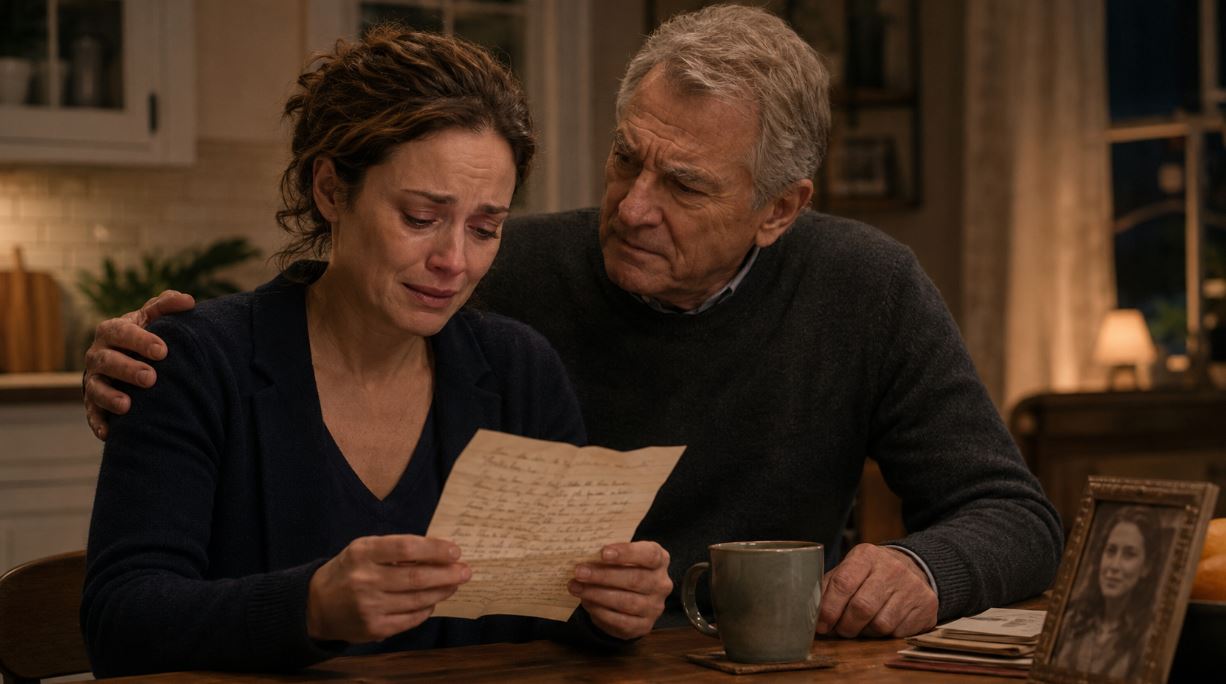
I opened the envelope with shaking hands.
Inside was one page.
My sweet Rachel,
If your father has given you this letter, it means life has hurt you in a way I am not there to help fix.
I am sorry for that.
But listen to me.
Do not confuse being gentle with being helpless.
Do not confuse being loyal with being blind.
And do not confuse losing a man with losing your life.
You were whole before him.
You will be whole after him.
But first, protect what is yours.
Your name.
Your home.
Your money.
Your peace.
Love is beautiful, but love without respect can become a cage.
Walk out.
Change the locks.
And let your father help.
He may act grumpy, but it makes him feel useful.
I laughed through tears at that line.
Then I kept reading.
One day, you will understand that the people who truly love you may not always say the softest thing first.
Sometimes they say the thing that saves you.
I love you always,
Mom.
I folded the letter against my chest and cried in the parking lot like a child.
My father did not rush me.
He just stood beside me, one hand on my shoulder, letting me fall apart now that the danger had passed.
That night, I went home to a quiet house.
For the first time, it did not feel empty.
It felt mine.
The locks were new.
The accounts were safe.
The ring was off my finger.
I made tea in the mug my mother had given me and sat at the kitchen table where Daniel and I used to argue about bills, groceries, family dinners, and all the small things that had covered the bigger truth.
I opened my banking app one more time.
Everything was still there.
But that was not what made me cry.
What made me cry was realizing how close I had come to losing it.
Not just the money.
My confidence.
My safety.
My belief that I could survive without him.
A week later, Daniel sent one final message.
I never meant to hurt you this much.
I stared at it.
Once, I would have answered.
I would have asked why.
I would have tried to pull remorse out of him like water from a stone.
This time, I sent the message to my attorney.
Then I blocked him.
My father came over that Sunday with a toolbox, even though nothing needed fixing.
He checked the back door.
Then the windows.
Then the garage.
Finally, he sat across from me at the kitchen table.
“You okay?” he asked.
This time, he did ask.
I looked around my house.
At the sunlight on the floor.
At the new lock on the door.
At my mother’s letter beside my coffee cup.
Then I nodded.
“Not completely,” I said. “But I’m getting there.”
Dad reached across the table and squeezed my hand.
“That’s enough for today.”
He was right.
For years, I thought love looked like someone choosing you forever.
Now I know love can also look like an old man standing outside a courtroom, refusing to let his daughter fall apart until she is safe.
It can look like a warning instead of a hug.
A changed PIN.
A locked door.
A father who sees the danger before you do.
And a mother’s letter, waiting for the exact moment when you need to remember who you were before someone tried to take everything.
Daniel thought the divorce was the end of my story.
He was wrong.
It was the first page I ever signed in my own name.