Chapter 1
The Night I Learned What I Was Worth to Them
The night I told my son I had heart failure, my daughter-in-law didn’t cry.
She didn’t touch my hand.
She didn’t ask what the doctor said.
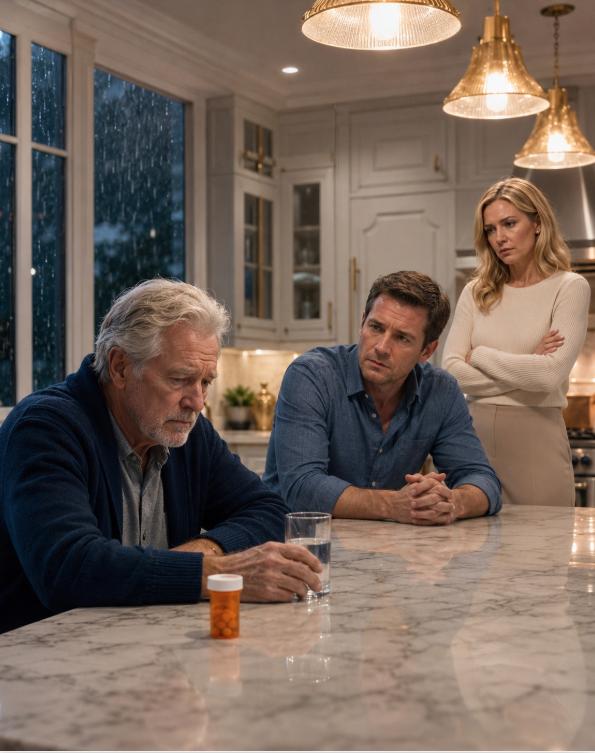
She looked at my pill bottle on the kitchen table as if it had left a stain.
The kitchen was bright and expensive, all white cabinets, marble counters, gold handles, and pendant lights hanging over an island bigger than the first apartment my wife and I ever rented. Outside the tall windows, Tampa rain slid down the glass in silver lines.
My son, Benjamin, sat across from me with his elbows on the table.
He looked tired.
He always looked tired around Catherine.
At forty-one, Benjamin still had the same brown eyes he had as a boy, the same small crease between his eyebrows when he was trying to solve a problem. But somewhere over the years, the softness in him had learned to hide.
Catherine stood near the stove with her arms crossed.
She was thirty-nine, beautiful in a careful way, with blond hair pulled into a smooth knot, a cream sweater, and a diamond bracelet that clicked softly whenever she moved her wrist. She liked clean counters, quiet children, expensive candles, and conversations that ended exactly where she wanted them to.
I had lived above their garage for three years.
Not in the main house.
Not really.
The apartment had one bedroom, a small bathroom, a kitchenette, and a window that looked over the side yard where the boys kicked soccer balls against the fence. I paid Benjamin and Catherine $2,500 a month because I did not want anyone saying I lived there for free.
I bought my own groceries.
Did my own laundry.
Picked up my prescriptions.
Kept my television low after nine.
I tried to take up as little space as possible.
That night, my orange pill bottle sat between us like a warning.
“Moderate-stage heart failure,” Benjamin repeated.
I nodded.
“The cardiologist says it can be managed. Medication. Diet. Monitoring. I’ll need to slow down some.”
Benjamin rubbed one hand over his mouth.
Catherine looked at the clock above the stove.
Not at me.
At the clock.
“What does ‘managed’ mean?” she asked.
“It means I’m not dying this week, if that’s what you’re asking.”
The sentence came out sharper than I intended.
Benjamin looked up.
“Dad.”
Catherine’s mouth tightened.
“I’m asking because we have children in this house.”
I glanced toward the hallway.
Eight-year-old Lucas had left his sneakers by the mudroom door. Little Noah’s dinosaur backpack hung from a hook, one strap twisted like a broken arm.
“I know you have children,” I said quietly. “They’re my grandchildren.”
“That’s not what I meant.”
But it was exactly what she meant.
The refrigerator hummed.
Rain tapped the windows.
Benjamin stared at the pill bottle as if the right answer might be printed on the label.
I tried to smile.
“I’m not asking you to become nurses. I just thought you should know.”
Catherine gave a soft laugh.
Not a kind one.
“Charles, with respect, these things never stay small.”
With respect.
People say that right before they take it away.
Benjamin said, “Maybe we should talk about practical things.”
I nodded.
“I agree.”
I thought he meant doctor appointments.
Emergency contacts.
Maybe whether the garage stairs were too steep.
Instead, Catherine pulled out the chair at the head of the table and sat down.
That was when I felt it.
The meeting had already happened before I walked in.
I was only being invited to hear the result.
Catherine folded her hands.
“We need to think about what’s best for everyone.”
I looked at my son.
He did not meet my eyes.
“What does that mean?”
She inhaled through her nose, slow and controlled.
“It means this arrangement may no longer be appropriate.”
Arrangement.
Not family.
Not home.
Arrangement.
I sat very still.
For a moment, I saw my wife, Sarah, standing in that kitchen the first time we visited after Benjamin and Catherine bought the house. Sarah had touched the marble counter and whispered, “Can you believe our boy lives somewhere like this?”
She had been proud.
Not of the house.
Of the boy.
She had died six years ago, after cancer took her strength in pieces. At the end, she could barely lift a spoon. But when Benjamin came to visit, she still tried to sit up straighter.
A mother’s body can fail before her hope does.
I wondered what she would have said if she were sitting beside me now.
Probably nothing at first.
Sarah always went quiet when she was hurt.
Then later, in the car, she would have said, “Charlie, did you hear what they weren’t saying?”
Yes, Sarah.
I heard it.
I looked at Catherine.
“You want me to move out.”
Benjamin’s head snapped up.
“No one said that.”
Catherine did not blink.
“We’re saying we need to explore options.”
I leaned back.
The chair creaked under me.
Options.
Assisted living. Senior apartments. A smaller place. Somewhere else. Anywhere else.
The boys burst into the kitchen then, wet from the backyard, cheeks red, socks muddy.
“Grandpa!” Noah shouted.
He ran straight to me before Catherine could stop him.
His small arms wrapped around my waist.
I put one hand on his back.
Lucas came slower, older enough to read the room.
“Are you okay?” he asked.
I smiled at him.
“Just talking grown-up things.”
Catherine stood.
“Boys, upstairs. Now.”
Noah clung tighter.
“I want Grandpa to read dinosaur book.”
“Not tonight.”
His face fell.
I could have told Catherine I was not contagious.
That heart failure did not jump from old men to children through bedtime stories.
But I said nothing.
The boys went upstairs.
Lucas looked back once.
That look stayed with me.
After dinner, I returned to the garage apartment.
I did not turn on the lights.
I stood in the dark and listened to the rain on the roof.
The apartment smelled faintly of motor oil from the garage below, coffee grounds, and the lemon soap Sarah used to buy in bulk because she said a clean sink could save a bad day.
On the dresser sat her photograph.
Sarah at fifty-nine, laughing beside a red convertible outside the first Morgan Auto Repair shop. Her hair was windblown. Her hand was raised to block the sun. Behind her, my younger self stood in grease-stained coveralls, grinning like a fool.
We had built everything from one rented bay.
One lift.
One toolbox.
One phone that rang only when something broke.
I worked twelve-hour days. Sarah kept the books at the kitchen table after Benjamin went to sleep. We ate sandwiches over invoices and celebrated every paid bill like a holiday.
By the time I sold the company, Morgan Auto Repair had twelve locations along the Gulf Coast.
But after Sarah died, the money felt like a house with all the lights off.
So I let people think I had less than I did.
Not because I was ashamed of it.
Because I was tired of being measured by it.
Benjamin knew I had done well.
He did not know how well.
Catherine knew I paid every month.
She did not know why I insisted on writing checks instead of automatic transfers.
Sarah had taught me that paper remembers what people deny.
Around midnight, I woke thirsty.
The apartment was quiet. Too quiet.
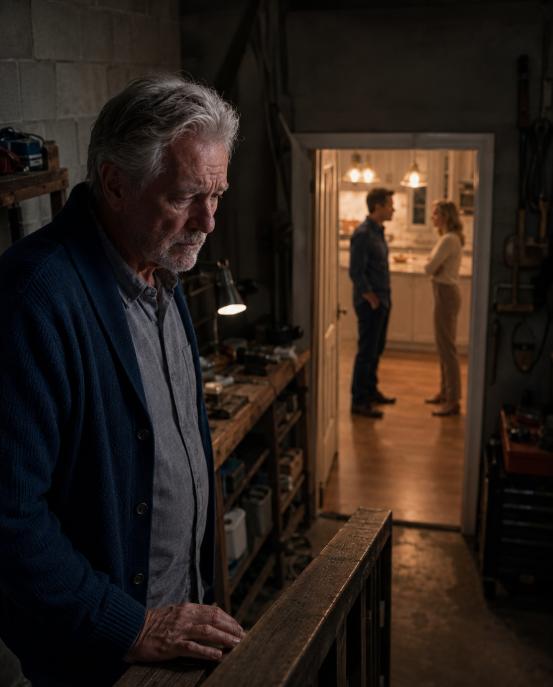
I went downstairs to get the blood pressure cuff I kept in the garage. The door between the garage and the main house had been left slightly open.
Light spilled from the kitchen.
Then Catherine’s voice.
“I am not becoming a caregiver for your father.”
I stopped.
Benjamin said something too low to hear.
Catherine’s reply came sharp.
“No. Don’t do that. Don’t make me sound cruel. I’m being realistic.”
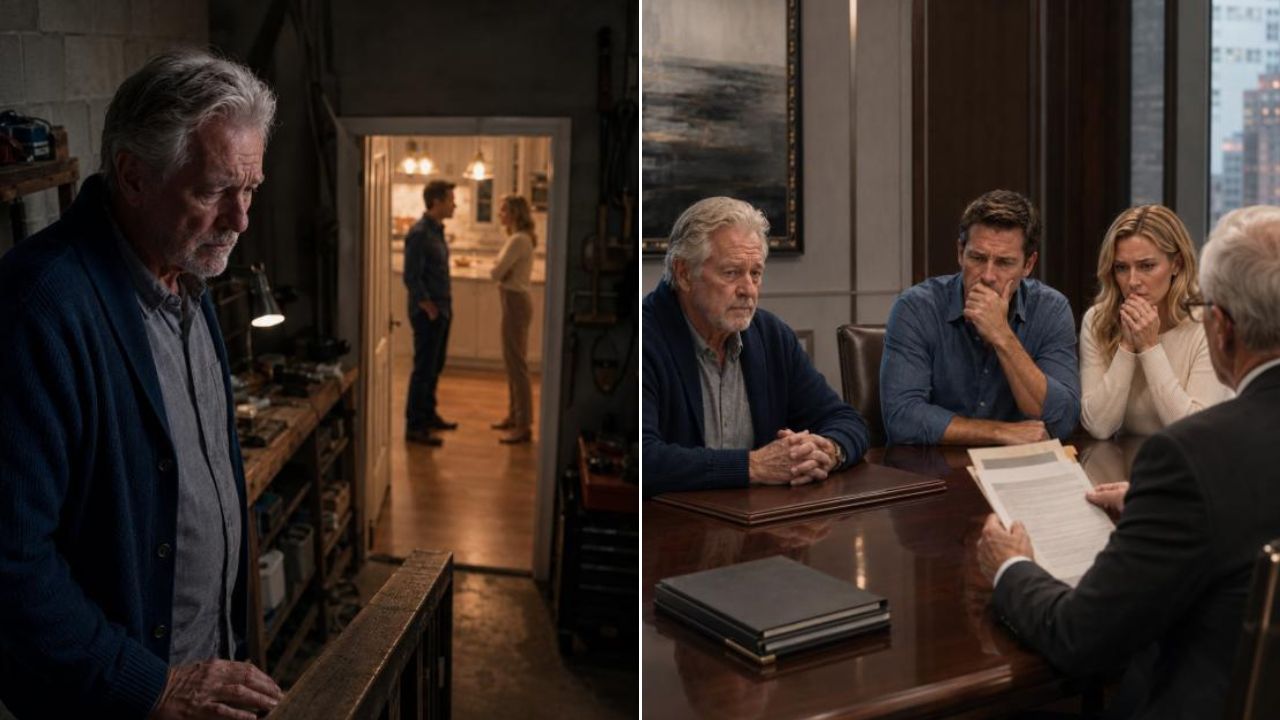
I stood in the dark beside my old workbench, one hand on the railing.
“He’s sick, Ben. Sick people get worse. Then it’s appointments, falls, emergencies, hospital beds. I don’t want the boys growing up around that.”
My breath caught.
Benjamin said, “He’s my father.”
“And I’m your wife.”
Silence.
Then Catherine said the words that changed something in me forever.
“I want that sick old man out of my house before he dies in it.”
The garage seemed to tilt.
I gripped the railing.
My house, she had said.
Not ours.
Not the family’s.
Not the house your father helped us buy.
My house.
Benjamin did not shout.
He did not defend me.
He did not say, Catherine, that is my father.
He said, very quietly, “I’ll talk to him tomorrow.”
I turned and climbed the stairs back to my apartment.
Slowly.
One step at a time.
Not because my heart was weak.
Because my son had finally made it heavy.
Benjamin came up the next morning carrying two coffees.
That was how I knew he was about to betray me politely.
He knocked even though he had a key.
“Come in,” I said.
He entered with the careful smile of a man delivering bad news wrapped as concern.
“Morning, Dad.”
“Morning.”
He set one coffee on the small table.
Black, no sugar.
He remembered.
That hurt more than if he had forgotten.
I sat by the window. The morning sun was bright, hard, and clean after the storm. In the yard, Noah’s red soccer ball rested near the fence.
Benjamin stayed standing.
“We’ve been talking.”
“I heard.”
His face changed.
Only for a second.
Then he looked down at the coffee.
“Dad…”
“Say what you came to say.”
He rubbed the back of his neck.
“We think it might be better if you found a place with more support.”
“We?”
He swallowed.
“Catherine and I.”
I nodded.
“How long do I have?”
“It’s not like that.”
“How long?”
His eyes flicked toward the stairs.
“A couple weeks.”
I picked up the coffee.
My hand was steady.
That surprised me.
“I’ve been paying you $2,500 a month.”
“I know.”
“I gave you the down payment on this house.”
His jaw tightened.
“That was a loan, and I always intended—”
“You always intended a lot of things.”
He looked wounded.
Maybe he was.
People do not like when the truth arrives without knocking.
“I’m trying to protect my family,” he said.
I looked at him.
“I thought I was part of it.”
His face went pale.
He had no answer.
That was answer enough.
I stood and walked to the closet.
Benjamin frowned.
“What are you doing?”
“Packing.”
“Dad, you don’t have to leave today.”
“Yes,” I said. “I do.”
“Don’t make this dramatic.”
I turned.
He looked so much like Sarah in that moment that I almost lost my balance.
Same eyes.
Different courage.
“Your wife called me a sick old man last night,” I said. “You heard her. Then you came upstairs with coffee.”
His mouth opened.
Closed.
I waited.
Part of me still wanted him to fight for me.
Even then.
Even after everything.
Benjamin whispered, “She shouldn’t have said it that way.”
That way.
Not she shouldn’t have said it.
Not she was wrong.
That way.
I folded a shirt and placed it in my suitcase.
“Tell the boys I love them.”
“Dad.”
“I’ll call them when you allow it.”
He looked away.
Downstairs, Catherine’s heels clicked across the kitchen floor.
She did not come up.
Of course she didn’t.
Cruel people often send others to carry the knife.
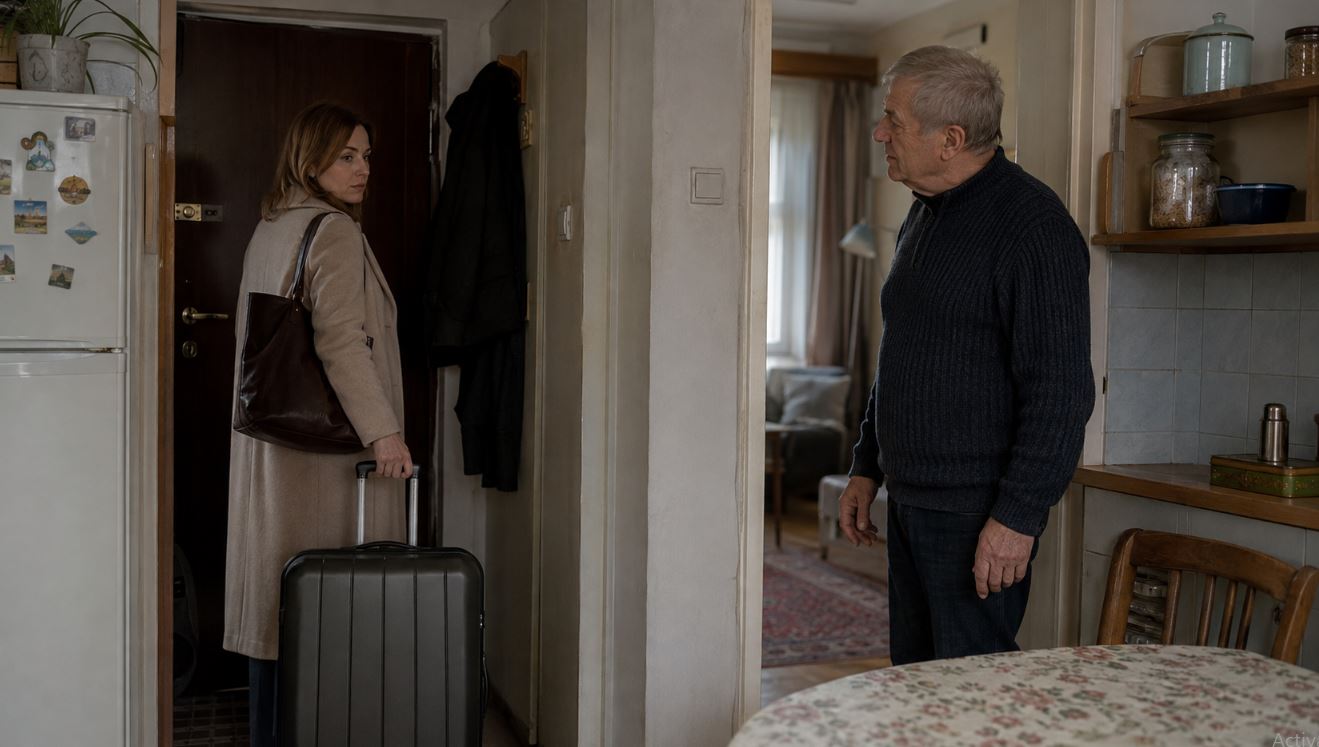
I packed two suitcases, a box of photographs, Sarah’s old recipe binder, my medication, and the small metal lockbox I kept beneath the bed.
Benjamin tried to help once.
I said no.
At the bottom of the stairs, Noah stood in his pajamas, holding his dinosaur book.
“Grandpa, are you going on a trip?”
I knelt carefully.
My knees complained.
My chest did too.
“Something like that.”
“Can you come back tomorrow?”
Behind him, Catherine stood in the kitchen doorway.
Arms crossed.
Silent.
I kissed Noah’s forehead.
“I’ll see you soon, buddy.”
Lucas stood halfway down the hall, watching.
He did not ask questions.
Older children often learn the truth before adults admit it.
I loaded the car myself.
As I backed down the driveway, Benjamin stood near the garage with his hands in his pockets.
Catherine watched from the front window.
Noah pressed both palms to the glass.
I lifted one hand.
Then I drove away from the house I had helped buy, from the family I had tried not to burden, from the life I had rented monthly with checks and silence.
I did not cry until I reached the stoplight.
And even then, it was only because Sarah’s photo slid off the passenger seat and landed face-up on the floor.
She was still laughing in it.
As if she remembered a version of me who would never have allowed this.
Chapter 2
The Paper Trail
For six nights, I stayed at the Bayside Inn off Route 60.
It was not a bad motel.
Just tired.
The curtains smelled faintly of mildew. The air conditioner rattled in the wall. The ice machine coughed every time someone used it. From my second-floor room, I could see a pawn shop, a tire store, and a strip of sky that turned pink over the highway at sunset.
I told no one where I was except my attorney.
Not Benjamin.
Not Catherine.
Not the boys.
Especially not the boys.
At night, I sat on the edge of the bed with my pill organizer open beside me and Sarah’s photograph propped against the lamp.
“You were right,” I told her on the third night.
The room answered with air conditioner static.
Sarah had never liked Catherine.
She had tried.
Lord knows she had tried.
But after one Thanksgiving dinner, when Catherine corrected Sarah’s gravy recipe at our own table, Sarah had washed dishes in silence for twenty minutes.
Then she whispered, “That girl counts kindness like it costs her.”
I had told Sarah to give her time.
Sarah had given everyone time.
Even cancer.
On the seventh morning, I signed the closing papers on a small house in Westshore.
Not a mansion.
Not a statement.
Just a beautiful one-story home with a wide porch, a lemon tree in the backyard, and enough space for two grandsons to leave muddy shoes by the door if their parents ever became decent enough to let them visit.
I paid in full.
My real estate agent, a cheerful woman named Denise, handed me the keys with tears in her eyes after I told her only half the story.
“Mr. Morgan,” she said, “this place is going to be good to you.”
I looked at the lemon tree through the kitchen window.
“I hope I’m good to it.”
That afternoon, I called my attorney, Harold Whitaker.
Harold was seventy-three, thin as a fence post, with white hair, sharp blue eyes, and a voice that sounded like old paper being folded. He had handled the sale of my business, Sarah’s estate, my investments, and every quiet decision I had made after learning grief attracts advice.
“Are you certain?” he asked.
“Yes.”
“You understand that once we send this letter, things will not return to the way they were.”
I looked around my new, empty living room.
Sunlight lay across the floor in bright rectangles.
“There is no way they were, Harold. There was just what I was willing to ignore.”
He was silent for a moment.
Then he said, “I’ll have the documents served tomorrow.”
Benjamin called me nine times the next afternoon.
I did not answer.
Catherine called twice.
I let those go too.
Then came a text from Benjamin.
Dad, what is this?
A second later, another.
Please call me.
Then:
Catherine is freaking out.
I sat on my new porch with a glass of water and watched a lizard dart along the edge of the steps.
“Good,” I said to no one.
The letter Harold sent was not cruel.
That was the important thing.
It was factual.
Facts have a way of sounding cruel to people who prefer fog.
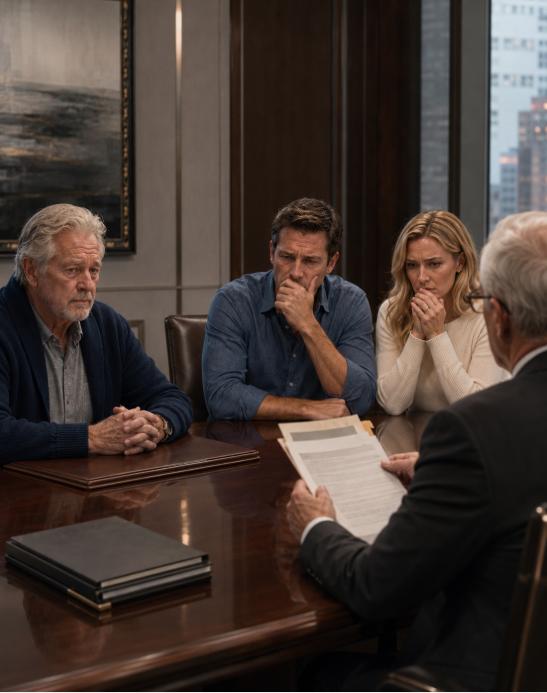
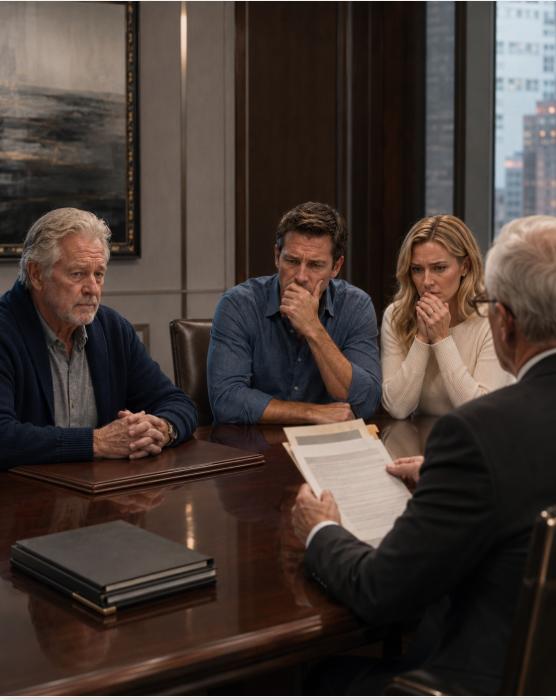
The first document was a formal demand for repayment of the down payment loan I had given Benjamin and Catherine when they bought their house: $75,000, plus agreed interest, documented by a signed promissory note Benjamin had probably forgotten existed.
Total due: $95,300.
The second document was a notice that all future financial support was terminated.
The third was a revised estate disclosure.
Not the full thing.
Just enough.
Enough for Benjamin to understand that the father he had allowed to be thrown out was not dependent on him.
Enough for Catherine to realize the “sick old man” above her garage had never needed her marble kitchen, her spare apartment, or her permission to exist.
Enough to show that my investment portfolio, real estate holdings, and trust assets were worth just over eleven million dollars.
I had never hidden the money to trick them.
I hid it because I wanted to know what remained when people thought there was nothing to gain.
Now I knew.
At 4:17 p.m., Benjamin pulled into my driveway.
I knew it was him before I saw him.
Sarah always said our son parked like he was late to his own conscience.
He got out of the car wearing a wrinkled dress shirt and no tie. His hair was a mess. His face looked gray.
He stood at the bottom of my porch steps and stared at the house.
“You bought this?”
I sat in the rocking chair.
“Yes.”
“When?”
“Yesterday.”
“You paid cash?”
I took a sip of water.
“Are you here to see me or appraise me?”
His face tightened.
“Dad, I didn’t know.”
“No,” I said. “You didn’t.”
He climbed one step.
I lifted a hand.
He stopped.
The gesture hurt us both.
“Catherine thought—”
I laughed once.
It surprised him.
Maybe me too.
“Do not come onto my porch and tell me what Catherine thought.”
He looked down.
“Okay.”
The silence stretched.
A lawn mower growled somewhere nearby. A warm breeze moved through the lemon tree leaves. My chest ached, but not from the heart failure.
Benjamin said, “The loan…”
“Is due.”
“I don’t have ninety-five thousand dollars sitting around.”
“I know.”
“Then why do this?”
I leaned forward.
“Because I gave you that money when you told me you wanted to build a stable home for your family. Not a house where your wife could charge me rent and call me a burden.”
He flinched.
“She was scared.”
“Of what? My illness? Or my inconvenience?”
He had no answer.
Again.
I was tired of loving people through their silence.
Benjamin sat on the bottom step without permission. I almost told him to get up. Then I saw his hands.
They were shaking.
“I should have defended you,” he said.
“Yes.”
He looked at me.
No excuses came.
That was new.
“I don’t know why I didn’t.”
“I do.”
His eyes filled.
“You were afraid of going home to her anger.”
His face broke then.
Not completely.
Just enough for me to see the boy under the husband.
“She makes everything a test,” he whispered.
“And you kept choosing the wrong answer.”
He bowed his head.
I let him sit with that.
Parents are strange creatures. Even when our children hurt us, part of us still wants to wrap them in a blanket and say the world did it. But the world had not stayed silent in that kitchen.
Benjamin had.
After a while, he said, “What happens now?”
“Now you repay what you owe.”
“And the inheritance?”
There it was.
He heard it too.
Shame crossed his face before I could point to it.
“I didn’t mean—”
“Yes, you did.”
He covered his eyes with one hand.
“I’m sorry.”
“I believe you.”
He looked up quickly.
“You do?”
“Yes. I believe you are sorry now.”
The hope in his eyes faded.
Because he understood the difference.
“I changed my estate plan this morning,” I said.
His mouth tightened.
“How much?”
“Enough.”
“That’s not an answer.”
“It is the only one you’re getting.”
He nodded slowly.
The wind shifted.
From somewhere down the street came the sound of children laughing.
I thought of Lucas and Noah.
My anger had sharp edges, but my love for those boys lived somewhere softer.
“I want to see my grandsons,” I said.
Benjamin looked up.
“Of course.”
“Not at your house. Not with Catherine supervising. Sundays. Here. If they want to come.”
“They’ll want to.”
“You don’t know that. Children notice more than adults allow.”
His face crumpled.
“Noah keeps asking why you left.”
“What did you tell him?”
He looked away.
“That you needed a place with fewer stairs.”
I closed my eyes.
Another small lie placed on a child’s heart.
“Tell him the truth,” I said.
Benjamin swallowed.
“What truth?”
“That Grandpa was hurt and needed his own home.”
He nodded.
“I can do that.”
I hoped he could.
Hope is foolish.
It is also stubborn.
Catherine arrived two days later.
She came alone.
I watched her through the front window as she stepped out of her white SUV, adjusted her sunglasses, and smoothed her blouse. She carried a small gift bag.
That almost made me smile.
Some people bring apologies.
Catherine brought presentation.
I opened the door before she rang.
Her smile appeared instantly.
“Charles.”
“No.”
The smile froze.
“I’m sorry?”
“No, you may not Charles your way into my living room.”
Her cheeks colored.
“I came to apologize.”
“You came because you read the papers.”
Her eyes flashed.
Then softened again, quickly.
Too quickly.
“I said something terrible. I was overwhelmed. Your diagnosis scared me. I didn’t handle it well.”
I looked at the gift bag.
“What’s in there?”
She glanced down.
“Cookies. From that bakery you like.”
“I like the cookies my wife used to bake.”
Her mouth tightened.
For the first time, she looked toward the street, as if checking whether neighbors could hear.
“Can we please speak privately?”
“We are.”
“Charles, this is humiliating.”
I leaned against the doorframe.
“Yes. It is.”
She heard the echo.
For a second, something like understanding moved through her face.
Then pride killed it.
“The repayment demand is unreasonable,” she said.
“There she is.”
Her eyes narrowed.
“We have children.”
“So did I.”
“That money went into the house.”
“I know.”
“And if you force this, it hurts your grandchildren.”
“No,” I said. “You and Benjamin built a life on money you did not repay. I am asking for the truth to be reflected in numbers.”
She took one step closer.
“You would punish your own son?”
“I am teaching him the price of letting someone else mistreat his father.”
Her mouth opened.
Closed.
Then she said the sentence that told me Harold had been right to warn me.
“If Sarah were alive, she would be ashamed of you.”
The air changed.
Even the birds seemed to stop.
I felt my wife’s name enter the porch like a hand on my shoulder.
My voice stayed quiet.
“If Sarah were alive, you would never have dared say what you said in that kitchen.”
Catherine’s face drained.
I stepped back.
“This conversation is over.”
She lowered the gift bag slowly.
“You’re making a mistake.”
“No,” I said. “I made the mistake when I paid rent to be tolerated.”
I closed the door.
Not hard.
I did not need to slam it.
The lock clicked.
Small sound.
Large freedom.
Three months passed.
Benjamin repaid less than half the loan.
Harold filed the necessary paperwork.
Catherine deleted her social media accounts after one of her own friends posted a vague comment about “people who treat aging parents like expired furniture.” Tampa is a big city, but circles shrink around scandal.
I did not encourage gossip.
I did not correct it either.
Benjamin started therapy.
At first, I assumed Catherine made him say that.
Then one Sunday, he brought Lucas and Noah to my house and stayed in the car while the boys ran up the porch.
Noah hugged my knees so hard I had to grip the railing.
“Grandpa, your new house has a lemon tree!”
“It does.”
“Can we make lemonade?”
“If the lemons cooperate.”
Lucas stood behind him, quieter.
“You okay?” he asked.
“I’m getting there.”
He nodded like a much older person.
Then he said, “Dad told us he hurt your feelings.”
I looked toward the driveway.
Benjamin sat behind the wheel, staring straight ahead.
“He told you that?”
Lucas nodded.
“And Mom?”
“Noah asked if Mom hurt your feelings too.”
“What did your dad say?”
Lucas looked at the lemon tree.
“He said yes.”
I had to sit down.
Not because of my heart.
Because truth, even late, has weight.
The boys stayed for two hours.
We made terrible lemonade.
Too sour.
Too warm.
Perfect.
Before they left, Noah asked if he could keep a lemon.
I gave him three.
Benjamin walked up the porch when it was time to go.
He looked thinner.
Cleaner somehow.
Not happier.
But less polished by denial.
“Dad,” he said, “Catherine wrote you a letter.”
“I know.”
“She wants you to read it.”
“I did.”
“And?”
I looked at the boys buckling themselves into the car.
“She apologized for what she said. She did not yet understand why she said it.”
Benjamin nodded slowly.
“That sounds fair.”
“Does it?”
He gave a sad smile.
“No. But fair has been hard to recognize lately.”
We stood in the porch shade.
Father and son.
Not healed.
Not restored.
But no longer pretending the wound was not there.
“I don’t know if my marriage will survive this,” he said.
“That is between you and Catherine.”
“I know.”
“Do you?”
He looked at me.
This time, he did not look away.
“I’m learning.”
That was all I could ask.
For then.
People like clean endings.
The greedy are punished.
The weak become brave.
The old man wins.
But real families do not heal in neat paragraphs.
Catherine did attend therapy.
Once.
Then twice.
Then enough times that I stopped counting but not enough that I trusted her.
Benjamin repaid the loan over eighteen months.
With interest.
He complained once.
Only once.
I changed my estate plan again six months after moving into the Westshore house.
Not back to what it was.
Never that.
Some money went into education trusts for Lucas and Noah, protected from their parents. Some went to a hospice charity in Sarah’s name. Some stayed with me, because old men are allowed to enjoy the years they fought to reach.
Benjamin remained in the will.
Less than before.
More than he deserved on his worst day.
Less than he imagined on his best.
That felt right.
As for Catherine, she eventually sat across from me on my porch one gray afternoon with no gift bag, no polished speech, no diamond bracelet.
Just red eyes and both hands wrapped around a mug of coffee.
“I was afraid,” she said.
“Of my illness?”
She shook her head.
“Of losing control.”
I waited.
She looked toward the lemon tree.
“When you got sick, I saw the future coming into my house without asking. Doctors. Bills. Need. Death. I hated myself for being scared, so I turned it into anger at you.”
It was the first honest thing she had ever given me.
I did not absolve her.
That is not what honesty is for.
“I was scared too,” I said.
She looked at me then.
Really looked.
Maybe for the first time.
“I know.”
We sat in silence.
Not comfortable.
But real.
Sometimes that is better.
On the first anniversary of Sarah’s death that I spent in the new house, Lucas and Noah helped me plant a second lemon tree.
Benjamin dug the hole.
Catherine brought water.
Nobody mentioned the garage apartment.
Nobody mentioned the money.
After the boys ran inside for cookies, Benjamin stood beside me in the yard.
“You happy here?” he asked.
I looked at the small house.
The porch.
The windows.
The trees Sarah would have loved.
“I’m peaceful here.”
He nodded.
“That’s better, isn’t it?”
I thought about it.
“Yes,” I said. “It is.”
Later, after everyone left, I sat on the porch until the evening cooled.
My heart was still weak.
The doctor still frowned at my numbers.
The pill bottles still lined up beside my sink like little orange soldiers.
But I was not a burden.
I had never been a burden.
I was a man who had worked, loved, lost, given, forgiven too easily, stayed too long, and finally learned that dignity is not something your family grants you.
It is something you stop handing over.
Inside the house, Sarah’s photograph sat on the mantel.
The one outside the repair shop.
The one where she was laughing.
I raised my glass of water toward her.
“You were right,” I said.
The porch light came on automatically as the sun disappeared.
For the first time in years, no one inside the house was waiting for me to make myself smaller.
So I didn’t.