Before humans built cities, planted farms, or wrote a single word, they may have already discovered something surprisingly familiar.
Fermentation.
Long before there were kings, temples, taxes, roads, or written laws, our distant ancestors were learning that fruit left too long on the forest floor could change. It became softer. Sweeter. Stranger. And sometimes, it carried a warm, dizzying effect that animals — and eventually humans — seemed drawn to again and again.
In a way, the story of alcohol did not begin in a tavern, a vineyard, or a brewery.
It may have begun millions of years ago, with fallen fruit.
Scientists have suggested that our ancient primate ancestors were exposed to naturally fermented fruit long before modern humans existed. Ripe fruit that dropped to the ground could begin producing ethanol as it decayed. For hungry animals, that smell may have been a signal: calories were nearby.
What began as survival may have slowly become something deeper.
A taste.
A habit.
A craving written into the long story of evolution.
But the truly surprising part comes much later.
For generations, many people assumed the story went like this: humans learned to farm, farming produced grain, and grain eventually gave us bread and beer.
It sounded logical.
But archaeology has started to complicate that simple picture.
At Raqefet Cave near Haifa, Israel, researchers found ancient stone mortars used by the Natufians, a people who lived around 13,000 years ago. Inside those stone tools, scientists discovered evidence that wild grains such as wheat and barley may have been intentionally fermented.
In plain language: people may have been making a primitive kind of beer before full agriculture had taken hold.
That changes the question completely.
Maybe beer was not just something humans invented after they became farmers.
Maybe the desire to brew helped push them toward farming in the first place.
Imagine that for a moment.
A small group of hunter-gatherers gathers near a cave. They do not live in a city. They do not have supermarkets, written recipes, or ceramic beer mugs. But they have wild grain, stone tools, water, patience, and observation.
At some point, someone notices that crushed grain left in the right conditions changes.

It bubbles.
It smells different.
It becomes something shared.
Not just food. Not just drink.
A reason to gather.
That may be one of the most important ideas in early human history.
Because civilization did not appear overnight. People had to learn how to cooperate with strangers, how to gather in larger groups, how to share labor, how to create rituals, and how to return to the same places again and again.
Alcohol may have helped make that possible.
This idea becomes even more fascinating when we look at Göbekli Tepe in southeastern Turkey.
Long before the pyramids, long before Stonehenge, long before cities as we understand them, hunter-gatherers built massive stone pillars decorated with animals. For years, this site puzzled archaeologists. How could people without cities, pottery, or large farming villages organize the labor needed to build such a place?
One answer may be feasting.
Large gatherings would have required food, planning, cooperation, and possibly fermented drinks. Some researchers believe ancient beer or grain-based beverages may have been part of the ritual life there.
Think about that.
People may not have gathered because they already had civilization.
They may have built the first pieces of civilization because they wanted reasons to gather.
A feast.
A ritual.
A shared drink.
A memory strong enough to bring people back.
That does not mean beer alone created civilization. History is never that simple. Climate, food, population, belief, tools, and survival all played their roles.
But alcohol may have been more than a side product.
It may have been social glue.
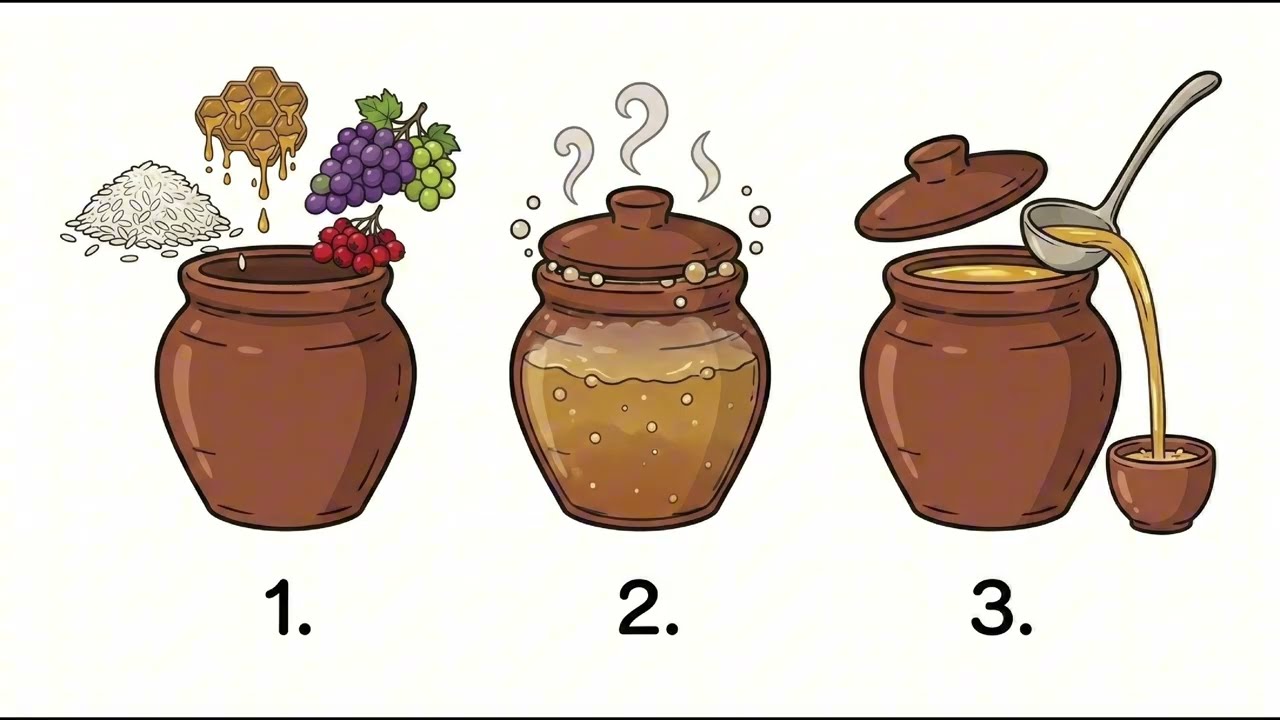
By around 7000 BCE, the evidence becomes even clearer in China. At Jiahu, archaeologists found pottery jars with traces of a fermented drink made from rice, honey, grapes, and hawthorn berries. This was not random fruit left to rot. This was a carefully made beverage, a recipe from the deep past.
People were no longer simply discovering fermentation.
They were mastering it.
Later, in ancient Egypt, beer became part of everyday life. It was not just something people drank for pleasure. It was food, wages, medicine, ritual, and survival.
Workers received beer as part of their daily rations. In a hot climate where clean water could be uncertain, beer offered calories, liquid, and a safer source of nourishment. It appeared in religious life, medical practices, and burial customs. Egyptians even connected beer with divine gifts and sacred stories.

To us, beer may seem ordinary.
To them, it could be life itself.
And that is what makes the story so powerful.
Alcohol was not always a luxury. It was not always a vice. It was not simply a party drink or a modern habit. For much of human history, fermented beverages were part of how people survived, gathered, celebrated, worshipped, and organized themselves.
The more archaeologists study the ancient world, the more one idea keeps returning:
Civilization may not have been built by bread alone.
It may also have been shaped by the cup passed from hand to hand.

From fermented fruit in ancient forests, to stone mortars in a cave, to great gatherings at Göbekli Tepe, to Egyptian workers receiving beer as daily nourishment, the story of alcohol follows humanity like a shadow.
Not always noble.
Not always harmless.
But always deeply human.
So perhaps the next time we look at an ancient temple, a farming village, or the first signs of organized society, we should ask a different question.
Not only:
How did humans learn to farm?
But also:
What brought them together before cities existed?
Maybe it was hunger.
Maybe it was faith.
Maybe it was survival.
And maybe, somewhere near the beginning of civilization, there was also a shared drink.