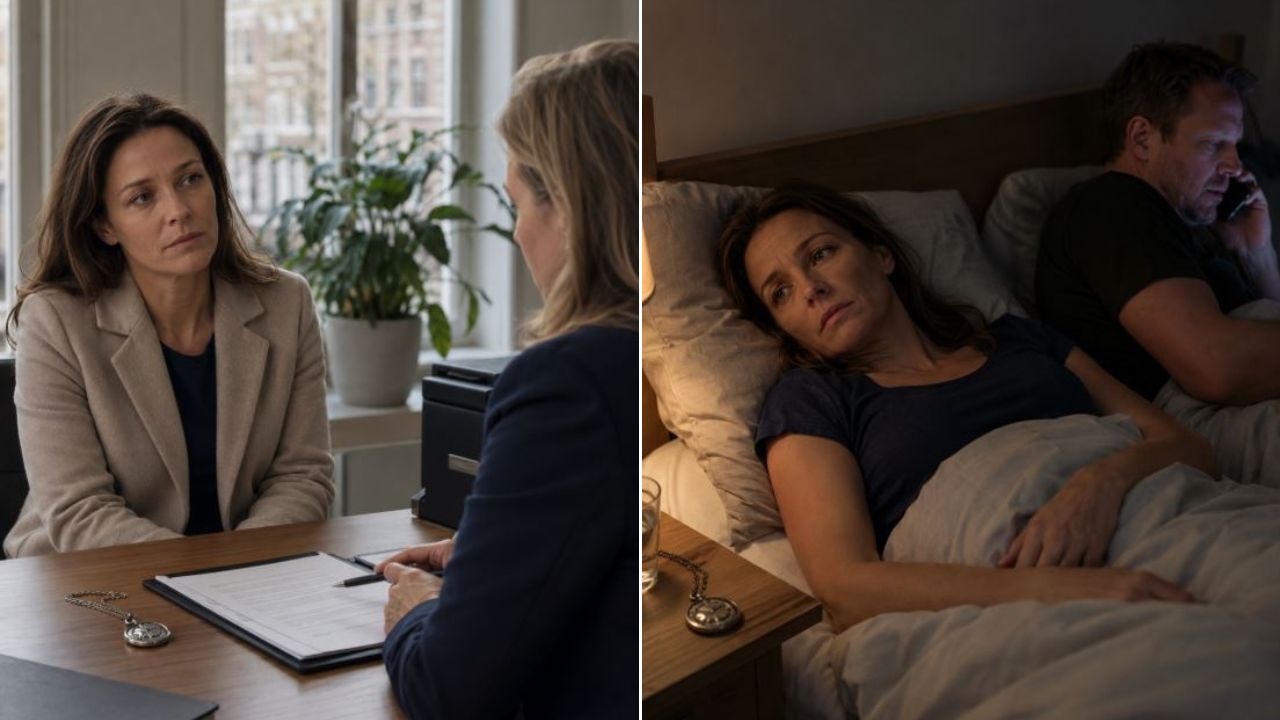
My father slid my college acceptance letter back across the kitchen table like it was an unpaid bill.
He did not yell. That almost made it worse.
If he had shouted, I could have told myself he was angry. If he had slammed his hand on the table, I could have told myself he was being cruel in the heat of the moment.
But he was calm.
My father, Thomas Sullivan, always sounded calm when he was doing something that hurt.
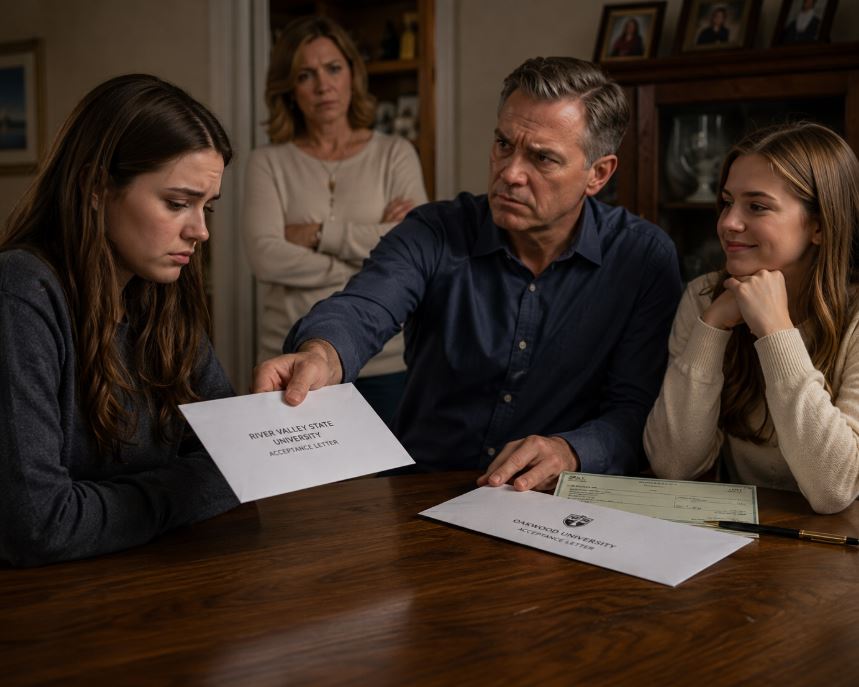
He sat there in his leather chair at the head of our dining table, holding two college acceptance letters.
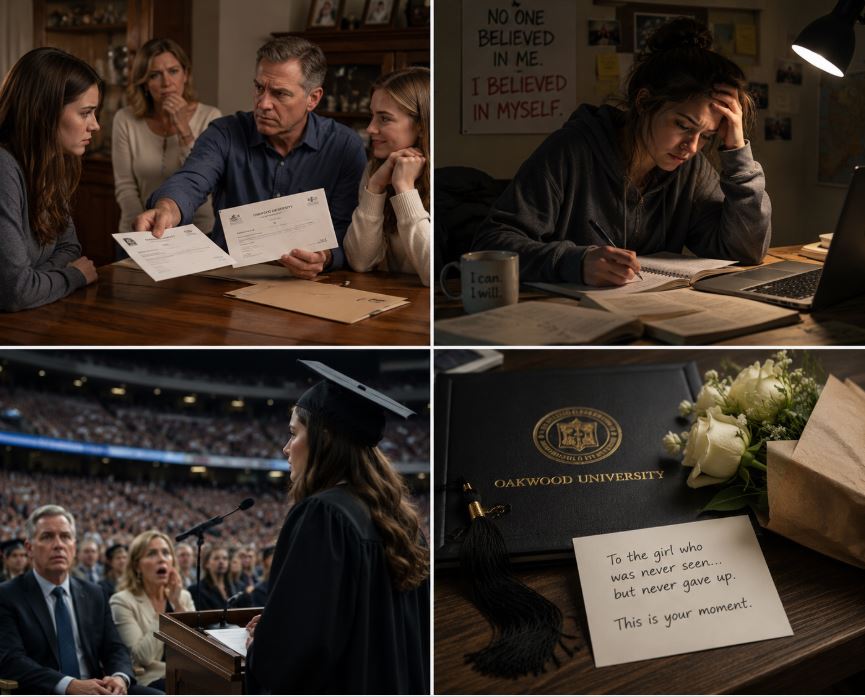
One was my twin sister Brooke’s letter from Oakwood University, a private school my mother had been talking about for months.
The other was mine from River Valley State, a public university two hours from home.
I had chosen River Valley because it was practical. Affordable. Strong in economics. The kind of school my father always claimed to respect.
Brooke stood near the fireplace with her arms folded, pretending not to watch too closely.
My mother sat beside her with tears already shining in her eyes, but they were not for me. They were happy tears. Proud tears. The kind mothers cry when they already know the answer.
My father looked at Brooke first.
“We’re going to pay for Oakwood,” he said. “Full tuition, housing, meal plan, books, everything.”
Brooke covered her mouth.
“Oh my God, Dad.”
My mother stood and hugged her.
I sat there holding my own letter, waiting.
I was eighteen years old, but in that moment I felt much younger. Like a child waiting to be chosen for a team after everyone else had already been called.
Then my father turned to me.
“Maya,” he said, “we’ve decided not to fund River Valley.”
For a few seconds, I thought I had misunderstood him.
“Not fund it?” I asked.
He folded his hands on the table.
“You’re smart. But Brooke has more potential in the long run. She knows how to connect with people. Oakwood will open doors for her.”
I looked at my mother.
She looked down.
That was the part I remembered later.
Not Brooke’s smile.
Not my father’s words.
My mother’s silence.
“What about me?” I asked.
My father sighed, not like a man who felt sorry, but like a man who was tired of explaining something obvious.
“You’ve always been independent,” he said. “You’ll figure it out.”
Then he pushed my acceptance letter back across the table.
Just like that.
A piece of paper I had carried home with shaking hands, believing it might be the beginning of my future, became something my father did not want to touch.
Brooke looked away, but not before I saw the corner of her mouth move.
She was trying not to smile.
My father continued, as if he were presenting a business decision.
“Brooke is worth the investment. You’re not.”
The room went quiet.
There are sentences that do not sound loud when they are spoken, but they echo for years.
That was one of them.
I did not cry at the table.
I wish I had.
Maybe if I had cried, someone would have remembered I was still a daughter and not just a line item in a family budget.
But I stood up, picked up my letter, and walked to my room.
Behind me, my mother said softly, “Maya…”
But she did not follow.
That night, I sat on the floor beside my bed and looked around my room.
Almost everything in it had once belonged to Brooke.
The desk had been hers until she wanted a bigger one.
The laptop had been hers until she wanted a newer one.
Even the mirror on my wall had a small crack in the corner because Brooke had dropped it years earlier and decided she did not want it anymore.
I had spent my life receiving what was left after Brooke was finished choosing.
When we were children, people always compared us.
Brooke was bright, charming, pretty in a way adults noticed immediately. She knew how to laugh at the right time. She knew how to make teachers feel special. She knew how to make our father proud just by entering a room.
I was quieter.
I read more than I talked. I remembered numbers. I noticed when bills were late, when Mom looked tired, when Dad’s smile disappeared the second important people left the room.
My father called Brooke “gifted.”
He called me “self-sufficient.”
For years, I thought self-sufficient was praise.
That night, I realized it was an excuse.
It meant they could give less and still call it character-building.
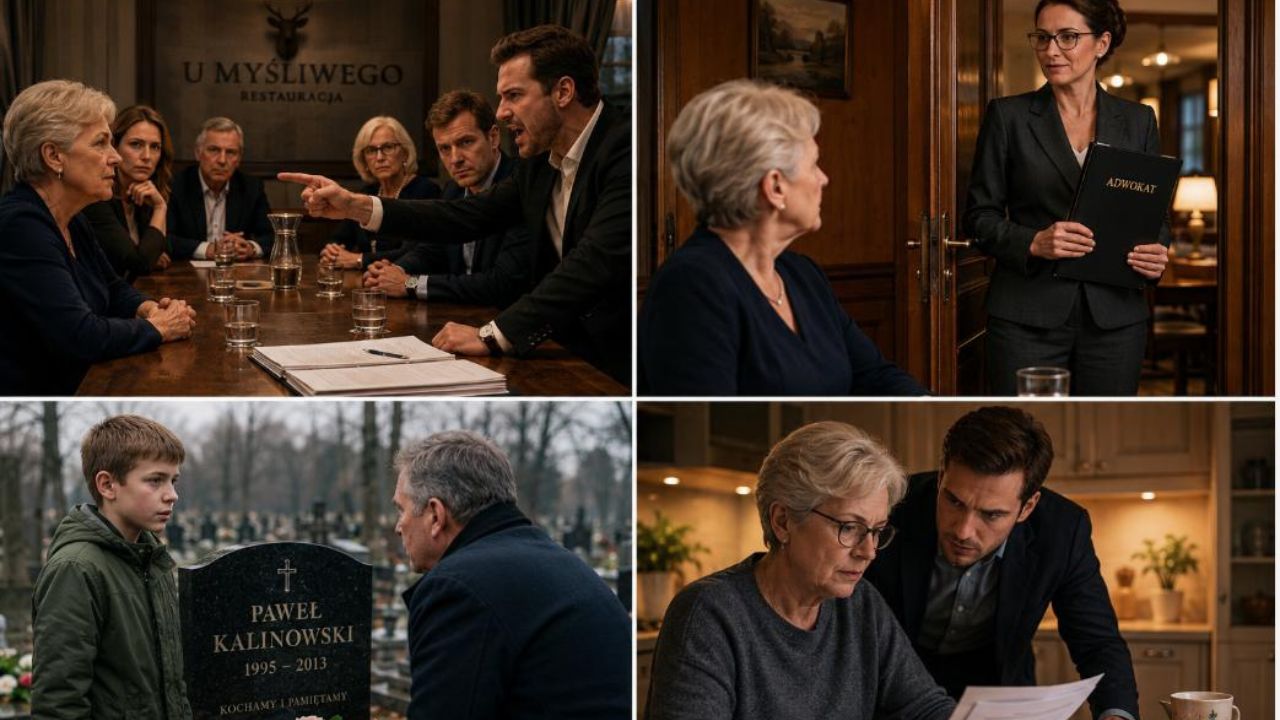
I opened my old laptop and searched for scholarships until the screen blurred.
Full tuition scholarships.
Work-study programs.
Independent student aid.
Emergency grants.
Every number felt impossible.
Tuition. Housing. Books. Food. Transportation.
I wrote them down anyway.
By two in the morning, my notebook was covered with calculations.
I did not have a plan.
Not really.
But I had something sharper than hope.
I had refusal.
I refused to let my father’s opinion become the final measurement of my life.
The next morning, the house acted like nothing had happened.
That was another kind of cruelty.
My mother stood in the kitchen showing Brooke pictures of dorm bedding.
“Do you like cream or sage green better?” she asked.
Brooke held a strawberry between two fingers and said, “Sage looks more expensive.”
My father smiled over his coffee.
“We’ll get whatever you need.”
I sat at the end of the table eating toast I could barely swallow.
No one asked what I was going to do.
No one asked if I was scared.
No one asked if I needed help filling out financial aid forms.
Brooke’s future filled the house with shopping bags, campus maps, new luggage, new towels, new shoes.
Mine fit into two used suitcases and a backpack from a thrift store.
When August came, my parents flew with Brooke to Oakwood for orientation.
They posted photos in front of brick buildings and green lawns.
My father wrote online, “So proud of our girl and her bright future.”
Our girl.
I stared at those words longer than I should have.
When it was time for me to leave for River Valley, my parents said they were tired from the trip and could not drive me.
My mother hugged me in the driveway with one arm because she was holding coffee in the other.
“Call if you need anything,” she said.
We both knew I would not.
My father handed me an envelope.
For one foolish second, I thought there might be a check inside.
There was two hundred dollars in cash and a note.
Be smart with emergencies.
I kept the money.
I threw away the note at the bus station.
River Valley State did not look magical when I arrived.
It rained that afternoon. My shoes got wet. My room was not even on campus because I could not afford the dorms. I rented a small bedroom in an old house with three other students.
The floor slanted.
The heat clanged at night.
The kitchen smelled like burnt onions no matter how often we cleaned it.
But it was mine.
I worked mornings at a campus coffee shop. My shift started at five. I learned to smile while exhausted, to make lattes for students whose parents had paid for everything, to say “Have a good day” when I had already been awake for four hours.
After classes, I studied in the library until it closed.
On weekends, I cleaned offices and sometimes bathrooms in the residence halls.
There is a special kind of loneliness that comes from being surrounded by people your own age who are living the life you were supposed to have.
They complained about cafeteria food.
I calculated whether I could afford eggs.
They called home for care packages.
I stopped calling home because every conversation hurt in a different way.
At Thanksgiving, I stayed on campus because I could not justify the bus fare.
I called my mother anyway.
There was laughter in the background.
Dishes clinking.
People talking.
“Happy Thanksgiving, honey,” she said.
“Can I talk to Dad?”
“He’s carving the turkey right now.”
I heard him in the background say, “Tell her I’ll call later.”
He did not call later.
That night, Brooke posted a family photo.
My parents sat on either side of her at the dining table.
There were three plates.
Not four.
I stared at that picture until my phone went dark.
That was the night I stopped waiting to be missed.
In my second semester, I nearly collapsed at work.
My manager Brenda found me sitting on the floor behind the counter, pale and shaking.
“You can’t keep doing this,” she said.
“I don’t have a choice.”
She looked at me for a long moment.
Then she said, “Everybody has a choice. Some people just get punished harder for making one.”
Brenda became the first adult in my life who looked at my exhaustion and saw effort instead of weakness.
A few weeks later, one of my professors did the same.
Professor Robert Maxwell taught economics like he was trying to cut through every excuse people made about success. He was strict. Blunt. Almost impossible to impress.
I wrote a paper for his class about family wealth and the myth of equal opportunity.
I wrote it at midnight after work, with coffee-stained notes and hands that smelled like dish soap.
When he returned it, there was an A+ at the top.
Underneath, he had written:
Come see me.
I thought I was in trouble.
Instead, he asked me how many hours I worked.
I told him.
His face changed.
“Who is helping you?” he asked.
“No one.”
He leaned back in his chair.
Then he asked the question no one in my family had asked.
“Why?”
I almost lied.
Then I told him the truth.
I told him about the acceptance letter.
The kitchen table.
My father’s words.
Brooke’s tuition.
My mother looking down.
Professor Maxwell did not pity me.
He looked angry.
Not loud angry.
The kind of anger that means someone understands exactly what was taken from you.
He opened a drawer and pulled out a folder.
“Apply for this,” he said.
It was the Vanguard Fellowship.
I had seen the name before. It was one of the most competitive academic fellowships in the country. Full tuition. Living stipend. Research placement. National recognition.
I laughed once, bitterly.
“I’m not that kind of student.”
Professor Maxwell looked at me.
“You are exactly that kind of student. You’re just used to being treated like you’re not.”
I carried the application home in my backpack like it was something fragile.
For three days, I did not touch it.
Then one night, I sat at my little desk and began writing.
The application asked about a moment that changed me.
I wrote about my father.
Not to punish him.
To tell the truth.
I wrote about being valued less because I was quiet. About being called independent when what people meant was easy to ignore. About learning that some children receive support while others are praised for surviving without it.
When I finished, I cried for the first time since that night at the table.
Not because I was weak.
Because I had finally said out loud what had happened.
Months passed.
I worked.
Studied.
Applied.
Interviewed.
Waited.
Then, one morning before my coffee shop shift, the email arrived.
Congratulations, Maya Sullivan.
You have been selected as a Vanguard Fellow.
I read it three times.
Then I sat on the floor behind the counter and laughed until Brenda thought I had lost my mind.
The fellowship changed everything.
For the first time in my life, I could breathe.
I could reduce my work hours. Buy books before classes started. Eat real meals. Sleep more than four hours without feeling guilty.
Professor Maxwell helped me map out the next two years.
Because of the fellowship, I had the option to transfer for my senior year to one of several partner universities.
Oakwood was on the list.
The same Oakwood my father had paid for without hesitation.
I stared at the name for a long time.
Part of me wanted to avoid it forever.
But another part of me understood something important.
I was not going there to chase Brooke.
I was not going there to impress my parents.
I was going because I had earned the right to walk into any room without asking whether someone thought I belonged.
So I transferred.
My parents did not know.
For nearly a year, they had called less and less.
My mother sent birthday texts with too many heart emojis.
My father sent practical messages about tax forms.
Brooke posted photos from Oakwood: parties, internships, campus events, brunches with girls who looked exactly like her.
I watched from a distance and said nothing.
Then, in the fall of senior year, Brooke found me in the Oakwood library.
She stood between two shelves holding an iced coffee, staring at me like I was a ghost.
“Maya?”
I closed my book.
“Hi, Brooke.”
“What are you doing here?”
“I transferred.”
“To Oakwood?”
“Yes.”
Her eyes moved over my laptop, my student badge, the fellowship medallion pin on my bag.
“How are you paying for this?”
“I won the Vanguard Fellowship.”
Her face went pale.
Brooke knew what that meant. Everyone at Oakwood knew.
“You never told us.”
“No,” I said. “I didn’t.”
She sat down slowly across from me.
For once, my sister had no performance ready.
“Mom and Dad don’t know?”
“No.”
She looked hurt, but not angry.
Maybe that was the first honest moment we had shared in years.
“Why didn’t you tell me?”
I looked at her.
“Because I needed something in my life that wasn’t immediately handed over to this family for judgment.”
She lowered her eyes.
“I didn’t know it was that bad for you.”
“You didn’t want to know.”
The words were not cruel.
They were true.
That evening, my phone started ringing.
Mom.
Dad.
Mom again.
Then a text from my father.
Call me now.
I turned the phone over and kept studying.
The next morning, I answered.
My father did not say hello.
“Brooke tells us you’re at Oakwood.”
“Yes.”
“And that you won some major fellowship.”
“Yes.”
A long silence.
“You should have told us.”
I looked out at the campus lawn where students walked under red and gold leaves.
“Why?”
“Because we’re your parents.”
That almost made me laugh.
“You were my parents when I was eighteen too.”
He breathed heavily into the phone.
“Maya, we made the decision we thought was best at the time.”
“No,” I said. “You made the decision that Brooke was worth helping and I was not.”
“That’s not fair.”
“It was your sentence, Dad. Not mine.”
He did not answer.
For the first time in my life, his silence belonged to him.
Not me.
Graduation came on a bright May morning.
Oakwood’s stadium was full of families carrying flowers, cameras, balloons, and pride.
I had not invited my parents.
Brooke did.
They came for her.
I saw them from the side of the stage.
My mother wore a pale blue dress and held a bouquet of roses.
My father sat beside her in a dark suit, camera ready.
They had front-row seats.
For Brooke.
I wondered if they had even looked for my name in the program.
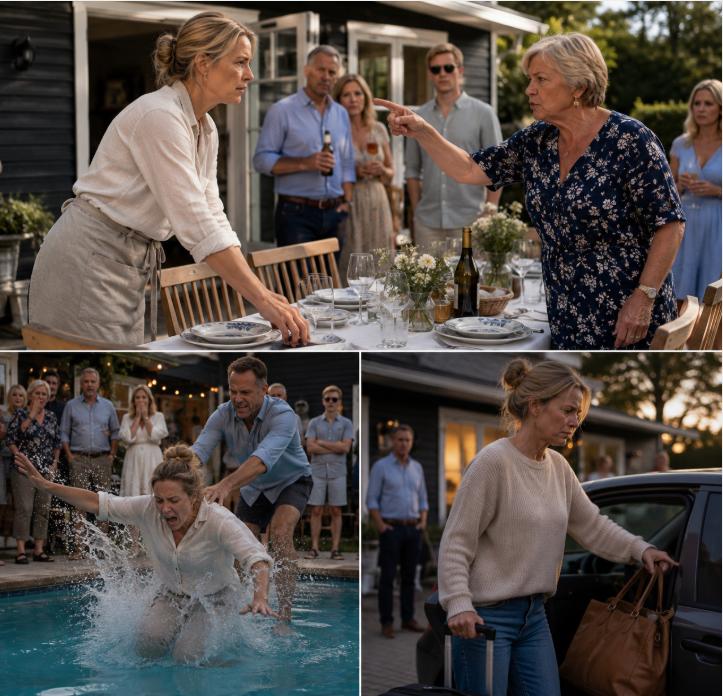
Then the university president stepped to the microphone.
“Each year, we select one student whose academic achievement, leadership, and perseverance represent the highest ideals of Oakwood University.”
My hands were cold.
Brooke turned in her seat.
She knew.
My parents did not.
The president smiled.
“This year’s valedictorian is Maya Sullivan.”
For one second, the whole world seemed to pause.
Then applause rose across the stadium.
I walked to the podium.
As I passed the front row, I saw my father lower his camera.
My mother’s mouth opened slightly.
The roses slipped in her lap.
I did not smile at them.
Not because I hated them.
Because that moment was not theirs.
It was mine.
I stood at the microphone and looked out at thousands of people.
Then I began.
“Four years ago, someone I loved told me I was not worth the investment.”
The stadium grew quiet.
“I believed those words for longer than I want to admit. Not because they were true, but because they came from someone whose approval I had spent my whole life trying to earn.”
I did not name my father.
I did not need to.
I spoke about work.
About loneliness.
About the difference between being independent and being abandoned.
About the quiet students who sit in classrooms carrying burdens no one sees.
Then I said the line I had written the night before.
“Sometimes the person no one claps for is still becoming someone extraordinary.”
When I finished, the stadium stood.
I saw Professor Maxwell clapping with tears in his eyes.
Brenda was there too, shouting my name louder than anyone.
My parents remained seated at first.
Then my mother stood slowly.
My father stood after her.
But he did not clap right away.
He looked like a man watching a house he built catch fire and realizing too late that he was the one who left the match burning.
After the ceremony, they found me near the reception tent.
My mother was crying.
“Maya,” she said. “We are so proud of you.”
I looked at her flowers.
They were still for Brooke.
“Are you?” I asked.
She flinched.
My father stepped forward.
“I made a mistake.”
I had waited years to hear those words.
When they finally came, they felt smaller than I expected.
“No,” I said quietly. “A mistake is forgetting an appointment. What you made was a decision.”
His face tightened.
Then broke.
Just a little.
“You’re right,” he said.
It was the first time I could remember hearing him say that to me.
My mother wiped her eyes.
“I should have spoken up.”
“Yes,” I said. “You should have.”
She began to cry harder.
I did not comfort her.
That was new for me.
I had spent my childhood making other people feel better about hurting me.
I was done doing that.
Brooke came over a few minutes later.
She hugged me carefully, like she was afraid I might pull away.
“I’m sorry,” she whispered.
“For what?”
“For enjoying it.”
I looked at her.
She swallowed.
“When Dad chose me. I knew it hurt you. And part of me liked being the one they picked.”
That honesty hurt.
But it also opened a door.
“I know,” I said.
“I don’t want to be your rival anymore.”
I looked at my twin sister, the girl who had been handed so much and somehow still looked lonely.
“Then don’t be.”
Two weeks later, I moved to Philadelphia for my first job as an economic analyst.
My apartment was small.
The kitchen cabinets stuck.
The radiator made a terrible noise.
But every bill had my name on it.
Every piece of furniture was chosen by me.
Every morning, when I locked the door behind me, I felt something I had never felt in my parents’ house.
Peace.
My parents tried.
At first, badly.
My father sent long emails explaining himself, which were really just excuses wearing nicer clothes.
I did not answer those.
Then one day, he sent a shorter message.
I valued your sister because her strengths were easy for me to understand. I failed you because yours required me to look closer. I am sorry.
That one, I answered.
Not with forgiveness.
Not yet.
But with a boundary.
If you want a relationship with me, you do not get to rewrite what happened.
He replied:
I understand.
Maybe he did.
Maybe he was learning.
My mother called every Sunday for a while. At first she cried too much. Then she started listening more. That was better.
Brooke visited me that winter.
We sat in a little cafe near my apartment and talked like sisters who had lost years to a competition neither of us had chosen.
“I thought being the favorite meant I was loved more,” she said.
I stirred my coffee.
“Maybe it just meant they saw you more clearly.”
She shook her head.
“No. It meant they used me too. Just in a prettier way.”
I had never thought of it like that.
Healing did not happen all at once.
It was not like the movies.
There was no perfect family dinner where everyone cried and everything became clean.
Some damage stays.
Some words cannot be unsaid.
But they can stop being the center of your life.
Years later, people still ask if I forgave my father.
The honest answer is complicated.
I forgave myself first.
For wanting his approval.
For believing his judgment.
For thinking my worth had to be confirmed by someone who had not even taken the time to see me.
My father paid for my twin sister’s future because he thought she was the better investment.
He was wrong.
But the greatest victory was not proving him wrong in a stadium.
It was learning that I did not need his investment to become valuable.
I had already been valuable.
Long before he noticed.
Long before the applause.
Long before my name echoed through that stadium.
I was worth it at the kitchen table too.