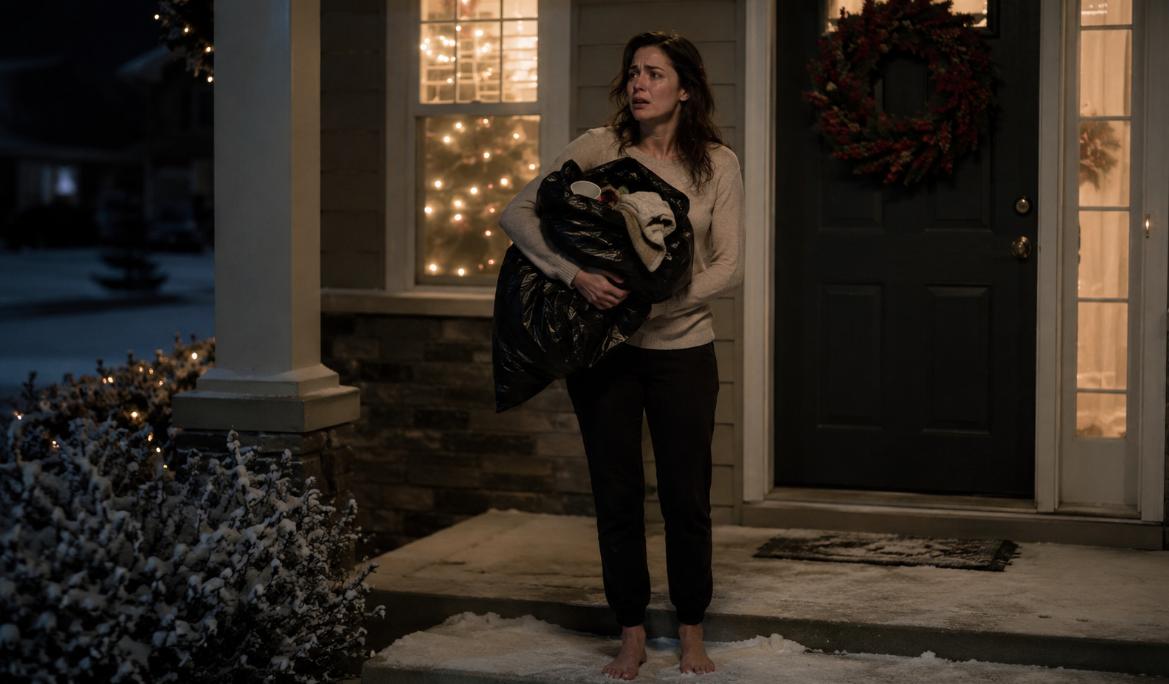
I was standing barefoot on the porch when the snow began collecting around my toes.
Behind me, the Christmas lights blinked red, green, red, green, as if nothing had happened inside that house.
As if my mother had not just shoved a trash bag into my arms.
As if my father had not slammed the front door so hard the wreath nearly fell off.
As if my family had not thrown me outside on Christmas Eve with no coat, no shoes, and no place to go.
The lock clicked.
That sound was worse than the shouting.
Shouting still leaves room for someone to change their mind.
A lock does not.
For a few seconds, I stood there unable to move.
Across the street, warm yellow light glowed behind curtains. Families were eating dinner. Children were probably opening one early present before bed. Somewhere nearby, someone was laughing.
At my parents’ house, the holiday music was still playing.
My mother’s voice still rang in my ears.
“You can’t do anything on your own, Lena. Not one thing.”
My name is Lena Carrington.
I was twenty-nine years old that Christmas Eve, though standing on that porch, I felt about eight.
The thin sweater I had been wearing at dinner did nothing against the cold. Snow soaked through my socks. My fingers tightened around the trash bag my mother had shoved at me.
At first, I thought it held my clothes.
It didn’t.
When the plastic tore near the bottom, a cracked coffee mug rolled out. Then a stained towel. Then a broken ornament from the Christmas tree. Not my documents. Not my phone charger. Not my shoes.
Junk.
They had not even given me my own things.
A porch light clicked on at the house next door.
I saw Mrs. Warren’s curtain shift.
Then close.
That was how my family operated.
Everyone saw enough to know something was wrong.
No one wanted the trouble of naming it.
The fight had started over a loan.
Not even my loan.
My brother Michael had another “business idea.” This one involved fitness supplements, a warehouse membership, and a website he said would “scale fast.” My parents wanted me to co-sign because my credit was better than his.
I said no.
Just that.
No.
My mother froze as if I had slapped her.
My father put down his fork.
Michael laughed and said, “You act like you’re better than us because you pay your bills on time.”
I told them I was not signing my name to debt I could not afford.
That was when the real words came out.
Ungrateful.
Selfish.
Dramatic.
Useless.
A burden.
My mother said I had been living in their house “too long,” though I paid for groceries, helped with utilities, cooked most nights, and took care of her appointments because she did not like driving downtown.
My father said I needed “a lesson.”
Michael said, “Let her freeze for one night. She’ll come crawling back.”
Then my mother disappeared down the hall and came back with a black trash bag.
“There,” she said, shoving it into my arms. “Take what you deserve.”
My father opened the door.
I thought he was bluffing.
He was not.
Now I was outside in the snow, with $182 in my checking account and no idea what came next.
My phone had 6% battery.
No service.
Of course.
I stepped carefully down the porch stairs. My socks slipped on the icy wood. I almost fell twice before reaching my car.
Inside, the engine groaned before starting.
The heater blew cold air.
I sat behind the wheel, staring at the house I grew up in.
The curtains were closed.
The lights were warm.
No one came out.
That was the moment something inside me changed.
Not dramatically.
Not all at once.
It was quieter than that.
For most of my life, my parents had convinced me that I was weak. That I needed them. That I would fail if I ever walked away.
But sitting there in my car, looking at their closed curtains, I realized something.
They were not afraid I could not survive without them.
They were afraid I might.
I wiped snow from my face with my sleeve and reached into my coat pocket for my keys.
My fingers brushed something hard.
Cold.
Flat.
Metal.
I froze.
Then I pulled it out.
A black card.
Not a credit card exactly. Not a bank card like any I had seen. It was heavier, smooth, with no name on the front. Only a small crest in one corner and a row of engraved numbers.
I had not thought about that card in years.
My grandfather Henry had given it to me when I was six.
I remembered the day clearly.
I had been sitting with him in his garden while my parents argued inside the house. Grandpa smelled like pipe tobacco and peppermint tea. He pressed the card into my little hand and closed my fingers around it.
“One day,” he whispered, “you may need this.”
I laughed because I was six and believed adults always came to save you.
“What is it?”
“A door,” he said.
“A door to what?”
“To somewhere safe.”
Then he leaned close.
“Use it only when you have nowhere left to go.”
At six years old, I promised him I would keep it forever.
At sixteen, after my parents told me Grandpa was “too confused” to have visitors, I tucked the card into an old jewelry box and forgot it existed.
At twenty-nine, barefoot in my car on Christmas Eve, I realized he might have known something long before I did.
I drove because sitting still felt dangerous.
The roads were mostly empty. Snow blew across the windshield. My car fishtailed once near a stop sign, and I had to pull over until my hands stopped shaking.
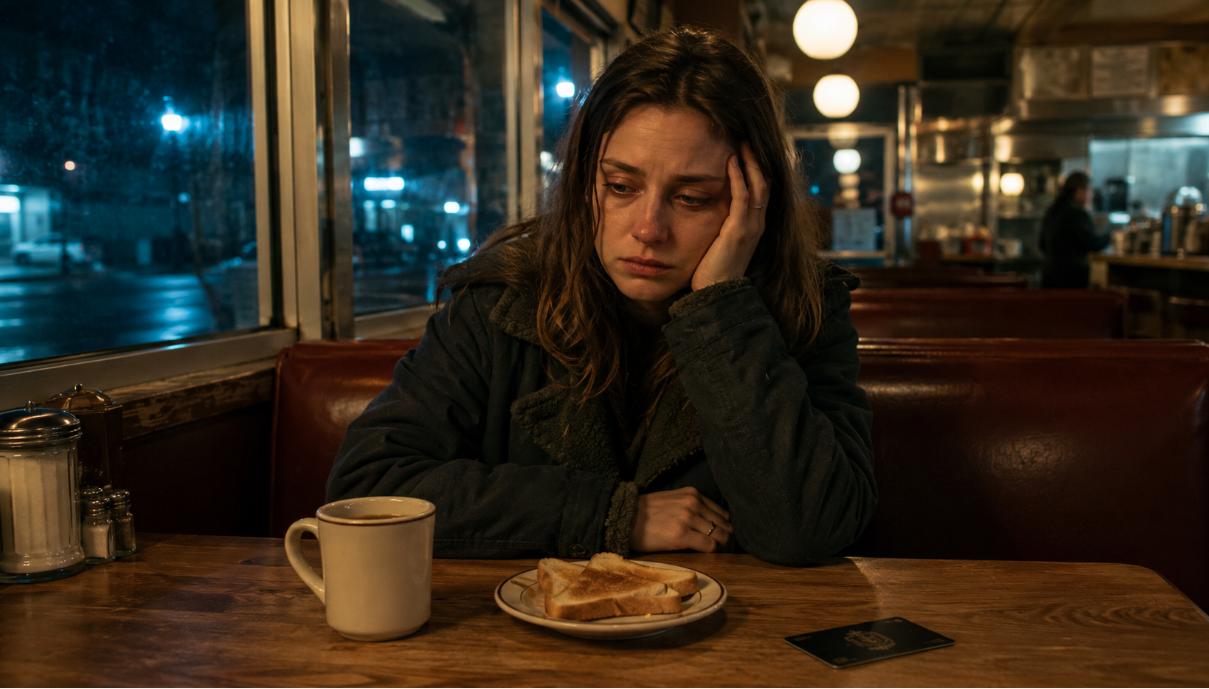
The only place open nearby was a twenty-four-hour diner off the highway.
I parked under the flickering neon sign and walked in wearing wet socks, a thin sweater, and the kind of face that makes waitresses ask fewer questions.
A woman named Connie brought me coffee.
“Need food?” she asked gently.
I looked at the menu.
The cheapest meal was still too much.
“Just coffee, please.”
She studied me for half a second.
Then she said, “Toast comes with coffee tonight.”
I almost cried over that toast.
I sat in the back booth, warming my hands around the mug.
The black card rested on the table beneath my palm.
After a while, Connie noticed it.
She glanced down, then away quickly.
“You have one of those?” she asked under her breath.
I looked up.
“You know what this is?”
“Not exactly,” she said. “But I’ve seen one once. Old trust bank downtown. Cumberland National.”
My heart began to beat faster.
“Is it still around?”
She nodded.
“Opens at eight.”
I looked out the window.
Snow drifted past the glass.
Eight hours.
I had to survive eight hours.
I sat in that booth as long as Connie let me. She refilled my coffee twice and never charged me for the toast.
When my phone finally died, I went back to my car.
I curled up in the back seat with the thin trash bag under my head and my arms wrapped around myself. The cold crept in from everywhere. My toes burned, then went numb.
For the first time all night, I whispered.
“Grandpa, I hope you knew what you were doing.”
I held the black card against my chest like a small piece of proof that somebody, once, had wanted me safe.
At eight the next morning, I stood in front of Cumberland National Trust.
The building looked too grand for me.
Marble steps.
Brass handles.
Tall windows glowing warm against the gray morning.
I almost turned around.
Then I heard my mother’s voice again.
You can’t do anything on your own.
I walked inside.
A receptionist in a navy blazer looked up.
“Good morning. How can we help you?”
“I need to check an old account,” I said. “I have a card.”
I placed the black card on the counter.
Her polite smile changed.
Not disappeared.
Changed.
She picked up the card carefully, like it was something fragile.
“One moment, please.”
She disappeared through a door.
I sat in a leather chair near the window, trying not to look like someone who had slept in a car.
Five minutes passed.
Then ten.
Finally, a man in his fifties stepped into the lobby.
Tall, silver at the temples, charcoal suit.
“Miss Carrington?”
I stood.
“Yes.”
“I’m Elliot Hayes, branch manager. Would you come with me?”
His office smelled like cedar and paper.
Before sitting, he asked for my ID. I handed it over with fingers that still felt stiff from the cold.
He typed for a long moment.
Then he looked at the screen.
Something in his expression softened.
“Miss Carrington,” he said, “the card you brought is tied to a legacy trust established by your grandfather, Henry Carrington.”
My mouth went dry.
“It’s real?”
“Yes.”
“I thought maybe it was expired or closed.”
“No. It is active.”
The word active made my chest ache.
Grandpa had not forgotten me.
Elliot turned the monitor slightly, not enough for me to read everything.
“This trust was designed to remain inaccessible until you presented the physical card in person.”
“Why?”
“Your grandfather’s instructions were very specific.”
He paused.
“Before we continue, may I ask why you came today?”
I looked down at my hands.
There was no graceful way to say it.
“My parents threw me out last night. On Christmas Eve.”
Elliot went still.
“They gave me a trash bag full of junk and locked the door. I slept in my car.”
He did not ask if I had misunderstood.
He did not say, “I’m sure they didn’t mean it.”
He only said, “I’m sorry.”
Two words.
No performance.
No pity.
Just decency.
I almost lost control right there.
Instead, I nodded.
“I don’t know what’s in the account. I just remembered my grandfather said to use the card if I had nowhere else to go.”
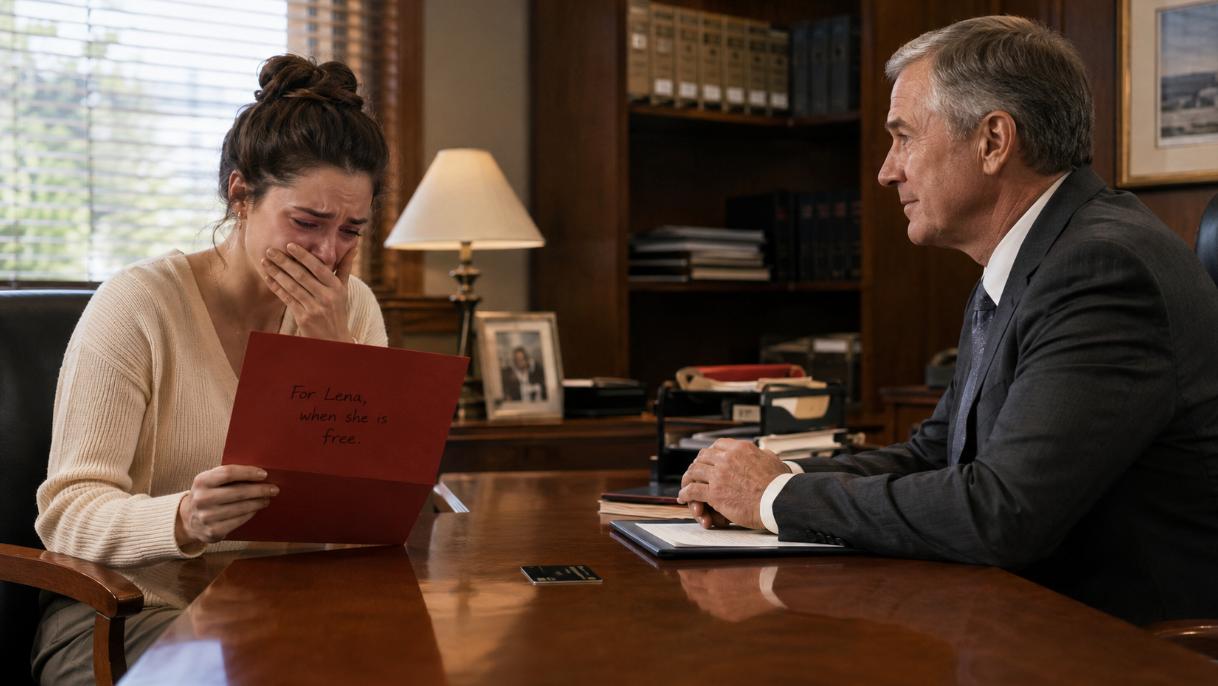
Elliot opened a locked drawer and removed a red folder.
On the front, in my grandfather’s handwriting, were six words:
For Lena, when she is free.
My throat closed.
Elliot placed it on the desk between us.
“Your grandfather left this for you.”
I did not touch it immediately.
“What’s in it?”
“Answers,” he said. “And a trust large enough to give you options.”
Options.
Not riches.
Not revenge.
Options.
That word alone felt impossible.
Finally, I opened the folder.
The first page was a letter.
My Lena,
If you are reading this, then the day I feared has come.
They have made you feel alone.
Please understand: you were never alone. I tried for years to reach you. If my letters never arrived, it is because someone stopped them.
You were not forgotten.
You were not unwanted.
You were the best part of this family.
I left this trust because I knew your parents valued control more than love. One day, I feared they would turn that control on you.
If that day has come, do not go back to them.
Not for guilt.
Not for fear.
Not because they call cruelty “family.”
Use what I left to build a life that belongs to you.
You are my legacy.
Grandpa Henry
I pressed the page to my chest and cried so hard I could not breathe.
Not because of the money.
I did not even know the amount yet.
I cried because for years, I had believed he stopped loving me.
My parents told me he was confused.
Then distant.
Then embarrassed by his illness.
Then too tired to see visitors.
They said he did not ask for me.
They lied.
The folder held copies of letters he had written.
Dozens.
My sweet girl, I miss you.
I asked again if you could visit. They said you were too busy.
Please remember I love you more than they will allow me to say.
I never got them.
Not one.
Elliot sat quietly while I read.
The next section was harder.
Medical evaluations proving Grandpa had been fully competent when my parents claimed he was declining.
Bank notes documenting their attempts to gain access to his accounts.
A rejected power of attorney request.
Emails between my parents, printed and saved.
If Lena keeps seeing him, he may leave her something.
That sentence made my stomach turn.
They had not kept me from Grandpa because he was confused.
They kept me from him because he loved me.
And because they feared what that love might cost them.
I turned the page.
There were trust documents.
Property records.
Investment summaries.
The total was not a fantasy number from a movie.
It was more money than I had ever imagined having access to.
Enough to buy a home.
Enough to go back to school.
Enough to pay for security, therapy, legal help, and time.
Enough to make sure I never had to stand barefoot in snow because someone else controlled the door.
My grandfather had left me approximately $4.8 million in protected assets.
My hand flew to my mouth.
“That can’t be right.”
“It is,” Elliot said.
“The house?”
“There is no mansion,” he said gently. “Your grandfather sold much of his larger portfolio before he passed. He placed the remaining funds into a protected trust for you. There is also a small rental property and a farmland parcel outside the county.”
I almost laughed through my tears.
No mansion.
No empire.
Just freedom.
That was enough.
More than enough.
“Do my parents know?”
“No.”
“But they might suspect?”
Elliot’s face grew serious.
“Your grandfather believed they would eventually try to challenge the trust if they discovered it. That is why he retained legal counsel for you.”
He slid a business card across the desk.
Vivian Rhodes
Estate Protection & Family Asset Disputes
“Call her today,” he said. “Do not speak to your parents first.”
As if summoned by his warning, my phone buzzed.
It had charged enough from a cable Elliot’s assistant gave me.
A text from my mother.
Where are you?
Then another.
Your father says you’re being dramatic.
Then a third, one minute later.
If you went to that bank, you need to come home right now.
My blood went cold.
I showed Elliot the screen.
He did not look surprised.
“Do not answer.”
I did not.
That afternoon, I met Vivian Rhodes.
Her office was not flashy. Just clean lines, organized files, and a woman in her early sixties who looked like she could cut through stone with a sentence.
She read the folder.
She read my mother’s texts.
She listened as I described Christmas Eve.
When I finished, she said, “Your grandfather prepared well.”
“Prepared for what?”
“For the possibility that your parents would try to control you the way they tried to control him.”
I swallowed.
“They’ll say I’m unstable.”
“Yes.”
“They’ll say Grandpa was confused.”
“They already tried that once. We have the medical records.”
“They’ll say I manipulated him.”
Vivian looked at me steadily.
“Then we will show the court letters they never gave you.”
I looked down at my hands.
“What should I do tonight?”
“First, you are not sleeping in your car again. We’ll arrange a hotel under a private reservation. Second, we notify the bank to lock down the trust. Third, you do not communicate with your parents except through counsel.”
She paused.
“Lena, listen carefully. People who use guilt to control you often panic when guilt stops working.”
That night, I slept in a real bed.
The hotel room was small, plain, and warm.
I took a shower so hot it made my skin red.
Then I sat on the floor in a clean towel and cried again, this time for the little girl in Grandpa’s garden who had promised she would never need the black card.
I had needed it.
And he had known.
By morning, my phone had thirty-two missed calls.
Most were from my mother.
Five from my father.
Three from Michael.
The voicemails came in stages.
First irritation.
“Lena, stop this nonsense and come home.”
Then concern for appearance.
“The neighbors are asking questions.”
Then anger.
“If you think you can embarrass this family and get away with it, you’re mistaken.”
Then something worse.
My father’s voice, low and cold.
“You don’t know what you’re getting into. That money belongs to this family.”
There it was.
Not, Are you safe?
Not, We’re sorry.
Not, Come home, we made a terrible mistake.
That money belongs to this family.
I forwarded everything to Vivian.
She replied within two minutes.
Good. Keep everything. They are helping us.
The next week moved quickly.
Vivian filed notices with the bank and probate court.
My parents filed an emergency petition claiming I was emotionally unstable and possibly being manipulated by “outside parties.”
They said I had always been dependent.
That I was impulsive.
That I had disappeared on Christmas Eve after a minor family disagreement.
That I was not capable of managing assets of this size.
When Vivian showed me the petition, I felt sick.
“They’re using my whole childhood against me,” I whispered.
Vivian shook her head.
“No. They’re using the story they trained you to believe. That is different.”
The hearing was scheduled for the following Thursday.
I did not sleep the night before.
At court, my parents looked almost respectable.
My mother wore pearls and a soft gray coat.
My father wore a navy suit.
Michael sat behind them, scrolling on his phone as if boredom might protect him from consequences.
My mother cried when their attorney spoke.
“Our clients are devastated,” the attorney said. “Their daughter has been unstable for years. They fear she is being influenced by unknown financial actors.”
Vivian stood.
“Your Honor, we have evidence that the petitioners attempted a similar claim against Henry Carrington nine years ago, after he refused to give them access to his assets.”
My father stiffened.
The judge looked over his glasses.
“Proceed.”
Vivian presented the medical evaluations.
The rejected power of attorney.
The bank records.
Then she presented the letters.
Letters addressed to me.
Letters my parents had intercepted.
My mother’s face went pale as Vivian read one aloud.
My sweet girl, I asked again if you could visit. They said you were too busy. If that is true, I understand. If it is not, then I hope one day you learn I never stopped asking for you.
I covered my mouth.
The courtroom blurred.
Vivian then submitted the emails.
If Lena keeps seeing him, he may leave her something.
The room went silent.
My father leaned toward his attorney and whispered sharply.
The judge noticed.
Finally, Vivian played a short recorded statement Grandpa had made three months before he died.
His face appeared on the screen.
Older than I remembered.
Thinner.
But clear-eyed.
“My name is Henry Carrington,” he said. “I am making this statement voluntarily. I am of sound mind. My estate decisions are mine alone. I am leaving my protected trust to my granddaughter Lena because she was the only one who loved me without asking what she would gain. If Richard and Elaine challenge this, let this recording serve as my answer. They are not protecting her. They are trying to reach what I refused to give them.”
My mother began to cry harder.
This time, I did not look away.
The judge denied their petition that day.
He also warned my parents against further harassment or contact outside legal channels.
Outside the courtroom, my mother tried to approach me.
Vivian stepped between us.
“All communication goes through my office.”
My mother looked past her, straight at me.
“Lena, this is not who you are.”
For the first time in my life, I answered without shrinking.
“No, Mom. This is who I am when you don’t get to define me.”
Her face changed.
Not with regret.
With rage.
That told me everything.
The legal process took months.
My parents tried to challenge the trust.
They failed.
They tried to claim Grandpa had been manipulated.
The medical records destroyed that argument.
They tried to claim I had abandoned the family.
Vivian submitted the Christmas Eve voicemails and a neighbor’s statement confirming I had been locked outside without proper belongings.
Mrs. Warren, the neighbor who had closed her curtains that night, eventually gave a statement.
She cried when she did.
“I should have helped you,” she told me afterward.
“Yes,” I said.
She flinched.
I did not say it to be cruel.
I said it because I was done cushioning other people from the truth of what they had done.
In the end, the trust stood.
My parents received nothing.
Not because I took it from them.
Because Grandpa had made sure they never had it.
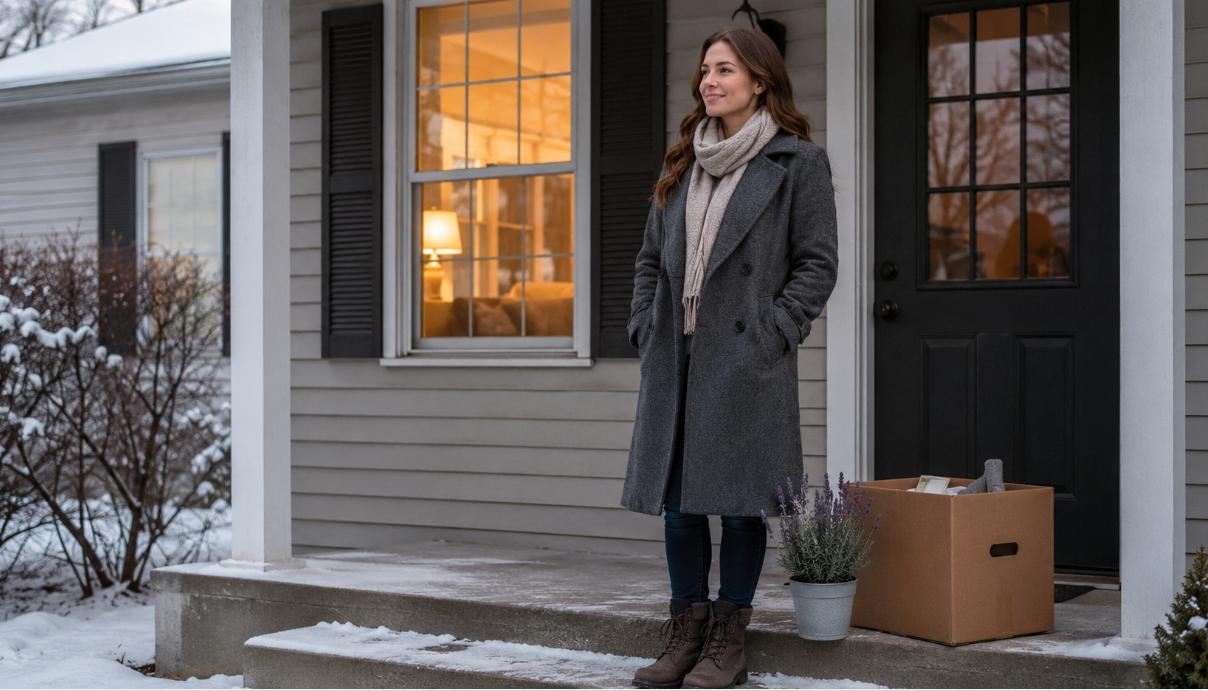
I used part of the money to buy a small house on a quiet street about forty minutes away.
Not a mansion.
Not a statement.
A home.
Two bedrooms.
A kitchen with yellow morning light.
A porch with enough space for a chair and a pot of lavender.
I bought warm boots.
A winter coat that fit.
A bed with a frame, because for years I had slept on whatever my parents decided I deserved.
I started therapy.
I changed my number.
I went back to school part-time for nonprofit administration, something I had wanted years before my mother convinced me I was “not leadership material.”
And every week, I read one of Grandpa’s letters.
Slowly.
One at a time.
I did not want to rush through the love I had been denied.
Six months after the hearing, my mother sent a letter through Vivian’s office.
It was not an apology.
Not really.
It said they had acted “out of concern.”
It said they had been “hurt by my choices.”
It said family should not be divided over money.
I read it once.
Then I placed it in a folder labeled: Things That Are Not Mine to Carry.
A year after that Christmas Eve, I drove to Grandpa’s grave.
The sky was clear. The ground was frozen. I wore my new boots and carried a small wreath with pine, red berries, and a black ribbon.
I stood there for a long time.
“I used the card,” I said.
The wind moved through the bare trees.
“I’m sorry I waited so long.”
Of course, he did not answer.
But in my mind, I could hear him in the garden, peppermint tea in his hand.
You came when you were ready.
I knelt and brushed snow from the top of his stone.
“They told me I was unwanted,” I whispered. “You knew I wasn’t.”
I stayed until my fingers went cold.
Then I went home.
My home.
That night, I made soup and sat by the window while Christmas lights glowed across the street.
For most of my life, I thought family was the people who could lock you out and still expect you to knock again.
I was wrong.
Family is not a door someone else controls.
It is not guilt.
It is not obedience.
It is not a trash bag on a porch or a voice telling you that you cannot survive alone.
Sometimes family is a grandfather who prepares a way out years before you understand you need one.
Sometimes freedom is a black card in your pocket.
Sometimes the night you are thrown away becomes the night you finally stop belonging to the people who never knew how to love you.
My parents thought they had left me with nothing.
But they were wrong.
They left me with the one thing they had spent years trying to destroy.
A reason to find out who I was without them.