In the fall of 1984, Nancy Kulp was fighting one of the hardest battles of her life.
She was no longer Miss Jane Hathaway, the prim, efficient secretary millions of Americans remembered from The Beverly Hillbillies.
She was now a Democratic candidate for Congress in Pennsylvania.
Her opponent, Republican incumbent Bud Shuster, was experienced, well-funded and heavily favored.
Nancy already knew she faced an uphill fight.
Then a familiar voice came over the radio.
Buddy Ebsen.
Jed Clampett himself.
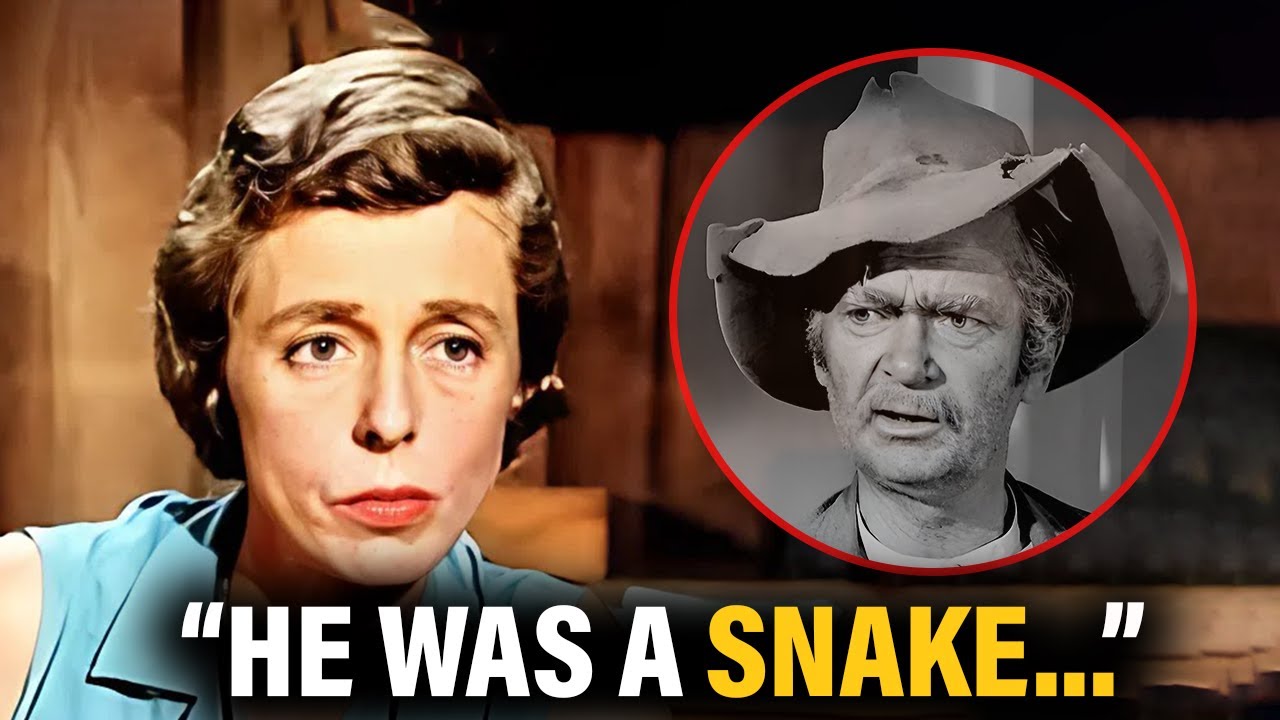
The man who had spent nine television seasons beside her on one of the most popular sitcoms America had ever seen was appearing in an advertisement for her opponent.
Buddy reminded listeners that he and Nancy had often talked politics while working together.
He described himself as conservative and Nancy as liberal.
Then came the line that made the moment unforgettable:
“Nancy, I love ya dearly but you’re too liberal for me.”
He was backing Bud Shuster.
Nancy was furious.
“I think it’s rotten,” she told a reporter.
For anyone who remembered Jed Clampett and Miss Jane on television, the contrast was startling.
On screen, they had been part of the same beloved comic world.
Off screen, they had never seen politics the same way.
Now Buddy had taken that disagreement out of the studio and into a real congressional race.
But the truth is more complicated than the later stories claiming Nancy Kulp “absolutely hated” Buddy Ebsen for years.
There is evidence they clashed.
There is evidence Nancy found Buddy difficult.
And there is no question that his decision in 1984 hurt her personally.
But there is little reliable evidence for the idea that The Beverly Hillbillies set had secretly been a nine-year battlefield of constant hatred.
The documented story is better.
It is about two actors who could create warmth together on television while seeing America very differently in real life—and the moment those differences finally became impossible to keep off camera.
1. Before Miss Jane, Nancy Kulp Had Already Lived Several Lives
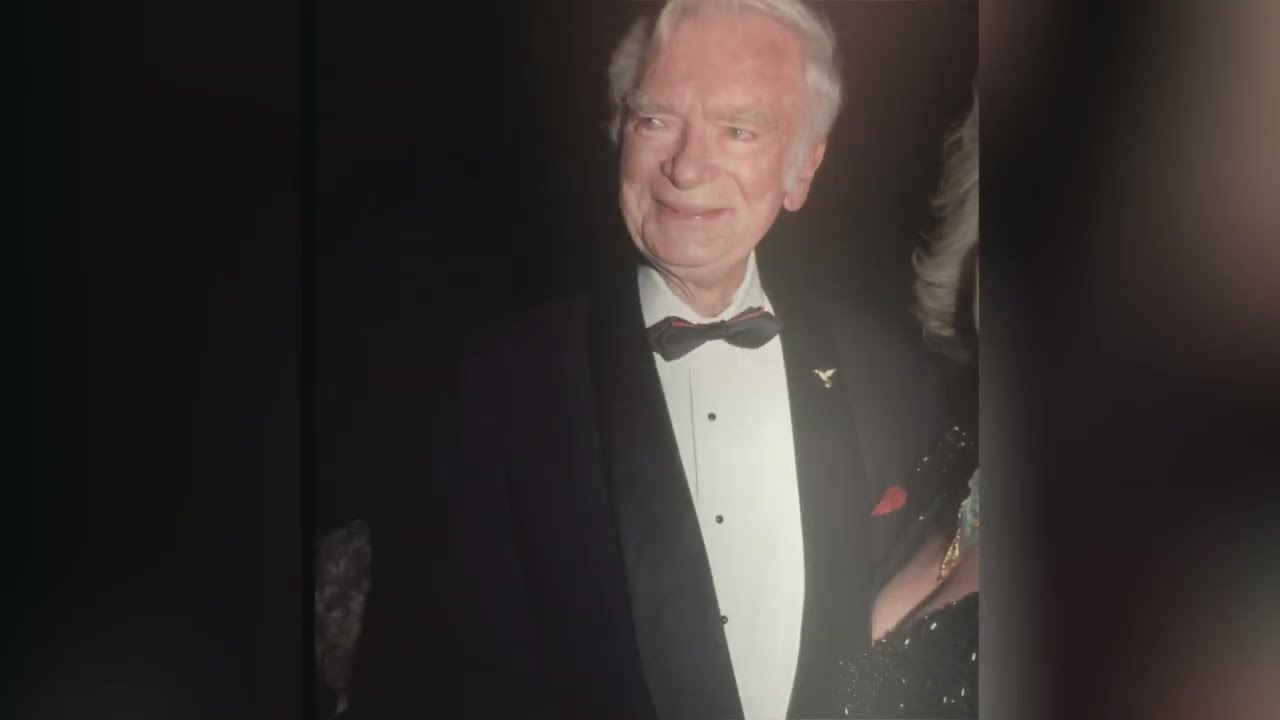
Nancy Jane Kulp was born on August 28, 1921, in Harrisburg, Pennsylvania.
Long before anyone associated her with Mr. Drysdale’s bank or the Clampett fortune, Nancy imagined a very different future for herself.
Journalism.
She studied at what became Florida State University and earned a degree in journalism.
Then she worked as a writer.
Years later, Nancy proudly remembered interviewing and profiling famous people including Clark Gable, Myrna Loy, Errol Flynn and the Duke and Duchess of Windsor.
Acting was not her first ambition.
“My first love has always been journalism,” she once said.
That matters because the woman audiences later knew as the socially awkward Miss Jane was, in real life, intellectually curious, politically engaged and far more adventurous than the character suggested.
And before Hollywood came calling, Nancy also served her country.
## 2. Nancy Served During World War II
During World War II, Nancy joined the United States Naval Reserve.
She served from 1944 to 1946 and attained the rank of lieutenant junior grade.
That part of her biography can surprise viewers who remember only Jane Hathaway’s severe suits, sensible shoes and comic frustration with Jethro Bodine.
But Nancy’s life was full of those contrasts.
Journalist.
Naval officer.
Public-relations worker.
Actress.
Union representative.
Political candidate.
Teacher.
Miss Jane was only one chapter.
It simply became the chapter America remembered best.
## 3. Hollywood Wasn’t Originally the Plan
After the war, Nancy moved into publicity work in Hollywood.
She worked in MGM’s publicity department and gradually found herself closer to performers and productions.
Then people around her began suggesting that she try acting herself.
Nancy did not look like the conventional female stars Hollywood was manufacturing at the time.
That turned out to be an advantage.
There were plenty of glamorous leading women.
There were fewer performers who could walk into a scene and instantly establish a very specific comic personality.
Nancy could.
She began collecting small roles.
And she kept working.
4. She Appeared Everywhere Before America Learned Her Name
Nancy’s early career became a catalog of familiar films and television programs.
She appeared in movies including Shane, Sabrina, A Star Is Born and The Three Faces of Eve.
She turned up on television.
She became especially memorable on The Bob Cummings Show as Pamela Livingstone, an enthusiastic bird-watcher.
Character acting suited her.
Nancy could make a few lines memorable.
She did not need to dominate the screen.
She needed a sharply defined character and enough room to make it her own.
Then, in 1962, came the role that changed everything.
Jane Hathaway.
## 5. “The Beverly Hillbillies” Became a Television Phenomenon
The premise sounded ridiculous.
Jed Clampett, a poor mountain man, accidentally discovers oil on his land.
Suddenly wealthy, he moves his family to Beverly Hills.
Culture clash follows.
Critics were not always kind to The Beverly Hillbillies.
Audiences did not care.
The show premiered on CBS in 1962 and became a massive ratings success.
During its first season it rose to No. 1.
It remained one of television’s dominant programs for years.
Buddy Ebsen played Jed Clampett.
Irene Ryan was Granny.
Donna Douglas became Elly May.
Max Baer Jr. played Jethro.
Raymond Bailey played banker Milburn Drysdale.
And Nancy Kulp became Drysdale’s extraordinarily capable secretary, Jane Hathaway.
For nine seasons, millions of Americans knew those people almost as members of an extended television family.
## 6. Miss Jane Wasn’t Supposed to Be Glamorous
That was part of the joke.
Jane Hathaway was educated.
Organized.
Competent.
She usually understood situations long before the people around her did.
But the scripts often emphasized her lack of conventional glamour.
Her severe clothes.
Her seriousness.
Her romantic hopes.
Her frequently frustrated fascination with Jethro.
Nancy could make Jane ridiculous without making her stupid.
That was crucial.
Miss Jane was often one of the smartest people in the room.
She simply existed in a world where intelligence offered little protection from absurdity.
Nancy’s work earned her an Emmy nomination in 1967.
She had found the role that would follow her for the rest of her life.
## 7. Buddy Ebsen Had Taken a Much Longer Road to Jed Clampett
Buddy Ebsen was already a veteran performer when The Beverly Hillbillies began.
Born in 1908, he first became known as a dancer.
He and his sister Vilma performed together onstage and eventually made their way to Hollywood.
Buddy danced in MGM musicals.
He worked with Shirley Temple.
He appeared with Judy Garland.
And then came one of the strangest near-misses in Hollywood history.
Buddy was originally involved in The Wizard of Oz.
After switching roles with Ray Bolger, he became the Tin Man.
Then the makeup nearly killed him.
## 8. Buddy Almost Died Before “The Wizard of Oz” Was Finished
The Tin Man makeup used on Buddy contained aluminum powder.
After repeated exposure, he became dangerously ill.
He developed serious breathing problems and was hospitalized.
Production continued without him.
Jack Haley replaced him as the Tin Man.
For decades, Buddy carried the strange distinction of having almost appeared in one of the most famous movies ever made.
But his career survived.
World War II interrupted it again.
Buddy served in the military and later returned to entertainment.
Then television gave him the role that would define him.
Jed Clampett.
## 9. Jed Was Gentle, but Buddy Was Never Politically Passive
Jed Clampett was one of television’s most easygoing fathers.
He rarely shouted.
He preferred common sense.
He treated people decently.
Even when surrounded by Beverly Hills absurdity, Jed remained grounded.
That public image followed Buddy.
But the actor behind Jed had strong political opinions.
By the later years of his life, Buddy was known as a conservative.
Nancy Kulp was considerably more liberal.
Those differences did not suddenly appear in 1984.
They had existed during The Beverly Hillbillies.
And according to people around the show, the two sometimes argued about them.
## 10. Donna Douglas Remembered the Political Arguments
Donna Douglas, who played Elly May, later recalled that Nancy and Buddy had very different political views.
The disagreements could become heated.
They sometimes went back and forth over issues for extended periods.
That gives us legitimate reason to say political tension existed.
But there is an important difference between:
“They argued about politics”
and:
“They secretly hated each other every day for nine years.”
The stronger claim has been repeated often in later internet retellings.
The contemporary evidence is much thinner.
What we know with greater confidence is that Nancy herself later said she found Buddy difficult to work with.
And what happened in 1984 convinced her he had crossed a line.
## 11. The Cameras Could Still Make Them Look Like One Happy World
This is where acting becomes interesting.
Viewers watching The Beverly Hillbillies did not see a political argument.
They saw Jed.
Miss Jane.
Drysdale.
Granny.
Elly May.
Jethro.
Nancy and Buddy were professionals.
Whatever they thought about elections, government or national policy did not need to enter a scene.
That is why their later conflict remains so surprising.
Television preserves relationships inside a fictional reality.
Real people keep changing after the episode ends.
## 12. “The Beverly Hillbillies” Ended in 1971
After nine seasons and more than 200 episodes, CBS canceled The Beverly Hillbillies in 1971.
The cancellation came during the network’s broader move away from rural-themed programming.
For Buddy, another major television chapter was still ahead.
Barnaby Jones debuted in 1973.
Buddy transformed himself from Jed Clampett into a widowed private investigator and found another long-running success.
Nancy’s career continued too, but she never found another character with Miss Jane’s cultural reach.
Eventually, she began thinking about a completely different kind of public service.
Politics.
## 13. Nancy Went Home to Pennsylvania
Nancy had roots in Pennsylvania.
By the early 1980s, she began involving herself more deeply in public affairs there.
In 1984, she decided to run for the U.S. House of Representatives.
She sought the Democratic nomination for Pennsylvania’s 9th Congressional District.
Nancy was 63 by Election Day.
This was not a celebrity joke campaign.
She took it seriously.
She spent time and money.
She talked about issues.
She wanted voters to see Nancy Kulp rather than simply Miss Jane Hathaway.
But she had chosen an extremely difficult race.
## 14. Her Opponent Was Not an Easy Man to Defeat
Republican Bud Shuster had represented the district since 1973.
He was an established incumbent.
The district leaned strongly Republican.
Nancy had television fame.
Shuster had political organization, experience and an electorate much friendlier to his party.
Even without Buddy Ebsen, Nancy was facing a very steep climb.
That point becomes important because later retellings sometimes make it sound as though one radio advertisement destroyed a campaign Nancy otherwise would have won.
The election numbers do not support that conclusion.
Buddy’s intervention mattered emotionally.
It was memorable.
But it should not be turned into the sole reason Nancy lost.
## 15. Then Buddy Ebsen Heard That Nancy Was Running
Buddy remained politically conservative.
When he learned his former co-star was trying to enter Congress as a Democrat, he did not remain neutral.
He contacted Bud Shuster’s side.
According to Shuster, Buddy even offered to campaign personally.
Shuster declined that offer.
Buddy found another way to help.
He recorded a radio advertisement.
He also made a $100 contribution to Shuster’s campaign.
Suddenly, the old Beverly Hillbillies relationship had entered a Pennsylvania congressional election.
## 16. Buddy Used Their Shared History in the Ad
That is what made it personal.
Buddy did not speak simply as a generic Republican celebrity.
He invoked the years he and Nancy had spent together.
He told listeners that they had discussed politics on the set.
Buddy described himself as conservative.
Nancy as liberal.
Then came the line people still remember:
“Nancy, I love ya dearly but you’re too liberal for me.”
And Buddy said he was going with Bud Shuster.
The warmth of “I love ya dearly” made the rejection almost more striking.
This was not a man claiming Nancy was evil.
He was saying something more complicated:
I know her.
I like her.
And I do not want you to elect her.
## 17. Nancy’s Reaction Was Immediate
Nancy was not amused.
When UPI interviewed her on November 2, 1984, she said:
“I think it’s rotten.”
She could not understand why, after the effort and money she had invested in the campaign, Buddy would voluntarily enter the race against her.
Nancy also said she did not believe the commercial had damaged her.
In fact, she suggested voters might be repelled by what Buddy had done.
That detail matters.
Nancy herself did not initially claim:
Buddy Ebsen destroyed my campaign.
She objected to the act.
To her, a former colleague had crossed a personal boundary.
## 18. The Difference Between Political Right and Personal Loyalty
From Buddy’s perspective, there was another argument.
Nancy had chosen to run for public office.
Once she did that, she was asking voters to judge her political positions.
Buddy disagreed with those positions.
Why should a former professional relationship prevent him from saying so?
That is the question at the heart of the story.
Was Buddy simply participating in democracy?
Or should nearly a decade of working together have made him stay out of the race?
People can reasonably answer that differently.
Nancy clearly believed he should have stayed out.
Buddy clearly believed politics mattered enough to get involved.
Neither interpretation requires inventing a secret conspiracy.
## 19. Buddy Was Open About Being Conservative
Buddy did not hide his political identity.
In another 1984 interview about Hollywood and politics, he acknowledged that his views were to the right of much of the entertainment industry.
But he also made an interesting point.
Some of his closest friends, he said, were liberal Democrats.
And he specifically included Nancy Kulp among them—even after making the campaign contribution to her opponent.
That complicates the idea that Buddy simply hated Nancy.
He disagreed with her.
Strongly.
Strongly enough to go on the radio against her.
But his own language did not describe her as an enemy.
## 20. Nancy Remembered the Incident More Bitterly
For Nancy, the emotional equation was clearly different.
Later accounts quote her as saying Buddy was not the kindly Jed Clampett audiences imagined.
She also said the two had not gotten along well because she found him difficult to work with.
But the most revealing part of her complaint was simpler.
She said she would never have done the same thing to him.
That sentence tells us more than “Nancy hated Buddy.”
Nancy saw the campaign intervention as a question of loyalty.
Buddy saw it as a question of political conviction.
They were judging the same act by completely different standards.
## 21. Election Night Settled the Political Question
On November 6, 1984, voters made their choice.
Bud Shuster received 118,437 votes.
Nancy Kulp received 59,549.
Shuster won with 66.54 percent.
Nancy received 33.46 percent.
It was not close.
The margin makes one fact especially important:
There is no good basis for saying Buddy Ebsen’s radio ad single-handedly cost Nancy Kulp a seat in Congress.
She was challenging a strong incumbent in difficult territory during a major Republican year.
Ronald Reagan was simultaneously winning Pennsylvania and carrying 49 states nationally.
Nancy’s defeat had a much larger political context.
Buddy’s advertisement was dramatic.
It was not magic.
## 22. But Losing an Election and Feeling Betrayed Are Two Different Things
The numbers could tell Nancy she had been badly beaten.
They could not determine how she felt about Buddy.
Even if his advertisement changed relatively few votes, the fact that he made it still mattered personally.
That distinction is essential.
Political impact:
uncertain.
Emotional impact:
obvious.
For Nancy, this was a man she had worked beside for years voluntarily helping her opponent.
For fans, it was as if Jed Clampett had suddenly entered a real election to tell Pennsylvania not to vote for Miss Jane.
The symbolism was irresistible.
## 23. Nancy Did Not Build a Second Career as a Politician
After the defeat, Nancy did not keep running for office.
Instead, another part of her earlier life resurfaced.
Education.
She became associated with Juniata College in Pennsylvania, working as an artist-in-residence and teaching acting.
That path suited the many different versions of Nancy Kulp.
The journalist.
The performer.
The woman interested in politics.
The teacher.
Students were encountering someone who carried decades of Hollywood history but was capable of talking about much more than Beverly Hillbillies trivia.
## 24. Nancy Had Also Served the Acting Profession Off Camera
Politics was not her first experience with representation.
In 1982, Nancy had been elected to the Screen Actors Guild’s Board of Directors.
She received more votes than any other candidate in that board election.
That fact deserves more attention than it usually gets.
Miss Jane Hathaway had been a supporting character.
Nancy Kulp did not think of herself as a supporting citizen.
She was willing to enter organizations.
Vote.
Represent colleagues.
Run for office.
Take positions.
The woman behind Miss Jane was never politically invisible.
## 25. Buddy’s Life After Jed Went in a Different Direction
Buddy Ebsen had one of television’s most durable careers.
After The Beverly Hillbillies, Barnaby Jones gave him another identity.
The detective series ran from 1973 to 1980.
That alone would have been a major second act.
Buddy kept working.
He sailed.
He wrote.
He eventually published an autobiography.
And he lived long enough to see generations discover Jed Clampett through reruns.
The man who had almost disappeared from The Wizard of Oz became one of television’s most familiar faces.
## 26. Nancy Did Not Get the Same Long Old Age
In the late 1980s, Nancy became seriously ill.
She was diagnosed with cancer.
She eventually returned to California.
Nancy Kulp died on February 3, 1991, in Palm Desert.
She was 69.
Obituaries naturally led with Miss Jane Hathaway.
That was inevitable.
But they also remembered the other lives.
Journalist.
Navy veteran.
Congressional candidate.
And the strange political chapter involving Buddy Ebsen.
The 1984 radio advertisement had become part of her public biography.
## 27. Buddy Lived Another 12 Years After Nancy’s Death
Buddy continued into his nineties.
He died in July 2003 at 95.
By then, The Beverly Hillbillies belonged firmly to American television history.
Most of the major cast members were gone.
Irene Ryan.
Raymond Bailey.
Nancy Kulp.
Buddy Ebsen.
But reruns had preserved all of them.
There was Jed, still calm.
There was Miss Jane, still trying to manage Mr. Drysdale.
None of the episodes knew anything about a 1984 congressional race.
That belongs to the actors, not the characters.
## 28. The Political Divide Was Real—But So Was Their Professionalism
This is where the exaggerated feud stories miss something important.
Nancy and Buddy did not need to adore one another to do excellent work together.
They also did not need to share a political worldview.
For nine years they contributed to one of television’s biggest hits.
Millions of viewers never suspected political tension because the actors did not make viewers responsible for it.
That is professionalism.
Whatever arguments occurred when the cameras stopped, the characters remained intact.
Jed did not suddenly become a Republican spokesman.
Miss Jane did not become a Democratic activist.
The Beverly Hillbillies remained a comedy.
## 29. Their Conflict Also Says Something About an Earlier America
It can be tempting to imagine political polarization as something completely new.
Nancy and Buddy are evidence that it is not.
The 1960s and early 1970s were hardly politically peaceful.
Vietnam.
Civil rights.
Protests.
Presidential elections.
Changing social values.
A Hollywood set did not exist outside those arguments.
Nancy and Buddy could work on the same comedy and come away with very different ideas about government and society.
By 1984, those differences had followed them into another era.
Only this time, there was an election ballot involved.
## 30. Buddy’s Words Were More Complicated Than Hatred
This is perhaps the most important correction to the modern version of the story.
Buddy did not record an advertisement saying:
Nancy Kulp is a terrible person.
He didn’t claim she lacked character.
His central criticism was ideological.
She was too liberal for him and, in his view, for the district.
He even began the rejection with affection:
“I love ya dearly…”
That line makes the story harder to reduce to hatred.
People can like each other and still strongly oppose each other’s politics.
They can respect professional talent and disagree about government.
They can also hurt one another deeply while believing they are acting on principle.
Human relationships are uncomfortable that way.
## 31. Nancy’s Anger Was Also More Complicated Than Hatred
Nancy’s response should not be simplified either.
She was angry.
She felt Buddy should not have interfered.
She later described him as difficult.
But what seems to have wounded her most was not discovering that Buddy was conservative.
She had known that for years.
The hurt came from his action.
He used his celebrity.
Their shared television history.
And his political beliefs.
Against her campaign.
To Nancy, that was different from arguing politics between takes.
It made a private difference public.
## 32. “Jed Clampett Against Miss Jane” Was Too Good a Story for the Press to Resist
Newspapers immediately understood the appeal.
This was not merely:
Republican actor endorses Republican congressman.
It was:
Jed Clampett campaigns against Miss Jane Hathaway.
Television characters had invaded real politics.
The press framed it around The Beverly Hillbillies because those names meant something to readers.
Four decades later, that remains true.
And it explains why the story keeps resurfacing.
The central event is real enough to survive without embellishment.
## 33. What Did NOT Happen
There is no need to invent a newly discovered 2026 recording.
The advertisement was publicly reported in 1984.
There is no strong evidence that one radio spot destroyed Nancy’s campaign.
The official vote shows she lost by a huge margin in a difficult district.
There is no need to invent anonymous crew members describing nine years of daily hatred.
There were political arguments.
Nancy later said she found Buddy difficult.
That is enough.
There is also no evidence that modern streaming services suddenly experienced a giant Beverly Hillbillies boom because the “secret feud” was exposed.
The real history does not need those additions.
## 34. In Fact, the Truth Creates a Better Question
Imagine being Nancy Kulp.
You spend nine years working beside someone.
You disagree.
Sometimes sharply.
Years later, you make a serious attempt to enter public life.
Then that former colleague voluntarily joins your opponent’s campaign.
Would you feel betrayed?
Probably many people would.
Now imagine being Buddy Ebsen.
A former colleague with political views you strongly oppose is asking voters to send her to Congress.
Do years of professional history require you to remain silent?
Some people would say no.
That is why this story still generates arguments.
There is no perfectly comfortable answer.
## 35. Nancy Kulp Was Much More Than Buddy Ebsen’s Political Opponent
The campaign should not swallow the rest of her life.
Nancy had crossed remarkable distances before 1984.
A Pennsylvania girl became a journalist.
A journalist became a Navy officer.
A Navy veteran entered Hollywood publicity.
A publicity worker became an actress.
A character actress became one of television’s most recognizable supporting performers.
Then a television star served on the Screen Actors Guild board.
Then she ran for Congress.
Then she taught.
That is an extraordinary American life even if she had never worked with Buddy Ebsen.
## 36. Buddy Ebsen Was More Than Jed Clampett Too
The same fairness applies to Buddy.
He was not simply the conservative actor who opposed Nancy.
Before Jed, he had been a professional dancer.
He survived a terrifying medical crisis on The Wizard of Oz.
He served during World War II.
He found television fame relatively late.
Then he managed something few actors do:
he starred in two long-running television series built around completely different characters.
Jed Clampett.
Barnaby Jones.
His political views were one part of him.
Not the entire man.
## 37. Television Made Their Relationship Look Simpler Than Life Was
That may be the real lesson.
Television compresses people.
Jed Clampett is decent.
Miss Jane is loyal.
Mr. Drysdale is greedy.
Granny is fiery.
Jethro is foolish.
Thirty minutes later, everything resets.
Real people do not reset.
They carry arguments forward.
They change political identities.
They remember old wounds.
They make choices a former friend considers unforgivable.
Nancy Kulp and Buddy Ebsen were much more complicated than Miss Jane and Jed.
They had to be.
They were real.
## 38. The Final Irony
There is something almost perfect about the fact that Buddy’s campaign advertisement survives in memory because of the affection inside it.
Not:
“I despise Nancy.”
But:
“I love ya dearly…”
Then the political rejection.
That one sentence contains the entire contradiction.
The actors had history.
They had disagreements.
There may even have been genuine affection at certain points.
But when politics demanded a choice, Buddy chose ideology over professional loyalty.
Nancy never forgot the choice.
## 39. The Election Ended. The Question Didn’t.
Bud Shuster returned to Congress.
Nancy Kulp returned to another kind of life.
Buddy Ebsen continued acting.
Eventually all three became part of history.
But the underlying question remains surprisingly current:
How much should political disagreement matter between people who have worked together, liked one another or called one another friends?
At what point does conviction become betrayal?
Buddy believed he had the right to support the candidate he preferred.
Nancy believed a former colleague should have stayed out of her race.
Both positions are easy to understand.
That is why the story survives.
## 40. The Real Story Is Better Than “She Hated Him”
Nancy Kulp did not need a secret nine-year hatred of Buddy Ebsen to make this story compelling.
The documented facts already give us something stronger.
For nine seasons, America watched Miss Jane Hathaway and Jed Clampett inhabit the same warm, ridiculous television world.
Behind the scenes, the actors playing them saw politics very differently.
They argued.
They remained professionals.
The series ended.
More than a decade passed.
Then Nancy asked Pennsylvania voters to send her to Congress.
And Buddy Ebsen stepped back into her life—not to support her, but to tell those voters he thought she was too liberal for the job.
Nancy called what he did “rotten.”
Buddy apparently believed he was acting according to his convictions.
Nancy lost badly, although there is no evidence Buddy’s advertisement alone caused that defeat.
And the two actors became permanently linked by a political episode almost as memorable as some of the television scenes they had once played together.
The later internet version says Nancy Kulp absolutely hated Buddy Ebsen.
The real version is more interesting.
They were colleagues who could make America laugh while disagreeing sharply about the country around them.
Then one of those disagreements escaped the television studio.
And once it did, there was no script telling either of them how the story was supposed to end.