Bernando LaPallo: I’m 114 but I Feel 70. I Eat These Same 5 Foods Every Single Day
Imagine reaching your 90s — or even your 100s — and still waking up with a reason to get dressed, move your body, read something interesting, and care about what is on your plate.
That is why Bernando LaPallo’s story continues to fascinate older adults.
LaPallo and his family said he was born in 1901 and died in 2015 at the age of 114. Contemporary media also reported him publicly as a 114-year-old Arizona resident. However, historical records are not completely consistent, and some genealogical records indicate a later birth year. So his exact age should be treated as disputed rather than established fact.
But there is something about his story that does not depend on whether he was 105, 107, or 114.
He became known for an unusually consistent lifestyle.
He talked about moderation.
He walked.
He ate plenty of plant foods.
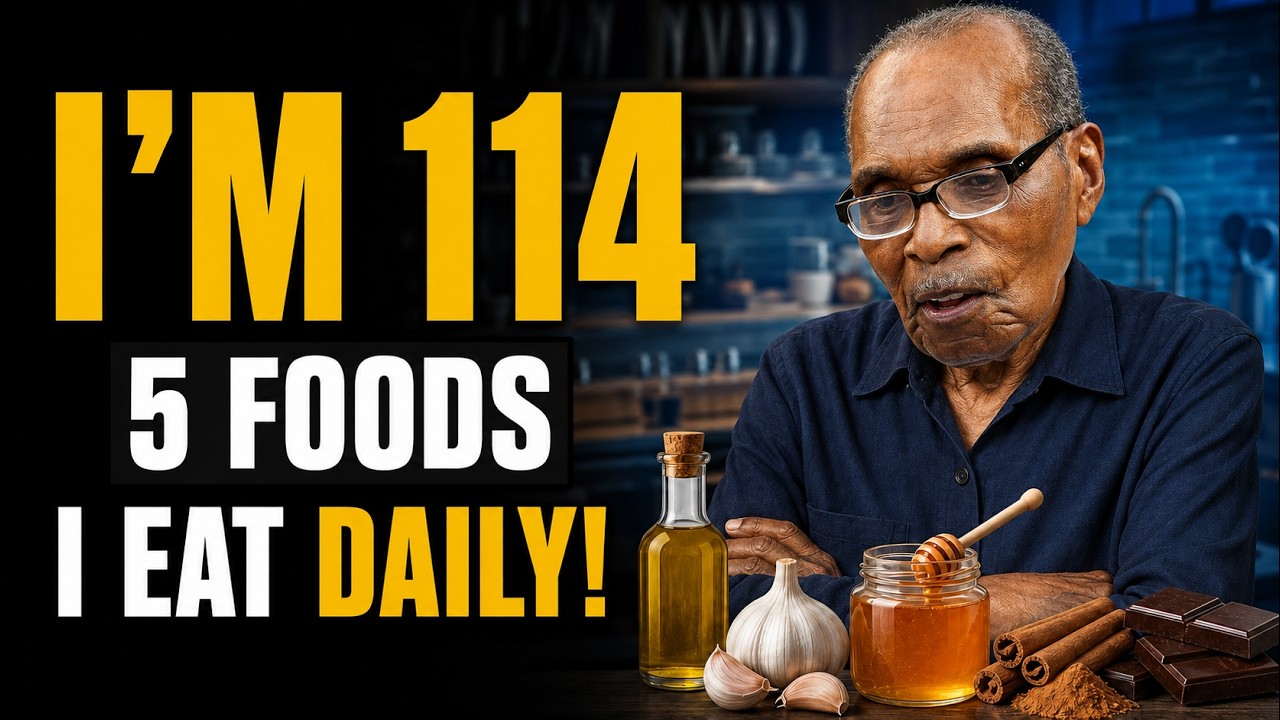
And he repeatedly highlighted five ordinary foods that he considered part of his personal “medicine chest”:
olive oil, garlic, honey, cinnamon, and dark chocolate.
That list is almost irresistible.
Five foods.
Available in an ordinary grocery store.
Used by a man who remained active very late in life.
But before turning those foods into another “longevity secret,” there is something far more useful to understand.
LaPallo did not simply eat five special ingredients and ignore everything else.
His broader routine included fruits, vegetables, oatmeal, walking, rest, water, reading, and moderation. His family’s published account of his routine shows a much larger lifestyle pattern than the viral “five foods” headline suggests.
And that may be where the real lesson begins.
1. Olive Oil — Not a Magic Potion, but a Useful Swap
Olive oil was one of the foods LaPallo frequently praised.
That part of his routine actually fits comfortably with modern nutrition advice.
Older adults need dietary fats, but the type matters.
Replacing some saturated fats with unsaturated fats can be part of a heart-friendly eating pattern. The National Institute on Aging recommends a varied diet with vegetables, fruits, whole grains, nutrient-dense proteins, and healthier sources of fat.
That does not mean drinking olive oil by the spoonful will make you live longer.
Think of it more simply.
Instead of loading vegetables with butter, perhaps use some olive oil.
Instead of a heavily processed dressing, make a simple one.
Use it as part of meals rather than treating it like medicine.
That distinction matters.
Healthy foods usually work best as part of a healthy pattern.
They rarely work like drugs.
2. Garlic — Small Food, Big Reputation
Garlic was another favorite.
LaPallo reportedly used it regularly in his food, and his family specifically included it among the five foods he valued most.
Garlic has been studied for possible effects on cardiovascular risk factors, including blood pressure.
But this is where internet health articles often go too far.
Garlic does not replace blood-pressure medication.
It does not “clean the arteries.”
It does not guarantee protection against heart disease.
It is simply a flavorful plant food that can fit very well into a nutritious eating pattern.
And sometimes that is enough.
One of the easiest ways to eat better after 60 is not to search for exotic superfoods.
It is to make ordinary healthy food taste good enough that you actually want to keep eating it.
Garlic can help with that.
Add it to vegetables.
Beans.
Fish.
Soups.
Salads.
Simple food becomes more enjoyable.
And enjoyable habits are easier to repeat.
3. Honey — Enjoy It, But Remember What It Is
Raw honey was also part of LaPallo’s list.
This is where we need more nuance than many longevity videos provide.
Honey contains various plant compounds, and some types of medical-grade honey have legitimate clinical uses.
But the honey in your kitchen is still a source of sugar.
That means the useful lesson is not:
“Eat honey every day and live longer.”
It is closer to:
If you use a sweetener, use modest amounts and remember that moderation still matters.
The National Institute on Aging specifically recommends limiting added sugars as part of healthy meal planning for older adults.
This is an important theme in LaPallo’s story.
His most frequently quoted principle was not:
“Eat unlimited honey.”
It was:
moderation.
And moderation is far less exciting than a miracle food.
It is also much more useful.
4. Cinnamon — Interesting, but Not Diabetes Medicine
Cinnamon was another ingredient LaPallo favored.
You will often see cinnamon online described as though it can “control blood sugar.”
That wording goes too far.
Research has explored cinnamon and glucose metabolism, but cinnamon is not a substitute for diabetes treatment or medical care.
Still, it can be a useful way to add flavor without relying heavily on sugar.
Sprinkle it over oatmeal.
Fruit.
Yogurt.
Or use it in cooking.
That is a reasonable habit.
The problem starts when a spice becomes a promise.
For older adults, especially those taking medications or managing diabetes, cardiovascular disease, kidney disease, or other chronic conditions, food should support medical care — not replace it.

5. Dark Chocolate — The One Everyone Hopes Is True
This is probably the item that made LaPallo’s list famous.
Chocolate.
But not a giant milk-chocolate candy bar.
His family described raw chocolate as one of his preferred foods.
Cocoa contains flavanols and other compounds that researchers have studied for cardiovascular effects.
But once again:
Dose matters.
Sugar matters.
The total diet matters.
Dark chocolate can fit into a healthy diet.
That is very different from saying chocolate extends lifespan.
A small amount enjoyed intentionally is one thing.
Using the “longevity food” label as permission to eat half a box is another.
The larger lesson is remarkably ordinary:
Healthy eating can still include foods you enjoy.
A diet does not have to feel like punishment to be nutritious.
But These Five Foods Were Not His Whole Diet
This may be the most important correction to the viral version of LaPallo’s story.
He did not live on five foods.
Published material from his family describes oatmeal, fruit, vegetables, salads, smoothies, grains and other foods as part of his routine. One reported smoothie included fruit and garlic along with a commercial “superfood” powder he personally promoted.
So rather than copying five ingredients, look at the pattern:
a lot of plant foods
fairly simple meals
regular habits
moderation
That pattern looks much more like mainstream healthy-aging advice than any miracle protocol.
The National Institute on Aging recommends choosing a variety of nutrient-dense foods, including fruits, vegetables, grains, protein foods and healthy fats rather than focusing on a small collection of “superfoods.”
The Habit That May Have Mattered More Than Any Food: Walking
LaPallo also emphasized staying active.
This deserves at least as much attention as the chocolate.
Probably more.
Regular movement is one of the most consistent recommendations across healthy-aging guidance.
Physical activity can support strength, balance, sleep, mood and the ability to remain independent.
And independence is where this becomes deeply relevant after 60.
You are not exercising just to burn calories anymore.
You are protecting your ability to:
get out of a chair,
climb stairs,
carry groceries,
walk through a parking lot,
travel,
garden,
play with grandchildren,
and keep living on your own terms.
You do not need to train like an athlete.
Walking matters.
Strength work matters.
Balance matters.
Consistency matters.
The best exercise is often the one you can still imagine doing next year.
He Also Kept His Mind Busy
LaPallo was known not simply for talking about food but also for remaining mentally engaged.
That fits another important principle of healthy aging:
Do not retire from curiosity.
Read.
Learn something.
Talk to people.
Join a group.
Take a class.
Try a new hobby.
Teach someone something you already know.
The National Institute on Aging specifically encourages older adults to stay mentally and socially engaged and to continue activities they find meaningful.
Your brain is not helped by spending every day waiting for bedtime.
It needs a life to participate in.
Sleep Was Not Optional
People sometimes act as though older adults simply need less sleep.
They do not.
The National Institute on Aging says older adults generally still need about seven to nine hours of sleep, even though sleep often becomes lighter and more fragmented with age.
That means sleep deserves protection.
A regular bedtime.
Less late caffeine.
Daytime movement.
A comfortable bedroom.
Evaluation if snoring, insomnia, pain, medications or frequent nighttime waking are interfering.
You cannot “health-food” your way out of chronically poor sleep.
Then There Was His Favorite Word: Moderation
When a reporter asked LaPallo about his longevity, he answered with two words:
“obedience and moderation.”
That may be more useful than the five-food list.
Because moderation applies everywhere.
You can eat nutritious food and still overeat.
You can exercise and still overtrain.
You can work hard and never recover.
You can become so obsessed with “living longer” that you stop enjoying the life you actually have.
Healthy aging is not about becoming perfect.
It is about doing enough good things consistently that they begin to outweigh the bad ones.
What About Stress?
LaPallo’s story also emphasizes staying calm and avoiding unnecessary stress.
It is tempting to turn that into another biological claim:
“Never get stressed and you will live longer.”
Life does not work that way.
Everyone experiences stress.
The goal is not to eliminate it.
The goal is to develop ways of handling it.
Walking.
Breathing.
Prayer.
Music.
Time outdoors.
Talking with someone.
Reducing unnecessary conflict.
Writing.
Rest.
Whatever genuinely helps you reset without creating another problem.
NIA healthy-aging guidance specifically includes managing stress alongside physical activity, healthy eating and social connection.
Loneliness Matters Too
There is another part of longevity content that is often ignored because it does not fit nicely on a grocery list.
People.
Older adults can gradually lose social contact through retirement, bereavement, mobility limitations, hearing problems or simply because families spread out.
Social isolation is associated with poorer health outcomes, while meaningful social activity can support mood, well-being and a sense of purpose.
So alongside:
olive oil,
garlic,
vegetables,
and walking,
we should probably add:
Call somebody.
Have coffee with someone.
Join something.
Show up.
Human connection is not garnish.
Was Bernando LaPallo Really 114?
This deserves a straightforward answer.
His family maintained that he was born on August 17, 1901 and died in December 2015, which would make him 114. Contemporary coverage repeated that age.
However, other historical/genealogical records give later birth dates, including a FamilySearch record showing 1908.
That means his claimed supercentenarian age should not be presented as an undisputed longevity record.
But here is the interesting part:
Even if he was younger than claimed, he still lived to an advanced age and became publicly associated with an unusually disciplined approach to food, movement and routine.
That is enough to make his lifestyle interesting.
We do not need to exaggerate it.
Don’t Make the Same Mistake With His Five Foods
The wrong lesson is:
If I eat olive oil, garlic, honey, cinnamon and chocolate every day, I can live past 100.
No responsible person can promise that.
Longevity is influenced by many things:
genetics,
medical care,
smoking history,
blood pressure,
metabolic health,
physical activity,
social conditions,
environment,
diet,
sleep,
and plain luck.
No five foods can control all of that.
The better lesson is:
Bernando LaPallo built simple habits and repeated them for decades.
And consistency is something you actually can copy.
What You Can Take From His Routine After 60
You do not need to recreate someone else’s breakfast.
Instead, ask yourself:
Am I eating enough vegetables and other nutrient-dense foods?
Do I move every day?
Am I preserving my muscle?
Am I sleeping enough?
Do I still spend time with people?
Do I have something that keeps my mind interested?
Am I managing my health conditions instead of ignoring them?
These questions are less exciting than:
“What food lets you live to 114?”
But they are far more useful.
Start With One Change
If you are over 60, do not look at longevity advice and immediately create a 17-step routine.
Pick one thing.
Add vegetables to dinner.
Take a short walk.
Replace one heavily processed snack.
Call an old friend.
Move bedtime 30 minutes earlier.
Add a simple strength exercise that is appropriate for you.
Schedule the checkup you have been avoiding.
Small habits are unimpressive for a week.
Repeated for years, they become a lifestyle.
And lifestyle is where healthy aging actually happens.
The Bottom Line
Bernando LaPallo became famous for five foods:
olive oil, garlic, honey, cinnamon and dark chocolate.
They make a fantastic headline.
But they are not the most interesting part of his story.
The more useful lesson is what surrounded them:
simple food,
movement,
sleep,
mental engagement,
moderation,
and a life that did not revolve around waiting to become old.
Modern healthy-aging guidance points in much the same general direction: stay physically active, eat a nutrient-rich diet, manage stress, sleep well, stay connected and continue taking care of your health.
There is no guarantee that doing those things will carry anyone to 100.
There is certainly no food that can promise 114.
But perhaps longevity is the wrong thing to obsess over anyway.
For most of us, the better question is:
How many of the years I have left can I spend strong enough, clear enough, connected enough and independent enough to enjoy them?
That is a goal worth eating — and living — for.