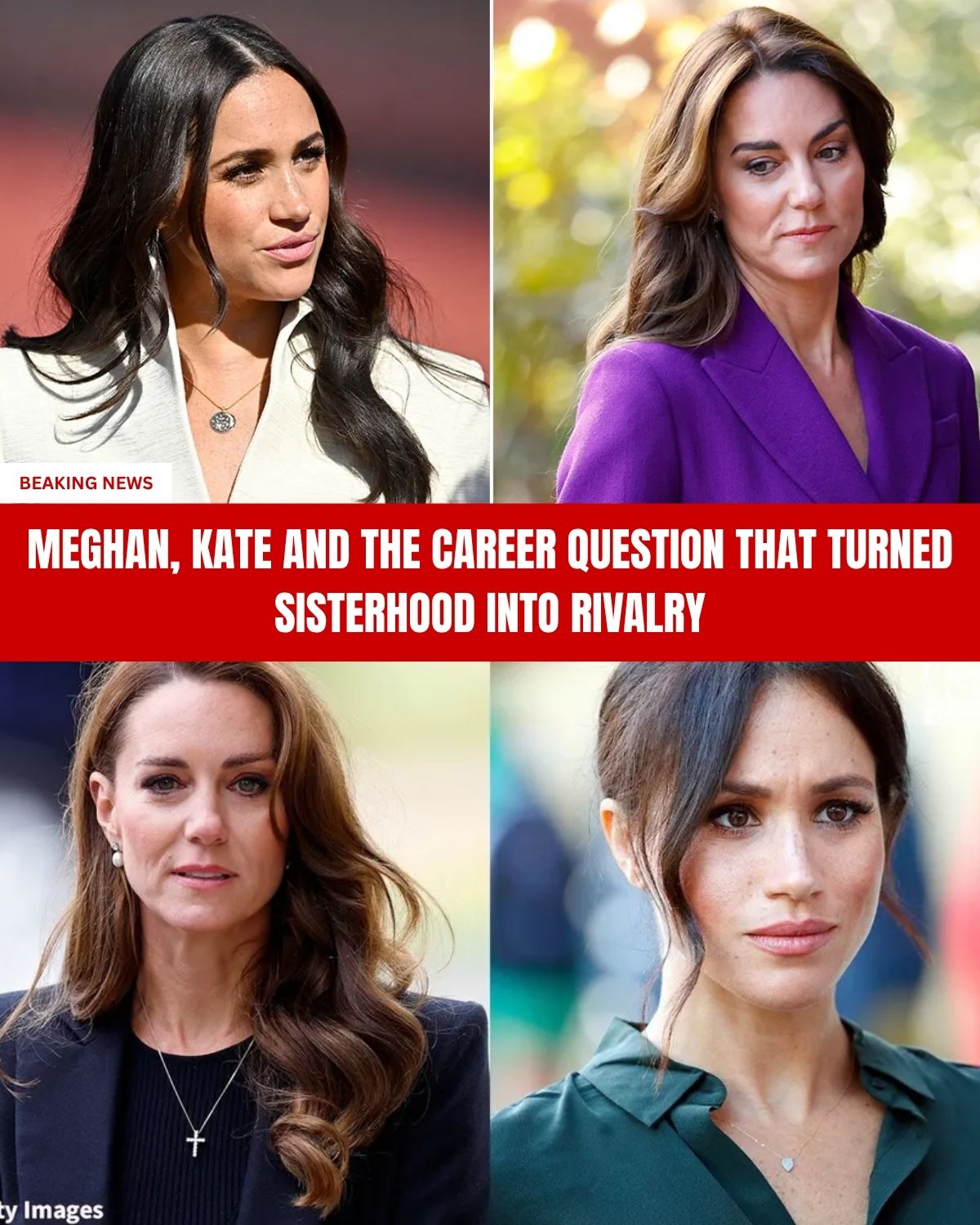
The Meghan Markle and Princess Kate rivalry has often been reduced to one familiar story: bridesmaid dresses, wedding pressure, tears, apologies and Palace silence.
But that explanation is too small. The real tension between Meghan and Kate was never only about one argument before a royal wedding. It was about two women entering the same public story with two completely different ideas of value, power and status.
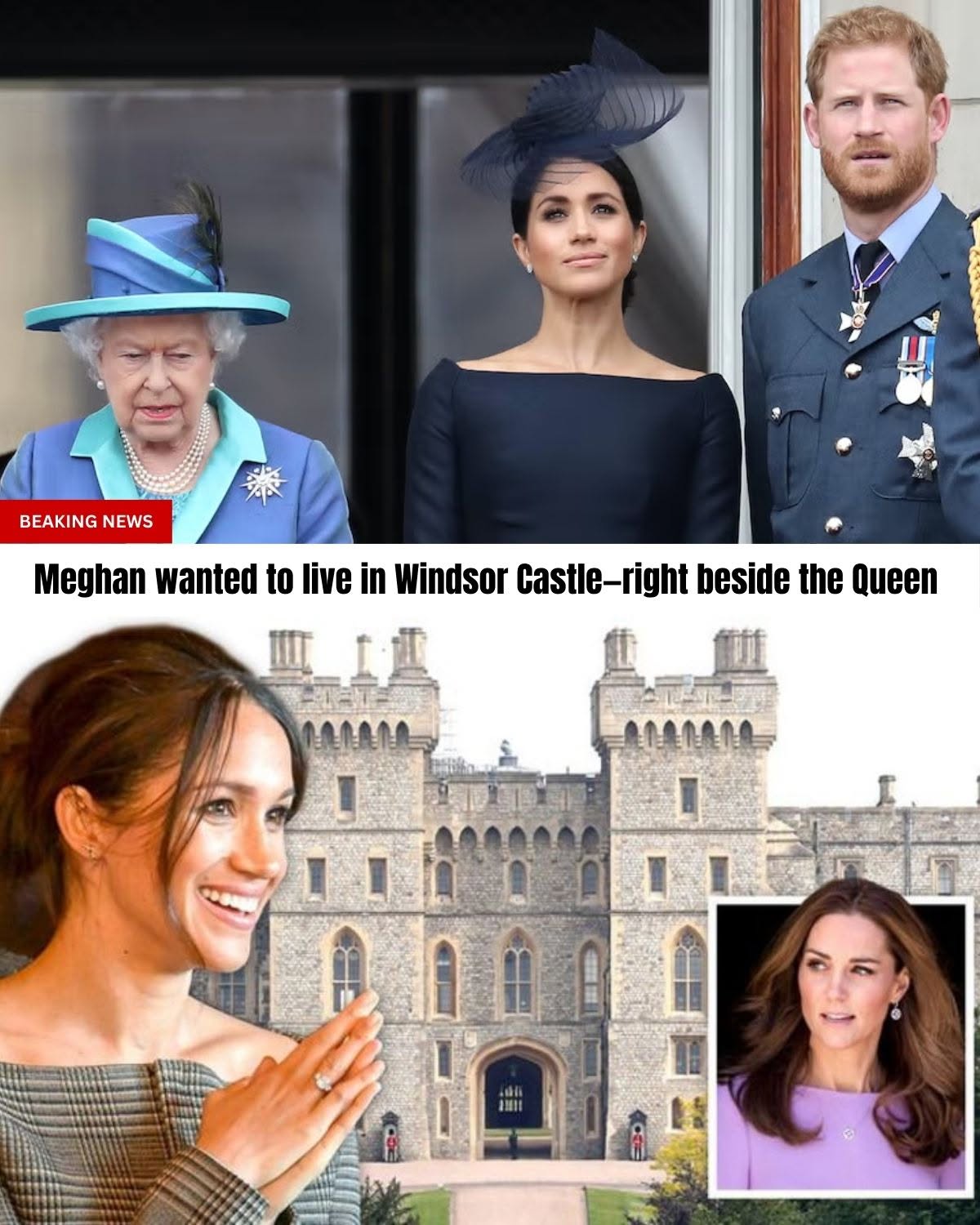
Meghan arrived as a woman who had already built an adult identity outside the monarchy. She had worked as an actress, built a public profile, spoken about women’s empowerment and attached herself to global causes before she ever became the Duchess of Sussex.
Kate’s path was the opposite. She did not arrive with a Hollywood résumé or a public activist brand. Her power came from patience, discretion and her position beside Prince William, the future King.
That difference became the silent fault line.
Because if Meghan saw herself as a humanitarian, a speaker and a woman with a global voice, the royal hierarchy still placed her below Kate.
And that was the contradiction Meghan could never fully escape.
Meghan Had a Career Before the Crown
Before royal life, Meghan had already learned how to perform, persuade and control a public image.
She starred in Suits for seven seasons, built a lifestyle presence through The Tig, and worked with organisations connected to women’s empowerment and humanitarian advocacy. Her official Sussex biography highlights her roles with UN Women, World Vision and One Young World — all of which helped shape the image of Meghan as a modern, socially conscious public figure before she married Harry.
This matters because Meghan did not enter the Royal Family as a blank slate.
She entered with a résumé.
She had language. She had causes. She understood cameras. She knew how to speak in soundbites that could travel globally. She came from a culture where personal achievement, self-expression and visibility are treated as forms of power.
That background likely gave Meghan confidence. It also may have made the royal system feel strangely illogical.
Because inside the monarchy, a woman’s public experience does not automatically determine her rank.
The line of succession does.
Kate’s Power Was Built Differently
Kate’s strength has always been harder to explain to people outside the royal system.
She did not become powerful by speaking the loudest. She became powerful by waiting the longest.
For years, she absorbed criticism, mockery and intense scrutiny without publicly fighting back. She learned the rhythm of royal appearances. She built trust with the institution. She became William’s steady partner, then the mother of a future King, and eventually the Princess of Wales.
Her charitable work also developed slowly. Through the Royal Foundation, Kate has focused heavily on early childhood, mental health, addiction and family wellbeing. In 2021, she launched the Royal Foundation Centre for Early Childhood, turning one of her long-running interests into a more formal platform.
That is not the same kind of visibility Meghan brought.
It is slower. Less glamorous. Less emotionally direct.
But in royal terms, it is more durable.
Kate’s power does not depend on being seen as self-made. It depends on being seen as reliable.
And that is exactly the kind of power the Palace rewards.
The Moment the Contrast Became Public
The 2018 Royal Foundation Forum was supposed to introduce the so-called “Fab Four” as the future of the monarchy: William, Kate, Harry and Meghan working together under one charitable banner.
Instead, the event revealed how different the two women were.
Meghan spoke with the confidence of someone used to advocacy language. Discussing women’s empowerment, she said women did not need to “find” their voices because they already had voices. It was a polished, forceful, modern line — the kind of message that would fit easily at a global summit or a Hollywood-backed social campaign.
Kate, meanwhile, stayed in the quieter lane of traditional royal duty.
Neither woman was necessarily wrong. But they were speaking different institutional languages.
Meghan’s approach was immediate and assertive.
Kate’s was cautious and cumulative.
That contrast may have looked minor on stage, but it exposed the deeper question that would haunt the relationship: would the monarchy adapt to Meghan’s style, or would Meghan have to adapt to the monarchy’s?
The answer came quickly.
The institution adapted far less than Meghan expected.
Why Being “Below Kate” Mattered
The most painful issue was not simply that Kate was more senior.
It was that Kate’s seniority had nothing to do with the qualities Meghan may have valued most.
Meghan had worked professionally. Kate had not built the same kind of pre-royal public career.
Meghan had spoken internationally on women’s issues. Kate was known more for discipline, family image and traditional royal causes.
Meghan had the language of modern feminism and social impact. Kate had the future Crown.
In a merit-based world, Meghan might reasonably have believed she had more to say.
But monarchy is not a meritocracy.
That is the brutal point.
Kate stood above Meghan not because she had more professional experience, not because she was more outspoken, and not because she had a stronger activist profile. Kate stood above Meghan because she was married to the heir.
Inside the Royal Family, that fact outweighed everything.
For someone like Meghan, who came from an environment where personal achievement matters, that hierarchy could easily feel suffocating.
For the Palace, however, it was non-negotiable.
The Rivalry Was Never Just Personal
This is why the Meghan-Kate tension became bigger than two women failing to become close friends.
They came to represent two competing ideas of female power.
Meghan represented voice, career, activism, visibility and self-definition. She embodied the modern public woman who expects to be heard and judged by what she has built.
Kate represented duty, restraint, patience, motherhood, hierarchy and institutional loyalty. She embodied the royal woman who gains influence by submitting herself to something larger than her personal brand.
That difference created a trap.
If Meghan spoke forcefully, supporters saw strength, but critics saw ego.
If Kate stayed silent, supporters saw dignity, while critics saw passivity.
Over time, the Palace-friendly audience rewarded Kate’s silence more than Meghan’s voice.
And that may have been Meghan’s most damaging discovery: inside the monarchy, silence can be more powerful than speech.
The Bridesmaid Story Became the Public Battlefield
The bridesmaid dress dispute before Harry and Meghan’s wedding became the emotional shorthand for everything that had gone wrong.
Early reports claimed Meghan made Kate cry. Meghan later told Oprah Winfrey the reverse had happened: Kate made her cry, then apologised with flowers and a note. Later accounts added more complexity, with some claims that both women were upset.
The truth may never be fully settled to everyone’s satisfaction.
But the reason the story still matters is that it turned the Meghan-Kate comparison into a public loyalty test.
If one believed Meghan, Kate became part of a Palace narrative that allowed Meghan to be wrongly blamed.
If one believed Palace-friendly accounts, Meghan became the disruptive newcomer whose arrival unsettled the existing order.
Either way, the conflict stopped being private.
It became symbolic.
Kate became the woman the institution protected.
Meghan became the woman who said the institution failed her.
The Royal Foundation Split Confirmed Two Different Futures
By 2019, the idea of the “Fab Four” had already collapsed.
Harry and Meghan split from the Royal Foundation they had shared with William and Kate, launching plans for their own charitable path. Officially and publicly, the separation was framed as a natural development as the couples’ roles diverged.
But symbolically, it confirmed the obvious.
These were not two couples moving in perfect formation.
They were two brands, two futures and two understandings of royal work.
William and Kate were moving toward the Crown. Their work would increasingly be shaped by constitutional responsibility and long-term monarchy strategy.
Harry and Meghan wanted a more personal, flexible, globally facing platform.
The split did not create the rivalry.
It revealed it.
Meghan’s Possible Miscalculation
If Meghan believed she had more to offer than Kate, she may have misunderstood the institution she had joined.
That does not mean Meghan had nothing valuable to offer. On the contrary, her communication skills, global recognition and interest in social causes were exactly why many people initially saw her as a modernising force.
But the Royal Family does not reward potential in the same way a media company, charity platform or activist network might.
It rewards obedience to hierarchy.
That is where Meghan’s strongest qualities became liabilities.
Her confidence became “pushiness” to critics.
Her voice became “complaining.”
Her desire to shape her own role became “not knowing her place.”
Kate, meanwhile, benefited from the exact qualities Meghan’s supporters sometimes dismissed: patience, quietness and willingness to move at the Palace’s pace.
That is why the rivalry feels so brutal in hindsight.
Meghan may have had the career.
Kate had the Crown’s trust.
What Kate Understood That Meghan Did Not
Kate’s greatest advantage was not that she was more talented, more modern or more charismatic.
It was that she understood the rules of the game.
She understood that the monarchy does not move quickly. She understood that public affection must be accumulated slowly. She understood that royal women are watched most closely when they seem to be asking for more.
Most importantly, Kate understood that inside the Royal Family, personal visibility must never appear to compete with the institution itself.
Meghan’s tragedy, from a Palace-friendly perspective, is that she seemed to want to use royal life as a platform for her voice.
Kate used silence as proof of loyalty.
That is why one woman became increasingly controversial while the other moved steadily closer to the centre of power.
The Seeds Were Planted Long Before the Wedding Tears
The Meghan-Kate feud did not begin with one dress fitting.
The seeds were planted the moment Meghan’s modern self-belief collided with royal hierarchy.
She entered as a woman with experience, ambition and a global voice. But the system placed her beneath a woman whose power came not from career, but from proximity to the throne and years of disciplined service.
That contradiction was always going to create tension.
To Meghan’s supporters, it exposed the outdated limits placed on a woman who had something meaningful to contribute.
To Kate’s supporters, it exposed Meghan’s failure to understand that the monarchy is not built around personal achievement.
And that is why the feud still fascinates the public.
It is not just Meghan versus Kate.
It is career versus duty.
Voice versus silence.
Modern feminism versus ancient hierarchy.
And perhaps most of all, it is the story of a woman who believed she had more to offer — only to discover that inside Windsor, being useful to the Crown matters more than believing you are above it.