My mother’s nurse inherited everything.
The house.
The savings.
The jewelry box my father had given Mom on their twenty-fifth anniversary.
Even the little lake cabin our family had owned since I was eight years old.
Not me.
Not my brother.
Not my sister.
A woman named Emily Hayes.
A nurse we had hired eighteen months before Mom died.
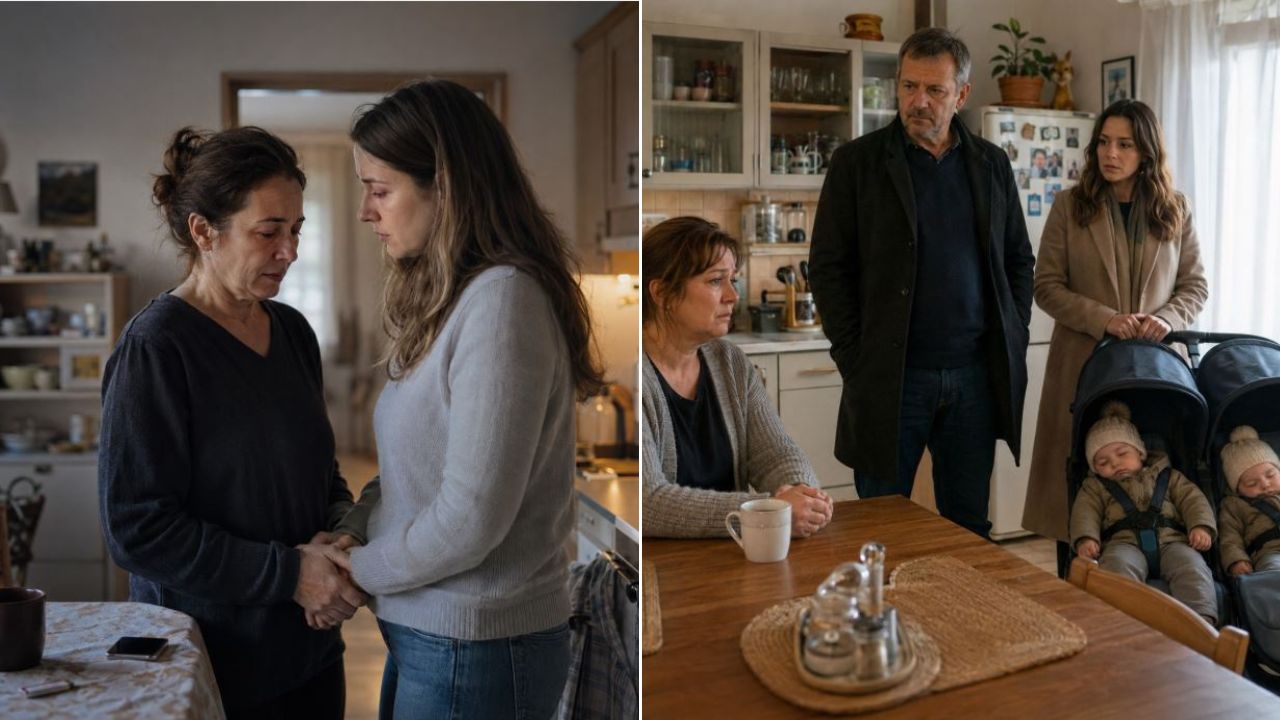
When the lawyer read the will, my brother stood up so fast his chair hit the wall.
“That’s not possible,” Mark said.
My sister, Claire, started crying before anyone had explained anything.
I just sat there.
Silent.
Because some part of me had already known there would be a punishment.
I just didn’t know it would come signed by my own mother.
The lawyer, Mr. Donnelly, adjusted his glasses and continued reading.
“To my children, Mark, Claire, and Anna, I leave the contents of the blue box in my bedroom closet.”
That was it.
A blue box.
My mother’s nurse got a lifetime of memories, bank accounts, property, and furniture.
Her children got a box.
Mark laughed.
Not because it was funny.
Because anger sometimes comes out wearing the wrong face.
“A blue box?” he said. “She left us a box?”
Mr. Donnelly folded the will carefully.
“Your mother was very clear.”
“Clear?” Claire snapped. “She had dementia at the end.”
“She was evaluated two weeks before signing this.”
“And?”
“She was found competent.”
Mark pointed toward the hallway, where Emily Hayes stood with her purse clutched in both hands.
“That woman manipulated her.”
Emily looked down.
She was forty-two, maybe forty-three. Plain face. Brown hair always pulled back. No jewelry except a thin silver cross. She had been Mom’s home nurse after the second fall, after the doctors said she could no longer be alone.
She did not look like a thief.
But that made everyone angrier.
A thief should look like one.
Emily whispered, “I didn’t ask for this.”
Mark turned on her.
“Then give it back.”
She said nothing.
That silence followed me home.
For three nights, I did not sleep.
I kept seeing my mother’s house in my mind.
The yellow kitchen.
The porch swing.
The hallway wall where our childhood school pictures still hung.
The rosebushes Dad planted before he died.
And Emily Hayes walking through it all with the keys in her hand.
I wanted to hate her.
It should have been easy.
But grief has a strange way of bringing back every version of the truth.
The truth was, I had not visited Mom as much as I should have.
None of us had.
Mark lived twenty minutes away and always said work was killing him.
Claire lived in Denver and sent flowers instead of coming.
I lived two towns over, close enough to feel guilty, far enough to make excuses.
At first, after Dad died, we all tried.
Sunday dinners.
Phone calls.
Doctor appointments.
Then years passed.
Mom got slower.
More forgetful.
More lonely.
Her stories repeated.
Her hands shook.
Her house, once warm and full of noise, became a place we entered carefully, as if old age itself might reach out and grab us.
I told myself she understood.
I told myself I had a demanding job.
I told myself my grown sons still needed me.
I told myself I would go next weekend.
There is always a next weekend until there isn’t.
Emily started as a part-time nurse.
Three days a week.
Then five.
Then live-in care after Mom left the stove on and nearly burned the kitchen down.
At first, I was relieved.
Emily gave us updates in the family group chat.
Blood pressure stable.
Ate half a bowl of soup.
Walked to the mailbox today.
Mom asked about Anna.
I would heart the message.
Sometimes I would reply, “Tell her I love her.”
Most days, I didn’t call.
That is the kind of sentence that looks small on a page and weighs a thousand pounds in your chest.
After the will reading, Mark wanted to fight.
“We contest it,” he said.
Claire agreed immediately.
“She preyed on Mom. It happens all the time.”
I wanted to agree.
Part of me did.
But the image that kept coming back was not Emily taking anything.
It was Mom’s last birthday.
She turned seventy-nine.
I had planned to stop by after work.
Then a meeting ran late.
Then traffic was bad.
Then I was tired.
I called at 8:43 p.m.
Emily answered.
“Your mom just fell asleep.”
“Oh,” I said. “Did she have cake?”
There was a pause.
“Yes. I made lemon cake.”
“Lemon was her favorite.”
“I know.”
“Did anyone come?”
Another pause.
“Mrs. Walker from next door came by for a little while.”
I closed my eyes.
“What about Mark?”
“He sent a plant.”
“Claire?”
“She called in the morning.”
“And Mom?”
Emily’s voice softened.
“She kept the candle lit for a long time.”
I did not ask what that meant.
I was afraid I knew.
Two weeks after the will reading, I went to Mom’s house to get the blue box.
Emily answered the door.
She had not changed anything.
That surprised me.
The porch swing still creaked in the wind. Mom’s ceramic rabbits still sat by the steps. The kitchen curtains, faded with yellow flowers, were still tied back exactly the way Mom liked them.
Emily looked exhausted.
“Anna,” she said.
“I’m here for the box.”
She nodded and stepped aside.
I had expected to feel fury walking into that house.
Instead, I felt eight years old.
I smelled coffee and furniture polish.
I saw Mom standing at the stove in her blue robe.
I heard Dad laughing from the garage.
For a second, I could not breathe.
Emily waited quietly.
“Bedroom closet,” she said.
“I know where it is.”
The words came out sharper than I meant.
She flinched but did not answer.
The blue box was on the top shelf of Mom’s closet.
A shoebox, really.
Blue cardboard with white corners.
My name was written on a sticky note stuck to the lid.
Anna brings this to Mark and Claire.
Mom’s handwriting.
My knees went weak.
I carried it to the kitchen table.
Emily stood near the sink.
“You can leave,” I said.
“I promised her I’d be here when you opened it.”
That made me look up.
“What?”
“She made me promise.”
“Of course she did,” I said bitterly. “Apparently you were the only one she trusted.”
Emily’s face changed then.
Not anger.
Pain.
She reached into the pocket of her cardigan and took out a folded envelope.
“I was told to give you this first.”
I stared at it.
On the front, in Mom’s handwriting, was my name.
Anna.
My hands did not want to touch it.
But they did.
I opened it slowly.
My darling Anna,
If you are reading this, then you are angry.
Probably hurt.
Probably sitting in my kitchen pretending you are not about to cry.
I know you too well.
I almost smiled.
Then I kept reading.
Before you blame Emily, listen to me.
Not as the sick woman you remember.
Not as the mother you were too busy to call.
Listen to me as the woman who raised you.
I left Emily the house because she was the one who kept it alive after the rest of you left it.
I sat down.
The chair scraped loudly against the floor.
Emily looked away.
Mom’s letter continued.
That sentence will hurt you.
Maybe it should.
But hurt is not the same as cruelty.
You, Mark, and Claire are my children.
Nothing changes that.
I loved you before you knew your own names.
I loved you when you broke windows, missed curfews, slammed doors, and forgot Mother’s Day until the last minute.
I loved you when you stopped visiting because watching me get old made you uncomfortable.
Yes, sweetheart.
I knew.
A sound came out of me.
Small.
Embarrassing.
Almost like a child.
I kept reading.
Emily did not replace you.
No one could.
But she showed up.
Every morning.
Every night.
She learned how I liked my tea.
She brushed my hair when my hands shook.
She listened to the same stories without making me feel foolish.
She sat beside me when I cried because your father was gone.
She slept in the chair the night I was afraid to die.
She did not become my daughter.
But she became my witness.
Do you understand the difference?
I covered my mouth.
Because I did understand.
And that was worse.
I looked at Emily.
Her eyes were red.
“You knew what was in this?”
She shook her head.
“Not all of it.”
“But you knew she changed the will.”
“Yes.”
“And you didn’t tell us?”
“She asked me not to.”
“We’re her children.”
“I know.”
“Then why would you let her do this?”
Emily gripped the edge of the counter.
“Because she was tired of begging people to love her on a schedule.”
The room went silent.
I hated her for saying it.
Because it sounded exactly like something Mom would have said when she was done being polite.
I turned back to the letter.
The blue box is not an insult.
It is not a punishment.
It is the truth.
Open it together.
All three of you.
If you can manage to sit in the same room without keeping score.
Love always,
Mom.
I read the last line three times.
Then I opened the blue box.
Inside were three smaller envelopes.
Mark.
Claire.
Anna.
Beneath them were photographs.
Old ones.
New ones.
A picture of Mark asleep on Dad’s chest as a baby.
Claire in a pink snowsuit, crying because she hated mittens.
Me at six years old, missing my two front teeth, holding a dandelion bouquet like it was a royal offering.
There were report cards.
Birthday cards we had made with crayons.
A dried corsage from my wedding.
A Father’s Day card Mark had given Dad, though Mom had written on the back: He picked this himself.
A hospital bracelet from when Claire had pneumonia at age four.
Every scrap of us.
Every proof that we had once been the center of her world.
At the bottom was a small cassette tape.
I stared at it.
“Do you have something that plays this?”
Emily nodded.
“In the living room.”
Of course Mom still had a cassette player.
It was on the bookshelf beside Dad’s old radio.
Emily plugged it in with trembling hands.
I should have waited for Mark and Claire.
I knew that.
But grief does not always wait for fairness.
I pressed play.
At first, there was only static.
Then Mom’s voice filled the room.
Thin.
Tired.
But hers.
“Hello, my babies.”
I broke immediately.
Not cried.
Broke.
There is a difference.
“I suppose you’re mad at me,” Mom continued. “That’s all right. I was mad at you too.”
She gave a small laugh.
A weak one.
“But anger is easier than loneliness. Remember that.”
The tape clicked softly.
“I don’t want you fighting Emily. She didn’t steal from you. You gave away what you thought you could come back for later. Time. Attention. Ordinary Tuesday afternoons. Those are the things people don’t realize are inheritance until they’re gone.”
I pressed my fist against my mouth.
“I left her the house because she gave me her days. But I left you the box because you gave me my life.”
I heard Mom take a breath.
“Those are not the same gift. Don’t compare them.”
The recording ended with a sound I remembered from childhood.
Mom humming.
The same tune she hummed while folding laundry.
I sat on the living room floor and cried until Emily brought me tissues.
I did not thank her.
Not then.
I called Mark that night.
He answered with, “Did you get the box?”
“Yes.”
“What was in it?”
“You need to come over.”
“I’m calling the attorney tomorrow.”
“Mark.”
“What?”
“You need to come over.”
Something in my voice stopped him.
The next evening, Mark and Claire sat in Mom’s kitchen.
Mark looked angry before he even took off his coat.
Claire looked fragile, like one wrong word could shatter her.
Emily stayed in the hallway.
Mark noticed.
“She doesn’t need to be here.”
I said, “Mom asked her to be.”
“Mom asked a lot of strange things at the end.”
I put the letter on the table.
“Read it.”
Mark crossed his arms.
Claire picked it up first.
Halfway through, she started sobbing.
Mark read it after her.
His jaw tightened.
Then loosened.
Then tightened again.
When he reached the line about Mom being tired of begging people to love her on a schedule, he pushed the chair back and walked outside.
We watched him through the kitchen window.
He stood near the rosebushes Dad had planted.
His shoulders moved once.
Then again.
Mark had not cried at the funeral.
Not where anyone could see.
Claire whispered, “I called her every Sunday.”
I said nothing.
“Almost every Sunday,” she corrected.
Still, I said nothing.
Then we played the tape.
All three of us listened to our mother tell us the truth in a voice from beyond the grave.
Nobody spoke when it ended.
The house made old-house noises around us.
Pipes.
Wind.
A floorboard settling somewhere down the hall.
Finally Mark said, “She should have told us.”
Emily spoke from the hallway.
“She tried.”
Mark looked at her.
“What does that mean?”
Emily’s face went pale, but she stepped into the kitchen.
“She asked for all of you. More than once.”
“That’s not fair,” Claire said.
“No,” Emily said. “It isn’t.”
She looked at each of us in turn.
“She would sit at that table with her phone. She would start to call, then stop. She didn’t want to be a burden. She hated that word. She said people use it when they don’t want to admit they are tired of someone.”
Mark looked down.
Emily continued.
“On bad days, she would ask me not to tell you how bad it was. On good days, she would ask me to take pictures so I could send them to you. Half the time, no one answered.”
“That’s enough,” I said.
But it wasn’t.
Not really.
Because the truth had finally entered the room, and it was not done with us.
Emily opened her purse and took out a small bundle of envelopes tied with string.
“What are those?” Claire asked.
“Letters she wrote and never mailed.”
I almost stood up.
There are some phrases that tear through a room.
That was one of them.
Emily placed them on the table.
“She asked me to keep them until after the will was read.”
Mark’s voice was low.
“Why?”
“Because she said if she gave them to you while she was alive, you would visit out of guilt. And she didn’t want guilt sitting beside her bed pretending to be love.”
Claire covered her face.
Emily touched the top envelope.
“She loved you. Please don’t mistake her pain for lack of love.”
Then she left the kitchen.
Not the house.
Just the room.
That small mercy made me understand something.
Emily had power now.
Legal power.
Financial power.
The house was hers.
And still, she walked away from the argument.
We opened the letters.
One by one.
Mine was dated six months before Mom died.
My sweet Anna,
Today Emily took me to the porch because the sun was warm. I thought about calling you, but I knew you were working.
I hope you are not always working.
Life can disappear inside useful excuses.
I know because I made plenty of them when you were little.
I kept saying I would play later.
Read later.
Sit later.
Then you were grown.
Don’t do that to your boys.
Come when you can.
But when you come, come all the way.
Do not bring only your body and leave your heart in your car.
Love,
Mom.
I had to put the letter down.
Mark’s letter was worse.
Not because Mom was cruel.
Because she was gentle.
My dear Mark,
You sound so tired on the phone.
I worry about you.
You think being strong means never needing anyone. Your father thought that too.
It made him lonely.
Do not become a man who can build a life but not sit inside it.
I do not need your money.
I need your face.
Even for ten minutes.
Mom.
Mark folded the letter carefully.
Then he covered his eyes.
Claire’s letter was the shortest.
My Claire,
You send beautiful flowers.
But sweetheart, flowers cannot hold my hand.
Come home before home becomes a place you only visit in memory.
Mom.
Claire made a sound I will never forget.
It was not crying exactly.
It was the sound of a daughter realizing she had misunderstood the deadline.
For the first time since the will reading, none of us mentioned lawyers.
We sat at Mom’s kitchen table until after midnight, reading letters, looking at photographs, telling stories badly because grief kept interrupting.
Emily came in once to make tea.
Mark would not look at her.
But he took the cup.
That was the beginning.
Not forgiveness.
Not peace.
Just the beginning.
The next weeks were ugly.
Grief does not turn people kind overnight.
Mark still wanted to challenge the will some mornings.
Claire called me crying, then angry, then crying again.
I went to Mom’s house twice and sat in the driveway without going in.
Emily never pushed.
She did something worse.
She waited.
One afternoon, I found her in the backyard wearing Mom’s gardening gloves, trimming the rosebushes.
I nearly lost my temper.
Those were Dad’s roses.
Mom’s gloves.
Our yard.
But Emily looked up and said, “Your mother said if I let these die, she’d haunt me.”
I laughed before I could stop myself.
Then I cried.
Emily stood there holding the pruning shears, unsure what to do.
“I’m sorry,” she said.
“For what?”
“For being here.”
The honesty of that almost undid me.
I wiped my face.
“Did you love her?”
Emily nodded.
“Like family?”
She thought about it.
“No,” she said. “Like herself.”
I frowned.
Emily looked back at the house.
“She was more herself with me near the end than she was with anyone else. Not because she loved you less. Because she didn’t have to protect me from watching her fade.”
That stayed with me.
Children sometimes make aging harder for parents.
Not because we do not love them.
Because we need them to remain who they were.
Mothers are supposed to be strong.
Fathers are supposed to know what to do.
Homes are supposed to wait unchanged until we have time to return.
But people are not houses.
They do not stay ready for us forever.
Three months after the will reading, Emily invited us to the house.
All three of us.
“I want to talk about something,” she said.
Mark almost refused.
But he came.
We sat in the living room where Dad’s chair still faced the window.
Emily had placed the blue box on the coffee table.
“I’m selling the cabin,” she said.
Mark stiffened.
Claire inhaled sharply.
Emily raised a hand.
“Please let me finish.”
No one spoke.
“I know what the will says. Legally, everything is mine.”
Mark said, “That must feel nice.”
“Mark,” I warned.
Emily looked at him without anger.
“No,” she said. “It feels heavy.”
That shut him up.
She continued.
“Your mother left me the house because she said it had become my home too. I won’t apologize for loving it. But the cabin was never mine.”
She opened a folder.
“I’m transferring it to the three of you.”
Claire stared.
“What?”
“Equally.”
Mark leaned forward.
“Why?”
“Because your mother told me the cabin was where your father taught you to fish, where Claire broke her arm, where Anna learned to swim. She said it held the loudest years of her life.”
Emily’s voice trembled.
“She left it to me because she was angry. And because she trusted me to know what anger should keep and what memory should return.”
No one moved.
Then Emily slid another paper across the table.
“I’m also setting aside part of the savings for your mother’s medical bills that I paid from my own account and for repairs to the house. The rest will remain as she wrote it.”
Mark looked at the paper.
“You don’t have to do this.”
“I know.”
“Then why?”
Emily’s eyes filled.
“Because your mother wasn’t trying to erase you. And I don’t want to become the reason you remember her that way.”
That was the moment Mark broke.
Not loudly.
His chin just lowered.
His hand went over his eyes.
“I should have come more,” he said.
Nobody corrected him.
Because there was no correction to make.
Claire moved first.
She crossed the room and hugged Emily.
It was awkward.
Stiff.
Brief.
But real.
Mark did not hug her.
Not then.
But when he left, he said, “Thank you.”
For Mark, that was almost a speech.
A year later, the house looks nearly the same.
Emily still lives there.
The porch swing still creaks.
The yellow curtains still hang in the kitchen.
Mom’s ceramic rabbits still sit by the steps.
But now, every Sunday afternoon, someone comes.
Sometimes me.
Sometimes Mark.
Sometimes Claire when she is in town.
Sometimes all of us.
At first, it felt strange visiting our mother’s house when she was gone and the nurse owned it.
Then it began to feel like something else.
Not ours.
Not Emily’s.
Hers.
Mom’s.
Still holding us.
On the first anniversary of Mom’s death, Emily brought out the blue box.
We played the cassette again.
“Hello, my babies,” Mom’s voice said.
Claire cried.
Mark looked out the window.
I held my coffee cup with both hands and let myself listen.
When the tape ended, Emily took a folded letter from the box.
“I found one more,” she said.
My chest tightened.
“It was tucked inside one of her cookbooks.”
She handed it to me.
On the front, Mom had written:
For whoever is still angry.
We all laughed.
Then we cried, because that was exactly like her.
I opened it.
My stubborn children,
If you are still fighting about what I left behind, then you have missed the point.
A house is wood.
Money is paper.
Jewelry is metal.
The only thing I ever truly owned was the time I was given with you.
Some of you spent that time with me at the beginning.
Emily spent it with me at the end.
Do not make love smaller by measuring it like property.
There is enough guilt in every family.
Do not turn mine into a weapon.
If you want to honor me, show up for the living.
Not just when they are easy.
Not just when they are healthy.
Not just when there is something to inherit.
Show up when it costs you time.
That is where love proves itself.
Mom.
No one spoke for a long time.
Outside, the rosebushes moved in the wind.
I thought about all the things I had called inheritance before that year.
A house.
A cabin.
A bank account.
My mother left me none of those.
At least not at first.
She left me a blue box.
A cassette tape.
Letters that told the truth.
And a woman I had wanted to hate, but could not.
Because Emily Hayes had done the one thing we kept postponing.
She had shown up.
Every day.
Not perfectly.
Not as a daughter.
Not as a replacement.
But as a witness.
There is a difference between being family by blood and becoming family by presence.
One is given.
The other is proven.
I still miss my mother.
Some days, I miss her so sharply I reach for the phone before remembering there is no number that reaches where she is.
Some days, I feel ashamed.
Some days, I feel forgiven.
Most days, I feel both.
But every Sunday, when I walk up the porch steps and see Emily open the door, I understand my mother a little more.
She did not leave everything to a stranger.
She left it to the person who stayed.
And she left the rest of us something harder.
The truth.
Waiting in a blue box.
Beside a letter she had hidden from us.
Until we were finally ready to read it.