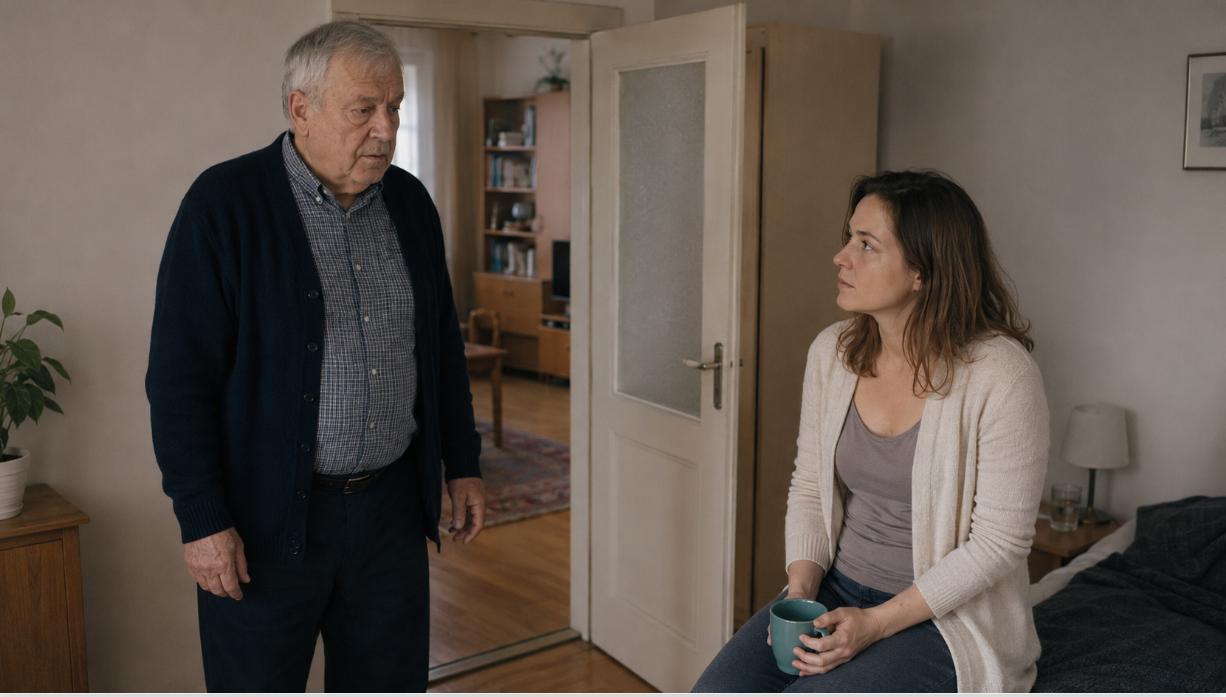
The slap came after my mother realized I was not going to whisper.
It happened in a private dining room at the Oakridge Country Club, in front of thirty-four relatives, six family friends, my fiancé, and the sister who had spent her whole life receiving what I was expected to give.
My mother’s hand struck my cheek so hard the room went silent.
The waiter near the doorway froze with a tray of coffee cups in his hands.
My father looked down at the table.
My fiancé, Ryan, stood up so fast his chair scraped against the floor.
My younger sister, Emma, covered her mouth like she was shocked.
But she wasn’t shocked.
Not really.
She knew exactly why my mother had cornered me that night.
My mother, Diane Whitmore, stood in front of me with her face flushed and her voice low enough to sound controlled, but sharp enough for every person in the room to hear.
“Don’t you dare embarrass this family, Natalie.”
I touched my cheek.
It burned.
For a moment, the old instinct came back.
Apologize.
Smooth it over.
Make everyone comfortable.
Let Emma cry.
Let Mom win.
But then I looked past my mother and saw my grandmother’s empty chair at the family table.
Grandma Rose had been gone eight months.
And suddenly I heard her voice in my head.
When they push too far, sweetheart, don’t yell.
Just tell the truth.
So I lowered my hand, looked my mother in the eye, and said quietly,
“Grandma was right about you.”
My mother’s face changed.
Not with anger this time.
With fear.
That was how I knew she understood.
At least a little.
The dinner had been Ryan’s idea.
Not the country club part. That was my mother’s doing.
Ryan and I wanted something simple after we got engaged. Maybe dinner at our favorite Italian restaurant, a few close friends, our parents, and one toast before dessert.
But my mother insisted.
“You’re the first daughter getting married,” she said. “This should look proper.”
By proper, she meant visible.
My mother had always cared deeply about how things looked.
She liked polished silverware, matching Christmas stockings, handwritten thank-you notes, and photographs where everyone smiled even if they had been crying five minutes earlier.
Our family did not have to be happy.
It only had to appear respectable.
For twenty-nine years, I helped her protect that image.
I was the responsible daughter.
The quiet one.
The one who made good grades, worked part-time, remembered birthdays, helped clean up after holidays, drove relatives to doctor appointments, and never asked for much.
My sister, Emma, was different.
Emma was seven years younger than me.
My mother called her “our miracle baby,” and by the time Emma could walk, the rest of us had learned to move around her.
If Emma cried, someone fixed it.
If Emma broke something, someone explained it away.
If Emma failed, someone blamed the teacher, the boss, the boyfriend, or the economy.
If Emma wanted something, the family discussed how to make it happen.
And if money was needed, my mother eventually turned to me.
It started small.
When I was sixteen and worked weekends at an ice cream shop, Mom asked me to use part of my paycheck to buy Emma a new dress for a school dance.
“She feels left out,” Mom said. “You know how sensitive she is.”
When I was eighteen and got a partial scholarship to college, Mom did not congratulate me first.
She cried because Emma might never get the same chance.
When Emma wrecked her first car, I was asked to help with the repair bill.
When Emma dropped out of community college, I was told not to make her feel worse by talking about my nursing program.
When Emma quit her job at a dental office after three months, Mom said she was “still finding herself.”
By then, I had found myself.
I just had to do it quietly.
I became a nurse.
I paid my own rent.
I paid down my student loans.
I bought used furniture.
I skipped vacations.
I said no to things I wanted because I had a plan.
At first, I called it my emergency fund.
Then I called it my freedom fund.
After Ryan and I got serious, it became our house fund.
By the week of our engagement dinner, I had saved just over $60,000.
Every dollar had a story.
A night shift.
A double shift.
A Christmas bonus I never touched.
A tax refund I put away instead of spending.
It was not family money.
It was not inherited money.
It was not something I found.
It was mine.
Ryan knew about it.
My father knew I had savings, but not the exact amount.
My mother was never supposed to know.
But two weeks before the dinner, my father called me.
His voice sounded tired.
“Natalie,” he said, “your mother asked if you and Ryan were looking at houses.”
My stomach tightened.
“What did you tell her?”
“I said you’d been careful with money.”
I closed my eyes.
“Dad.”
“I’m sorry,” he said. “I didn’t think.”
That was my father’s whole life in one sentence.
He never meant harm.
He simply stepped aside until harm had enough room to happen.
“What did Mom say?” I asked.
He was quiet for a long moment.
“She said Emma needs help more than you do.”
I did not speak.
Because I knew.
I knew before the dinner.
I knew before my mother wore her pale blue dress and smiled for the photographer.
I knew before Emma arrived late with Mark, her fiancé, and complained that the room felt “a little stuffy.”
I knew before the first toast.
My mother was going to ask for my money.
And she would not call it asking.
She would call it family.
The first toast was from Ryan’s best man.
People laughed.
Glasses clinked.
Ryan squeezed my hand under the table.
For a few minutes, I almost let myself enjoy it.
Then my mother stood and walked around the table.
She slid into the empty chair beside me with that soft smile I had feared since childhood.
“Natalie,” she said, “come with me for a moment.”
I looked at her.
“Why?”
Her smile tightened.
“We need to talk privately.”
“Then we can talk later.”
“It won’t take long.”
Ryan glanced at me.
I gave him a small nod, though my chest had already gone tight.
My mother led me to the corner near the sideboard, where coffee cups and dessert plates were waiting.
Not private.
Not public enough to be honest.
Exactly the kind of place she liked.
Emma followed a few steps behind us.
That told me everything.
Mom folded her hands.
“Your sister and Mark found a house.”
I looked at Emma.
She looked away.
“That’s nice,” I said.
“They need help with the down payment.”
I waited.
Mom sighed, as if I was making this difficult.
“You and Ryan both have good jobs. Emma and Mark are just starting out.”
“We’re all just starting out.”
“You have savings.”
There it was.
I felt strangely calm.
“How much do you think I have?”
Mom’s mouth tightened.
“Enough.”
Emma finally spoke.
“It wouldn’t be forever, Nat. We could pay you back.”
I looked at her.
“With what?”
Her face crumpled.
“Why do you always talk to me like that?”
“I’m asking a real question.”
Mom stepped closer.
“Your sister needs $60,000.”
I almost laughed.
Not because it was funny.
Because the number was too perfect.
She knew.
Somehow, my father had said enough, or my mother had pushed enough, or Emma had guessed enough.
But they knew.
“That is my house fund,” I said.
Mom lowered her voice.
“You can build it back.”
“No.”
The word came out clean.
No shaking.
No apology.
Just no.
Emma blinked.
“What?”
“I said no.”
Mom’s face changed first.
The soft smile disappeared.
“Natalie, don’t be selfish.”
There it was.
The oldest weapon in our house.
Selfish.
I had heard it when I didn’t want to share my clothes.
When I didn’t want to give Emma my graduation money.
When I didn’t want to co-sign her car loan.
When I didn’t want to pretend her choices were emergencies.
I looked at my mother.
“I earned that money.”
“And Emma is your sister.”
“She is not my responsibility.”
Emma began to cry.
Not loudly.
Just enough.
She had always been good at that.
A few people at the table turned toward us.
Mom noticed.
Her cheeks flushed.
“Keep your voice down.”
“I’m not the one making a scene.”
“You are humiliating your sister.”
“No,” I said. “I am refusing to fund her.”
Mom grabbed my wrist.
Not hard enough to bruise.
Hard enough to remind me who she thought I was.
A child.
A disobedient child.
“You will not do this tonight,” she said.
Ryan stood from the table.
“Natalie?” he called.
“I’m fine,” I said.
But my mother did not let go.
“You have always thought you were better than us,” she said.
The room had gone quiet now.
Everyone was listening.
My father stared at his plate.
That hurt more than my mother’s grip.
Because I knew he heard.
He always heard.
He simply chose silence.
I pulled my wrist free.
“I am not giving Emma my house fund.”
Mom’s eyes flashed.
“You ungrateful girl.”
Then she slapped me.
One clean, sharp sound.
The whole room stopped breathing.
Ryan was beside me in seconds.
“Do not touch her again,” he said.
His voice was low.
Not loud.
That made it more frightening.
My mother looked startled, as if she had not expected anyone to defend me.
I touched my cheek.
It burned hot under my fingers.
Emma whispered, “Mom…”
But she did not come to me.
Of course she didn’t.
For one moment, I saw my childhood laid out in that room.
My mother angry.
Emma crying.
My father silent.
Me expected to fix it.
Only this time, I didn’t.
I lowered my hand.
Then I said,
“Grandma was right about you.”
My mother went still.
“What did you say?”
I reached into my small clutch and took out my phone.
I had one message already typed.
NOW.
I sent it.
My mother stared at the phone.
“What did you do?”
I looked toward the side door near the hallway.
“Exactly what Grandma told me to do if you ever tried this.”
The side door opened two minutes later.
Not dramatically.
Not like a movie.
Just quietly.
Mr. Callahan stepped in wearing a dark gray suit and carrying a leather folder.
Beside him was his associate, Ms. Brooks.
They had been waiting in a small conference room down the hall.
My grandmother had arranged it long before she died.
My mother saw him and went pale.
Everyone in my family knew Mr. Callahan.
He had been Grandma Rose’s attorney for more than thirty years.
He handled my grandfather’s estate.
He handled Grandma’s trust.
He knew where every family dollar had gone.
And, more importantly, where it should have gone.
My father finally looked up.
“Callahan?”
Mr. Callahan gave him a tired nod.
“Frank.”
My mother’s voice sharpened.
“This is a private family dinner.”
Mr. Callahan looked around the room.
“After what I just witnessed, Mrs. Whitmore, I believe privacy is no longer the issue.”
Emma wiped her eyes.
“What is happening?”
I turned to her.
“For once, Emma, someone else is going to explain the rules.”
Mr. Callahan opened the folder.
“Before Mrs. Rose Whitmore passed, she made several updates to her estate plan. Those updates included protections for Natalie.”
Mom’s mouth opened.
“She had no right to interfere.”
“It was her estate,” he said calmly. “She had every right.”
The room stayed silent.
Even the waiter was still standing near the doorway, holding the tray.
Grandma Rose had been my father’s mother.
She was the only person who ever seemed to notice the small things.
She noticed when Emma received three gifts at Christmas and I received one practical sweater.
She noticed when I cleared dishes while Emma sat on the couch.
She noticed when my mother called me selfish for wanting boundaries.
She noticed the year I came home from college for Thanksgiving and looked so tired I could barely smile.
The next morning, Grandma took me to breakfast at a diner with red vinyl booths.
She poured cream into her coffee and asked,
“How long have they been making you pay to belong?”
I cried before the pancakes came.
After that, Grandma started teaching me quietly.
How to keep records.
How to read financial papers.
How to stop explaining no.
How to protect money from people who believed guilt was the same as permission.
A year before she died, she called me to her house.
She was thin then, but still sharp.
“Natalie,” she said, “one day your mother is going to ask for something too big.”
I tried to smile.
“She already has.”
Grandma shook her head.
“No. Bigger.”
Then she handed me a sealed envelope.
“If she ever tries to take your savings or force you to give your inheritance to Emma, call Mr. Callahan. Don’t argue. Don’t scream. Let the paper speak.”
I did not understand everything then.
I did after the funeral.
Grandma had left money to several family members.
My father received a trust to help with retirement and medical expenses.
Emma received a smaller conditional trust. It could be used for housing, education, or medical expenses, but payments had to go directly to the lender, school, or provider.
No cash advances.
No “temporary help.”
No emotional emergencies.
And me?
Grandma left me the largest share.
Not because she loved me more.
Because she knew I had already spent years paying debts that were never mine.
But the most important part was not the money.
It was the protection clause.
If Diane or Emma tried to pressure me, threaten me, shame me publicly, or demand that I surrender my personal savings or inheritance, Diane would lose any control over my father’s trust, and Emma’s trust would be placed under outside management.
Grandma also left copies of handwritten notes my mother had sent her.
Notes asking Grandma to “talk sense into Natalie.”
Notes complaining that I was “too independent.”
Notes saying Emma deserved more help because I was “stronger.”
Notes proving this was not one misunderstanding.
It was a pattern.
Mr. Callahan looked at my mother over his glasses.
“Mrs. Whitmore, based on what occurred tonight, Rose’s instructions are now active.”
My mother shook her head.
“No. You can’t do that.”
“I am not doing anything,” he said. “Rose already did.”
Ms. Brooks handed him a second paper.
Mr. Callahan continued.
“Effective immediately, you are removed from any trustee authority connected to Frank Whitmore’s trust. A neutral fiduciary will take over administration.”
My father closed his eyes.
Emma stood up.
“What about mine?”
Mr. Callahan turned to her.
“Your trust remains intact, but all distributions will be reviewed and paid directly to approved institutions or lenders. No funds will be released to you personally.”
Emma looked at me as if I had stolen from her.
“So you get everything and I get treated like a child?”
“No,” I said. “You get treated like someone Grandma understood.”
My mother pointed at me.
“You planned this.”
I shook my head.
“I prepared for it. There’s a difference.”
Her face twisted.
“You destroyed this family.”
That old sentence might have worked on me once.
It would have made me panic.
Apologize.
Give in.
Write the check.
But not that night.
Not with Ryan standing beside me.
Not with Grandma’s papers on the table.
Not with thirty-four relatives finally seeing the truth.
“No, Mom,” I said. “I just stopped paying for the lie that we were fine.”
For once, she had no answer.
She looked around the room, maybe searching for someone to defend her.
No one moved.
Not my aunts.
Not my cousins.
Not the family friends who had praised her table settings and Christmas cards for years.
My father finally stood.
His voice was quiet.
“Diane, sit down.”
She turned on him.
“You don’t get to speak now.”
He looked at me.
Then back at her.
“Yes,” he said. “I think I finally do.”
That was the first time in my life I had seen my father choose a side in front of my mother.
It did not erase the years he stayed silent.
But it mattered.
A little.
My mother grabbed her purse and left before dessert.
Emma followed her, crying into Mark’s shoulder.
Mark looked back once.
He seemed embarrassed.
Maybe that was the first honest thing he had done all night.
After they left, nobody knew what to say.
The room felt broken open.
Ryan touched my shoulder.
“Do you want to go?”
I looked at the white roses.
The half-finished plates.
The engagement cake waiting near the wall.
The guests who had come expecting a celebration and instead witnessed the end of a family performance.
Then I looked at the chair where Grandma Rose should have been.
“No,” I said. “This is still our engagement dinner.”
So we stayed.
It was awkward at first.
Of course it was.
People whispered.
Someone hugged me too tightly.
My aunt Linda cried and said she always knew something was wrong but never wanted to interfere.
I didn’t know whether to thank her or ask why knowing had never been enough.
So I just nodded.
Dinner continued.
The cake was cut.
Ryan made a short toast.
He did not mention my mother.
He simply raised his glass and said,
“To the woman I love. May our home be the first place where she never has to earn her seat.”
That was when I cried.
Not when my mother slapped me.
Not when Emma accused me.
Not when Mr. Callahan opened the folder.
I cried when Ryan reminded me that love should feel like a place to rest.
Later that night, after everyone left, my father found me near the coatroom.
He looked older than he had that morning.
“Natalie,” he said, “I failed you.”
I waited.
For once, I did not rescue him from the discomfort of his own truth.
He swallowed.
“I saw it. I heard it. I let your mother decide that keeping peace mattered more than protecting you.”
My eyes burned.
“Yes,” I said. “You did.”
He nodded slowly.
“I’m sorry.”
I believed him.
But believing an apology is not the same as healing from what caused it.
“I hope one day that means something,” I said.
He accepted that.
It was the most honest conversation we had ever had.
The next morning, my mother called seventeen times.
I did not answer.
Emma sent a long text saying I had humiliated her and ruined her chance at a real future.
I deleted it.
Then I blocked both of them for thirty days.
Not forever.
Just long enough to breathe without being asked to feel guilty for needing air.
Three months later, Ryan and I used my $60,000 house fund exactly as planned.
We bought a modest home with a wide front porch, an old maple tree, and a kitchen window that caught the morning light.
The first night in that house, I sat on the floor among unopened boxes and thought about Grandma Rose.
I thought about her red lipstick on coffee cups.
Her careful handwriting.
The way she always looked directly at me when I spoke, as if my words deserved a place in the room.
Ryan brought me two paper cups of takeout coffee and sat beside me.
“Do you feel safe?” he asked.
I looked around the empty living room.
At the walls we would paint.
At the floor we would scratch.
At the future my mother had tried to hand to my sister because she thought I would always surrender mine.
“Yes,” I said.
And I meant it.
People like my mother call boundaries cruelty because they benefit from your silence.
People like Emma call fairness punishment because they were raised to believe everything soft should bend toward them.
But I had finally learned the difference between love and obligation.
Love does not demand your future as proof.
Love does not slap you in a room full of people and call your pain embarrassment.
Love does not make you smaller so someone else can feel chosen.
My mother wanted my money.
My sister wanted my obedience.
But my grandmother left me something stronger than an inheritance.
She left me proof.
She left me protection.
And most of all, she left me permission to stop buying a place in a family that had never truly saved one for me.