The photo came through on a Tuesday afternoon.
Just an ordinary Tuesday.
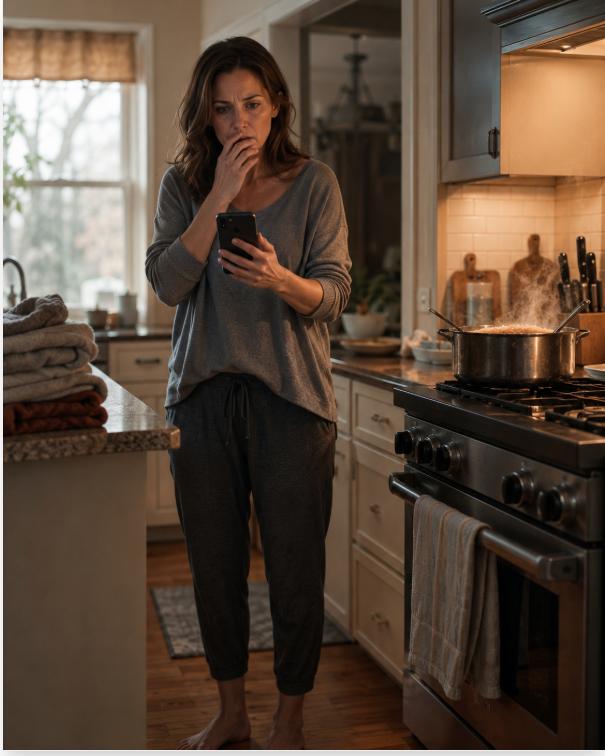
I was standing barefoot in my kitchen, folding a basket of towels while chicken soup simmered on the stove.
My sister Emily’s name flashed across my phone.
One image.
No message.
I opened it without thinking.
And in that single second, eight years of my marriage turned into a lie I had not known I was living.
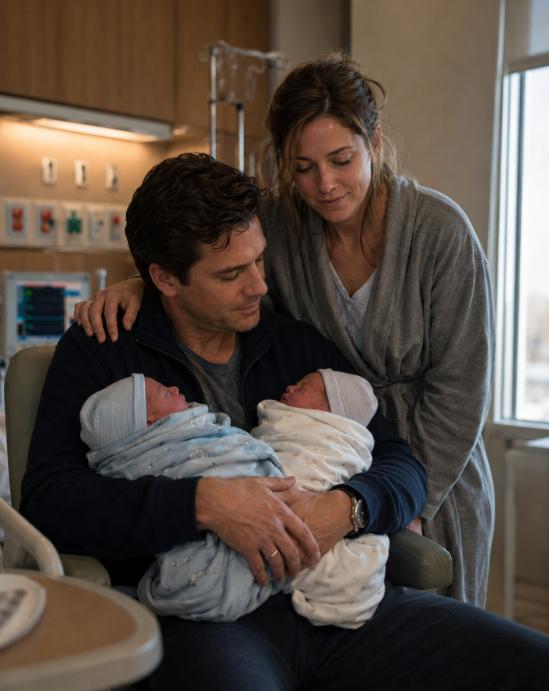
My husband was in the photo.
Charles.
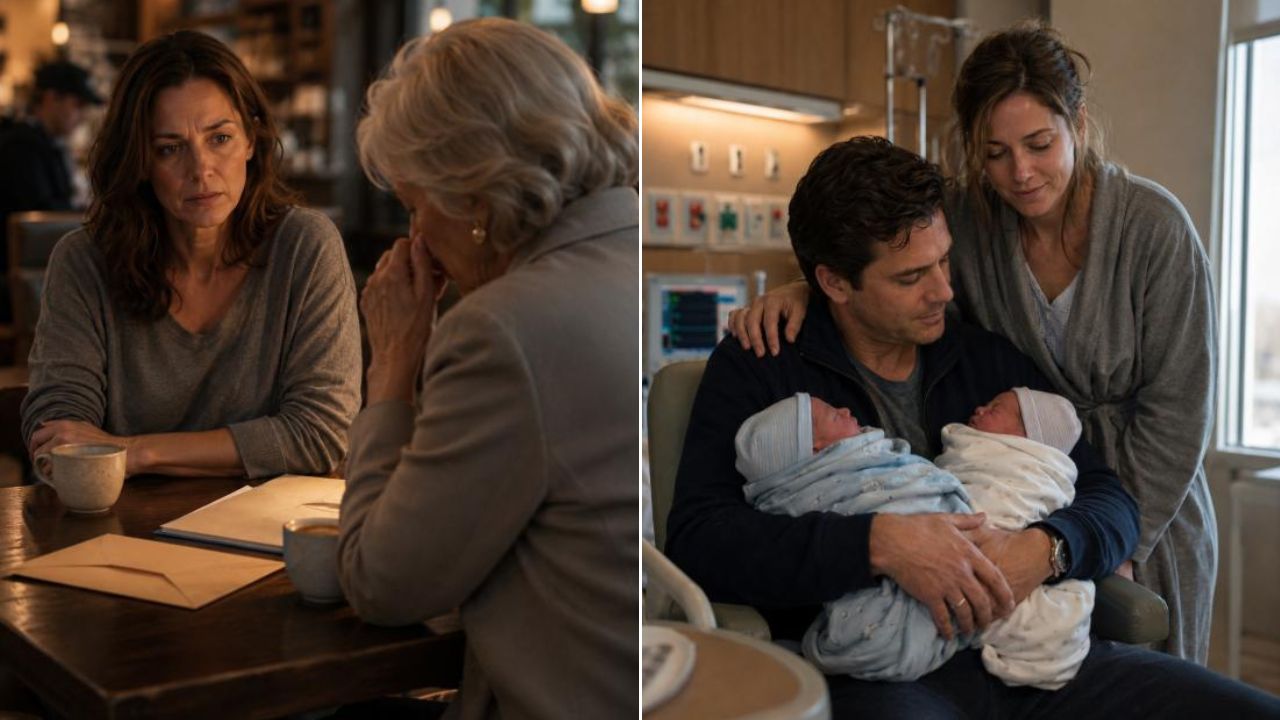
He was sitting in a hospital chair, wearing the same navy jacket I had bought him for Christmas. His hair was messy. His face looked tired.
And in his arms were two newborn babies.
One wrapped in pale blue.
One wrapped in white.
Under the photo, Emily had written:
Daddy loves you both.
For a moment, I did not understand what I was seeing.
My mind tried to protect me.
Maybe it was a joke.
Maybe Charles was visiting someone.
Maybe Emily had sent it to the wrong Nicole.
Maybe there was some explanation that would let my world remain standing.
Then I looked closer.
Charles was not holding those babies like a visitor.
He was holding them like they belonged to him.
Like they were the beginning of his life.
Like he had not spent the last eight years beside me, telling me we would get through infertility together.
My hand tightened around the phone.
I did not scream.
I did not cry.
Something inside me went completely still.
A minute later, Emily called.
I stared at her name on the screen until it stopped ringing.
Then it rang again.
This time, I answered.
Neither of us spoke at first.
Then Emily whispered, “Nicole, I didn’t mean for you to find out like this.”
That sentence told me everything I needed to know.
I hung up.
My name is Nicole Young. I was thirty-eight years old when I learned my husband had two newborn children with my younger sister.
But that was not the worst thing I discovered.
Not even close.
I am a forensic accountant.
My job is to find the tiny inconsistencies people believe no one will notice.
A number that doesn’t match.
A payment that does not belong.
A story that almost makes sense, but not quite.
I have built a career on trusting evidence over emotion.
I just never thought I would need those skills in my own marriage.
Charles and I married when I was thirty.
He was charming, ambitious, funny in the way that made strangers feel like they had known him for years. He co-owned a small logistics company that was just beginning to grow. I loved watching him work. I loved believing we were building something together.
Back then, we talked about children like they were already waiting for us somewhere.
Two, maybe three.
He liked old-fashioned names.
I wanted names that sounded good with “Dr.” or “Senator” in front of them, just in case our future children became more impressive than both of us.
We laughed about it.
It felt certain.
Then one year passed.
Then two.
Then came the appointments.
The blood tests.
The ultrasounds.
The polite voices of doctors trying to say painful things gently.
Then the language of fertility treatment became part of our marriage.
IUI.
IVF.
Hormone injections.
Follicle counts.
Embryo quality.
Pregnancy tests that stayed blank.
Three times, I saw a heartbeat too early to trust.
Three times, I lost it.
Each loss became a room inside me that I never truly left.
Charles came to the appointments. He held my hand. He said the right things.
“We’ll get through this together.”
I believed him.
I needed to.
Because the alternative was unthinkable.
For eight years, I blamed myself.
I blamed my body.
I blamed stress.
I blamed my job.
I blamed the wine I had one night before I knew I was pregnant.
I blamed myself for wanting too much.
I apologized to Charles in the dark more times than I can count.
“I’m sorry,” I would whisper.
He always said, “Don’t.”
But he never said, “This is not your fault.”
At the time, I thought that was kindness.
Now I know it was silence.
Emily was there through all of it.
Or I thought she was.
She was three years younger than me, softer in the way people mistake for goodness. She brought casseroles after procedures. She texted, “Thinking of you.” She told me I was strong.
I never once wondered if her comfort had another purpose.
I never once thought my sister was standing close enough to watch my marriage collapse from the inside.
The afternoon I received the photo, Charles had supposedly been on a work trip.
He had kissed my forehead the morning before and told me he would call when he landed.
He had said, “Maybe when I get back, we talk about one more round.”
One more round of treatment.
One more chance.
One more way for me to keep blaming myself while he held newborn twins somewhere else.
After I hung up on Emily, I stood in the kitchen for a long time.
The soup kept simmering.
The dryer buzzed.
The normal sounds of my home continued as if my life had not split open.
I wanted to call Charles.
I wanted to ask how long.
I wanted to ask how he could sit beside me in waiting rooms while doing this with my sister.
I wanted to ask if the babies were planned.
If Emily had laughed at me behind my back.
If everyone knew except me.
But I did not call him.
Because in my line of work, you learn something early:
You do not confront a liar the moment you find the first lie.
You collect the full shape of it first.
So I opened my laptop.
Within an hour, I had booked an appointment with a divorce attorney.

His name was Daniel Brooks.
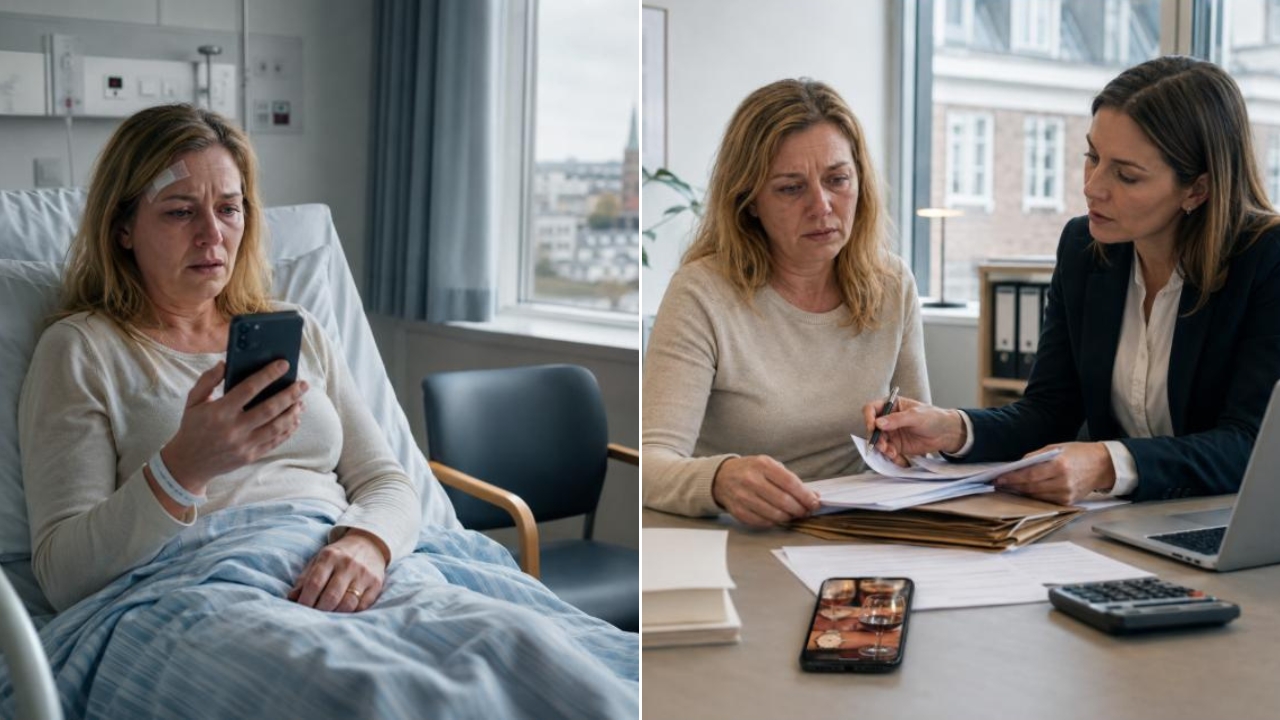
Two days later, I sat across from him in an office that smelled like coffee and expensive paper.
I placed my phone on his desk and showed him the photo.
He looked at it once.
Then he looked at me.
“Is that your husband?”
“Yes.”
“And the woman who sent it?”
“My sister.”
His face did not change.
Good lawyers are like good accountants. They know when emotion is unnecessary because the evidence is already loud.
“Do you want to file?” he asked.
“Yes.”
My hand did not shake when I signed the paperwork.
That surprised me.
I went home that night and made dinner for one.
Charles texted around eight.
Long day. Miss you.
I stared at the message.
Then I deleted it.
The next morning, I began my own audit.
Charles and I had mostly separate accounts, which once seemed practical and now felt like a small mercy from a wiser version of myself.
But we had a joint account for household bills.
That was where I started.
At first, the charges looked normal.
Mortgage.
Utilities.
Grocery store.
Insurance.
Then I found the hotel.
A small boutique hotel in a suburb neither of us had any reason to visit.
Two nights.
Thursday to Saturday.
Three months later, the same hotel.
Then again.
Then again.
I cross-checked the dates with my own calendar.
The first hotel stay happened during the week I was recovering from an IVF procedure.
Charles had told me he was sleeping at the office because the company had a shipping crisis.
The second hotel stay was the week after my second miscarriage.
The third was on Emily’s birthday weekend, when she told me she was going away with friends.
I sat at my kitchen table until almost two in the morning, building a timeline.
Hotel charges.
Gas receipts.
Restaurant payments.
Work trips that did not line up.
Photos from a shared cloud folder Charles had forgotten existed.
There they were.
Emily standing too close at his office holiday party.
Charles in sunglasses on a beach he had told me was near a client warehouse.
A dinner receipt for two from a restaurant Emily once told me she “always wanted to try.”
The affair had not been a mistake.
It had been a second life.
And I had been financing parts of the first one while grieving beside him.
I sent everything to Daniel Brooks.
At our next meeting, he read the file in silence.
When he finished, he said, “This is thorough.”
I almost smiled.
“I’ve had practice.”
He advised me not to confront Charles yet.
That was easy.
I had no desire to beg liars for explanations they would only shape into excuses.
For almost two weeks, I lived quietly inside my own house while Charles lived inside his false one.
He came home twice.
Once to pick up clothes.
Once to tell me the work trip had been extended.
He kissed my cheek both times.
Both times, I let him.
Not because I loved him less or more in those moments.
Because he did not deserve to know what I knew until I was ready.
Emily texted me three times.
I didn’t answer.
Then, on a Friday afternoon, my phone rang.
Charles’s mother.
Margaret.
Margaret and I had always been close in a careful, respectful way. She called me on holidays. She remembered my work deadlines. She had cried with me after the second miscarriage.
I answered because some part of me still trusted her.
“Nicole,” she said.
Then nothing.
Only breathing.
“Margaret?”
Her voice broke.
“Please don’t tell him yet.”
I stood very still.
“Don’t tell him what?”
She began crying.
“Please,” she whispered. “Don’t tell Charles yet.”
I looked down at the folder of evidence on my kitchen table.
“I know about Emily,” I said.
“I know,” Margaret said.
“That’s not what I mean.”
Something cold moved through me.
I had uncovered the affair.
But suddenly I understood I had not uncovered the truth.
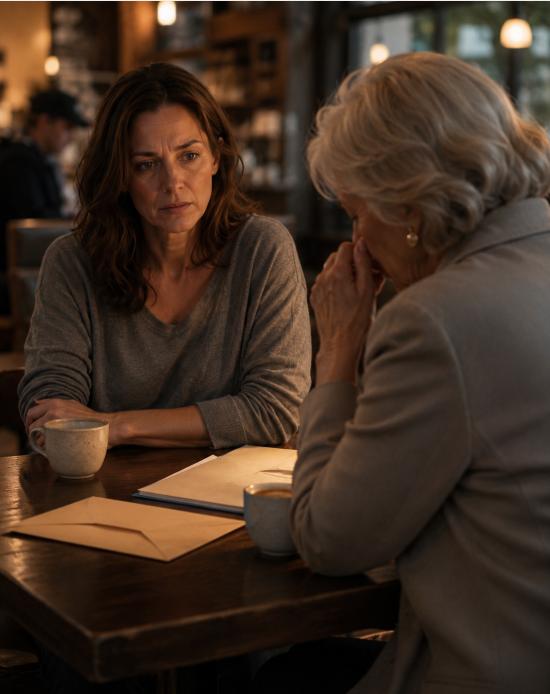
Two days later, I met Margaret at a coffee shop halfway between our houses.
She was already seated when I arrived, her hands wrapped around a cup she had not touched.
She looked older than she had a month ago.
Not in her face.
In her posture.
As if something inside her had been holding its breath for years.
“I should have told you,” she said before I even sat down.
I took off my coat slowly.
“Told me what?”
Margaret looked at the table.
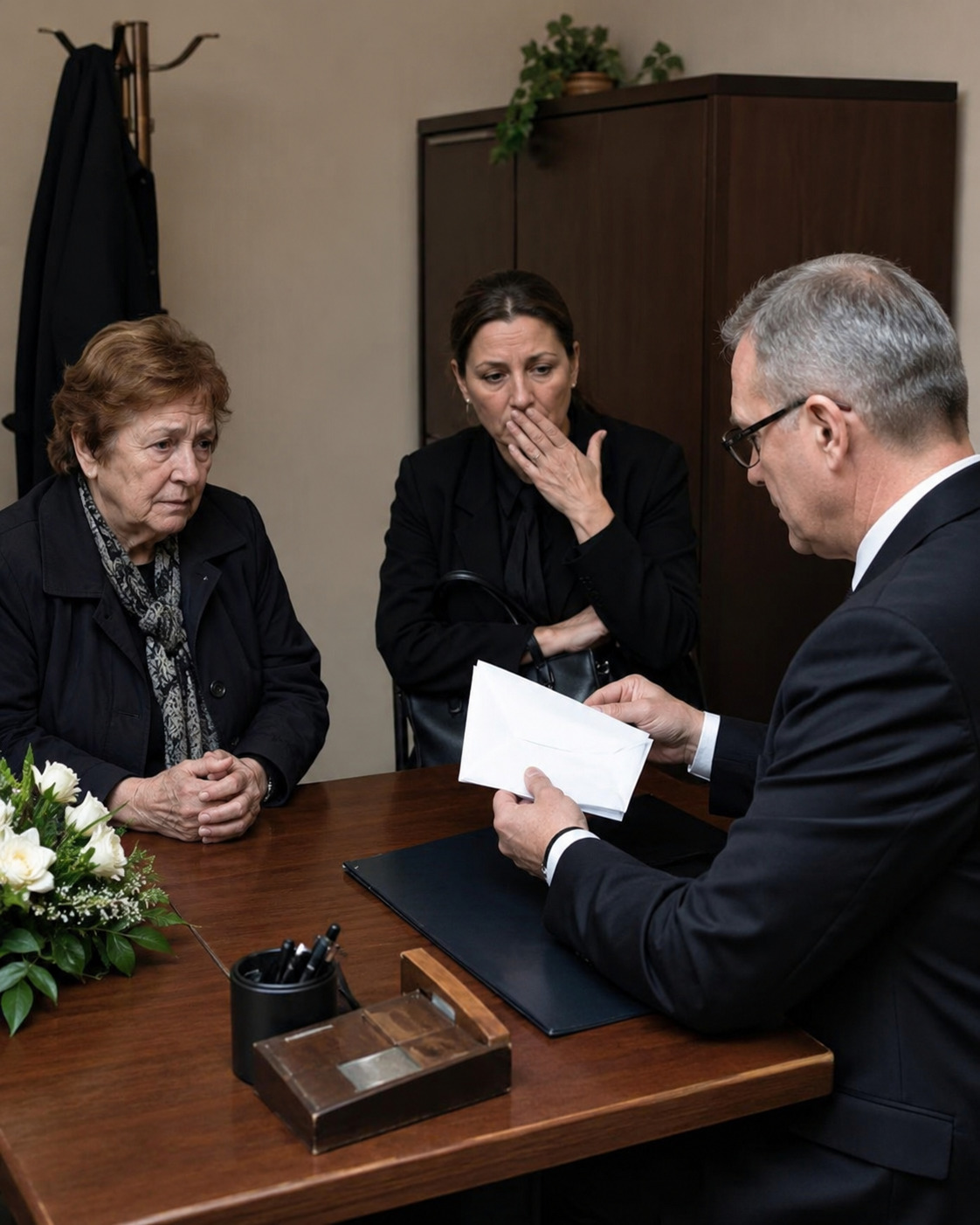
“There was a report.”
My chest tightened.
“What report?”
“From the fertility clinic. Eight years ago.”
For a moment, I heard nothing except the small hiss of the espresso machine behind the counter.
“Margaret.”
She closed her eyes.
“It was addressed to Charles. It came to the house by mistake while he was still using our address for some medical correspondence. I opened it without thinking.”
“And?”
Her face crumpled.
“It wasn’t about you.”
I did not speak.
She continued.
“It was his test results.”
The room seemed to narrow.
For eight years, every doctor’s office, every injection, every loss, every apology had lived inside me as evidence against my own body.
Margaret’s voice dropped to a whisper.
“The report showed a significant male factor issue. Dr. Collins recommended that you both come in and discuss options together. Charles never saw the letter.”
I stared at her.
“Why?”
“Because I didn’t give it to him.”
The words sat between us.
Ugly.
Unbelievable.
Margaret’s hands shook.
“I thought I was protecting him. He was so proud. So certain. He wanted children so badly. I thought if he saw that report, it would destroy him.”
“So you let me think it was me.”
She began to cry.
“Yes.”
“You let me go through years of treatment believing my body was failing.”
“I know.”
“You watched me apologize to him.”
“I know.”
Her voice was so small it almost disappeared.
“I was a coward, Nicole. I called Dr. Collins and begged her to let me handle it. I told myself I would tell him at the right time. Then time passed. Then it became harder. Then it became impossible.”
I should have hated her in that moment.
Part of me did.
But another part of me saw a woman sitting across from me, finally crushed by the weight of the lie she had chosen to carry.
“Does Emily know?” I asked.
Margaret shook her head quickly.
“No. Emily doesn’t know. Charles doesn’t know.”
The answer did not comfort me.
It made everything stranger.
Because if Charles had a significant fertility issue, and Emily had just given birth to twins he believed were his, then there was another question sitting in the room with us.
A question neither of us wanted to say.
Margaret whispered it first.
“Those babies changed everything, Nicole.”
I looked at her.
“But not for the reason Charles thinks.”
The next morning, I called Dr. Rebecca Collins.
I had not spoken to her in years.
Her office put me through faster than expected.
“Nicole,” she said carefully. “It’s been a long time.”
“I need my old file,” I said. “All of it. Every test, every result, every letter.”
There was a pause.
Then she said, “Margaret told you.”
“Yes.”
“Come in this afternoon. I’ll pull it myself.”
The fertility clinic looked exactly as I remembered it.
Soft gray walls.
Watercolor prints.
Chairs arranged to make heartbreak look organized.
Dr. Collins met me in her office. A thick folder was already on her desk.
Before she slid it toward me, she said, “I owe you an apology.”
I sat down.
“I let Margaret’s fear override your right to medical truth,” she said. “I have regretted it for years.”
I wanted to be angry.
I was angry.
But I also needed the file more than I needed the apology.
She opened the folder.
There were the familiar pages.
My hormone panels.
My ultrasound notes.
Procedure summaries.
Then near the back was a report I had never seen.
Charles’s report.
The language was clinical.
Clean.
Merciless.
The difficulty had not started with me.
It had never been only me.
Dr. Collins had recommended a joint consultation to discuss male factor infertility and alternative paths forward.
The letter had been sent.
The letter had been hidden.
I read the report once.
Then again.
Then a third time, slower.
A strange sensation moved through me.
Not relief.
Relief would be too simple.
This was grief changing direction.
For years, I had carried blame that did not belong to me.
I had made my body the villain in a story written by other people’s silence.
Now the file in front of me said:
You were never the whole problem.
Maybe not even the main one.
I thought I would cry.
I did not.
I only asked for copies.
Dr. Collins printed everything.
When she handed me the folder, she said, “Nicole, whatever you do next, I hope you do it for yourself.”
“I intend to.”
That night, Margaret called.
“I have the file,” I told her.
She exhaled as if she had been holding her breath for eight years.
“Now you understand why I looked terrified when Charles brought those babies home.”
“He brought them to you?”
“Tonight,” she said. “He wants me to meet them. Emily is coming too.”
The line went quiet.
“Margaret,” I said, “you don’t have to do this tonight.”
“Yes,” she said. “I do.”
I was not there when Charles walked into his mother’s house with Emily and the twins.
Margaret told me the story later.
Charles came in first, smiling like a man delivering joy.
Emily followed with one baby carrier in each hand.
She looked tired, Margaret said. Exhausted in the way new mothers are. But proud too.
Charles lifted one baby into his arms and said, “Mom, you’re finally a grandmother.”
Margaret told me she almost fell.
She looked at the babies.
Then at Charles.
Then at Emily.
And eight years of silence collapsed inside her.
Charles noticed.
“Mom? What’s wrong?”
Margaret said the words came out before she could stop them.
“Wait.”
Charles frowned.
“Wait for what?”
She looked at Emily.
“She didn’t tell you?”
Emily went pale.
Not guilty pale.
Confused pale.
That mattered.
Charles turned slowly toward Emily.
“Tell me what?”
Emily shook her head.
“I don’t know what she means.”
Margaret walked to the study.
In the back of the closet was a small fireproof safe.
Inside was the original envelope.
The medical report.
The letter from Dr. Collins.
And a handwritten note Margaret had written years earlier but never had the courage to send.
She carried it into the living room and placed it on the coffee table.
Charles stared at it.
“What is this?”
Margaret said, “Sit down.”
He did.
Emily sat too, one baby against her shoulder.
Margaret opened the envelope and laid the papers out one by one.
Charles picked up the report.
At first, his eyes moved quickly.
Then slowly.
Then not at all.
“This is about me,” he said.
Margaret nodded.
“This isn’t Nicole’s file.”
“No.”
He looked at his mother.
“You knew?”
Margaret began to cry.
“Yes.”
“For eight years?”
“Yes.”
His voice cracked.
“You let her think it was her fault.”
Margaret covered her mouth.
“You let Nicole apologize to me,” he said. “You let her cry. You let her go through everything thinking—”
He could not finish.
Then Emily spoke.
Her voice was small.
“Charles.”
He turned toward her.
She was looking at the report now. At the medical language. At the twins.
The same thought had reached her.
If the report was true, then the children Charles had been calling his own might not be his.
Emily whispered, “What does this mean?”
Charles did not answer.
Margaret said the room went so quiet she could hear one of the babies breathing.
Then Charles stood.
“I need to see Nicole.”
Margaret tried to stop him.
“Charles, wait. You need time.”
But he was already grabbing his keys.
He came to my house a little after nine.
I saw his headlights cross the living room wall.
I was folding towels.
For a second, the ordinary detail struck me.
The story had started with laundry.
Now here we were again.
I opened the door.
Charles stood on my porch, holding the creased report in one hand.
His eyes were red.
“You knew,” he said.
“I found out two weeks ago.”
“About this?”
“Yes.”
“I didn’t know,” he said quickly. “Nicole, I swear I didn’t know.”
“I believe you.”
He looked almost relieved.
That made the next part harder.
“Can I come in?” he asked. “Please.”
I let him in.
Not because he deserved it.
Because I wanted this conversation to happen in my home, on my terms, where I could end it when I chose.
We sat in the living room where we had spent eight years building the appearance of a life.
He told me everything Margaret had told him.
The report.
The safe.
Emily’s face when she realized the twins might not be his.
The affair that had suddenly turned into something even uglier.
“I don’t even know what’s real anymore,” he said.
I understood that.
More than he knew.
Then he looked at me with desperate hope.
“Nicole, if I had known, if my mother had told me eight years ago, none of this would have happened.”
I let him say it.
All of it.
People reveal a lot when you let them reach the end of their own excuse.
When he finished, I said, “You’re right about one thing.”
He looked up.
“Your mother’s lie changed our marriage. It changed both of us. She should have told the truth.”
He nodded quickly.
“But that is not where this started,” I said.
His face changed.
“You chose to have an affair with my sister.”
He looked down.
“You chose to let me keep blaming myself while you built a secret life with her.”
“I was hurting too.”
“I know.”
“I didn’t know how to talk to you.”
“So you slept with Emily?”
He flinched.
I did not raise my voice.
That mattered to me.
I had given too many years to pain. I was not giving it volume too.
“The medical report explains part of the damage,” I said. “It does not erase what you chose to do after.”
He had no answer.
For the first time, I saw him accept that there was no version of the story where he was simply another victim.
He had been lied to.
Yes.
But he had also lied.
He had been wounded.
Yes.
But he had also wounded me.
“What happens now?” he asked.
“The divorce moves forward.”
He closed his eyes.
“Nothing changes?”
“Everything changed,” I said. “That’s why I’m not staying.”
Charles left before midnight.
I watched his taillights disappear down the street and felt something inside me settle.
Not heal.
Not yet.
But settle.
The final mediation happened three weeks later.
I dressed simply.
Black slacks.
White blouse.
Hair pulled back.
No jewelry except my wedding ring, which I removed in the parking lot and placed in the small pocket of my purse.
Daniel met me outside the courthouse.
“You ready?” he asked.
“Yes.”
And I was.
Charles was already seated inside with his attorney.
He looked smaller than the man I had married.
The affair had collapsed. Emily had left the state with the twins, according to someone who thought I would want to know.
I did not ask where.
I did not ask with whom.
For the first time in my life, my sister’s choices did not require my attention.
Before the proceedings began, Charles turned to me.
“Nicole.”
I looked at him.
“I know I don’t deserve to ask. But is there any version where we try again?”
I felt nothing dramatic.
No rage.
No temptation.
Only quiet finality.
“There isn’t,” I said.
He nodded slowly.
“Because of Emily?”
“Because of us.”
His eyes filled.
“I think someday I can forgive you,” I said. “But forgiveness is not the same as staying.”
He looked down.
That was the last personal thing I said to him.
The mediation was quick.
Daniel had done his job well. The financial disclosures were complete. I asked for what was fair, nothing more.
I did not need to punish Charles through the settlement.
The truth had already done that.
When I walked out of the courthouse, the morning sun felt too bright.
I stood on the steps for a long moment, breathing.
For eight years, I had measured myself against a story that was never true.
Now I was unaccountable to it.
Margaret called that evening.
She did not ask me to forgive her.
I respected that.
She said, “I’m proud of you.”
I said, “I don’t know what we are now.”
“I don’t either,” she replied. “But if you ever want coffee, I would be grateful.”
Three months later, I met her.
Not because she deserved it automatically.
Because I wanted to.
We did not pretend her silence had been small.
We did not pretend love had excused it.
But she listened.
She apologized without defending herself.
That was more than most people ever learn to do.
I never rebuilt my life around what I lost.
I rebuilt it around what I finally knew.
A year after the divorce was finalized, I used part of the settlement to start a small foundation that helps couples navigating infertility treatment understand their rights, their records, and their options.
Full transparency.
Full access.
No hidden files.
No one carrying blame that was never theirs.
I did not name it after Charles.
Or Margaret.
Or Emily.
Or myself.
It did not need my story attached to it to matter.
It only needed to exist.
Sometimes people ask if I ever wanted children again.
The honest answer is complicated.
Some days, yes.
Some days, no.
Some days, I grieve the children I imagined so vividly that they still feel like people I almost knew.
But I no longer grieve them as proof of my failure.
That is the difference.
Charles wrote me once, two years after the divorce.
A short letter.
He said he was in therapy.
He said he was trying to understand the man he had become.
He said he was sorry.
I read it twice.
Then I put it away.
I did not write back.
Not because I hated him.
Because not every apology requires an audience.
Emily tried to contact me too.
I deleted the message before reading past the first line.
There are some doors that do not need to be slammed.
They only need to remain closed.
As for me, I live quietly now.
I still work as a forensic accountant.
I still find the numbers that do not belong.
But I no longer ignore the inconsistencies in my own life.
A pause before an answer.
A story that changes shape.
A kindness that feels like performance.
A person who lets you blame yourself because your guilt benefits them.
I notice those things now.
And I trust myself sooner.
That may be the greatest gift I took from all of it.
Not the settlement.
Not the divorce.
Not even the truth about the medical report.
The gift was this:
I stopped making myself the suspect in someone else’s crime.
For eight years, I blamed my body.
For eight years, I apologized for a failure that was never mine alone.
For eight years, I believed patience would be rewarded if I only endured enough pain quietly.
I was wrong.
Sometimes patience is not a virtue.
Sometimes it is the cage we build when we are afraid of the truth.
The photo my sister sent by mistake did not destroy my life.
It exposed the life that had already been destroying me.
And once I saw the truth, I did what I should have done years earlier.
I chose myself.
Not loudly.
Not cruelly.
Not for revenge.
For freedom.