Chapter 1: No Room
My parents had two empty bedrooms and a finished basement.
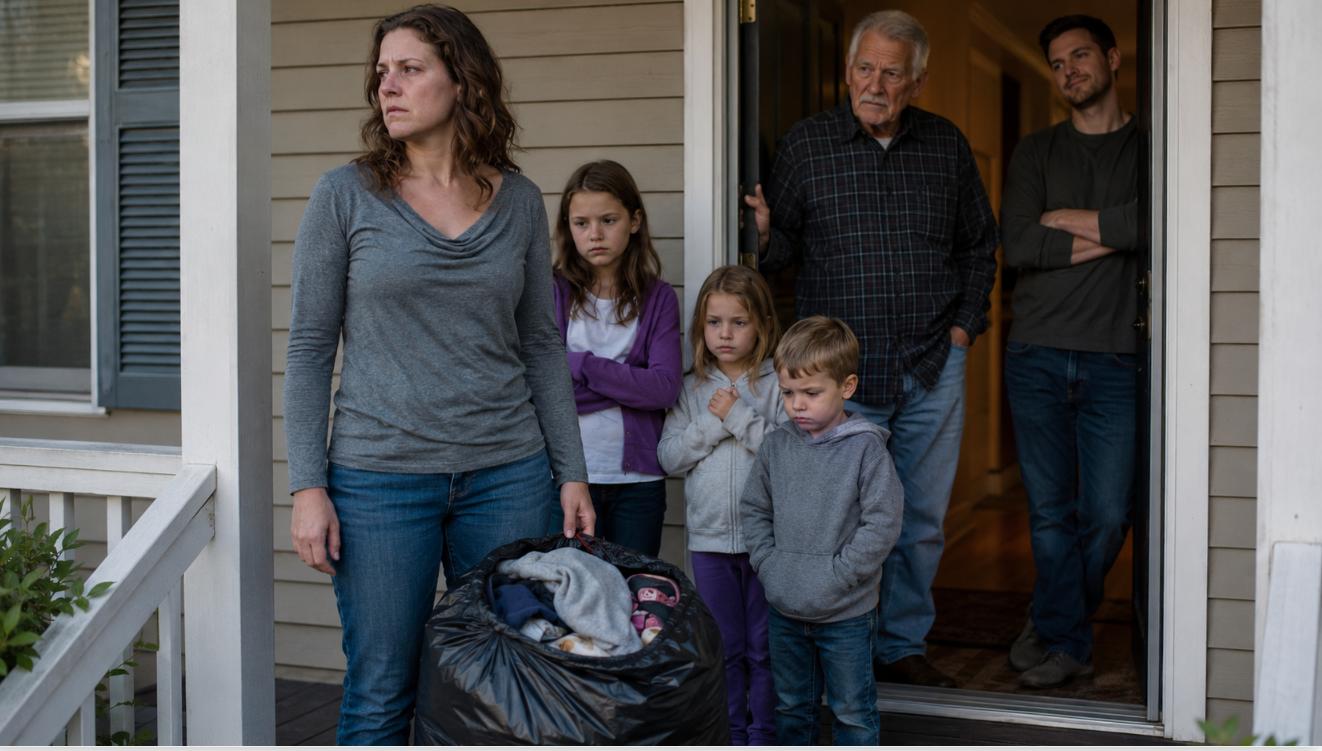
That was what I kept thinking as I stood on their porch with three children behind me and a black garbage bag at my feet. Not a suitcase. Not neat boxes. A garbage bag, because when your life collapses in one weekend, you do not pack with dignity. You grab socks, pajamas, school clothes, stuffed animals, toothbrushes, and whatever else your shaking hands can reach before the children start asking questions you cannot answer.
My father opened the door first. Bowen Miller had always looked larger to me when I was a child, the kind of father who could carry two grocery bags in each hand and still hold the screen door open with his foot. That morning, he looked smaller, older, and strangely prepared. His face did not show surprise when he saw us. That was my first warning.
“Dad,” I said, keeping my voice low because my children were close enough to hear everything. “I called Mom yesterday. I just need a few weeks. Until the lawyer figures out what happens with the house.”
Behind me, Saren held my hand so tightly her fingers felt cold. She was nine, serious and quiet, already old enough to understand when adults were lying politely. Kayla, six, leaned against my leg with one thumb hooked in the waistband of her pajama pants. Arlo, four, hugged my waist from behind and pressed his cheek into my coat.
My father looked past me at the minivan, then at the garbage bag, then at the children. “Your mother and I talked,” he said. “We don’t think this is a good idea.”
The words were so calm I almost did not understand them.
“There are three bedrooms upstairs,” I said. “Landis only uses one.”
My brother’s voice came from somewhere behind him. “There literally isn’t space, Cor.”
Then I saw Landis lean around my father’s shoulder. Thirty-two years old, rent-free in my parents’ house, wearing gaming headphones around his neck at ten in the morning. He gave me a half smile, the kind people use when they know they are safe on the other side of a door.
My cheeks went hot.
“Dad,” I said, “Caspian cheated. I found the messages. I filed because I had to. I am not asking you to fix my life. I’m asking you to let your grandchildren sleep somewhere safe.”
My father’s expression tightened, not with anger, but with discomfort. That was worse somehow. “Maybe you should go back home and try again,” he said. “Your mother thinks you’re acting too quickly.”
Before I could answer, my sister Bryony appeared in the hallway. She crossed her arms and tilted her head like she was about to deliver wisdom. Bryony had been married eighteen months and spoke about marriage like she had survived a war.
“Honestly, Coralie,” she said, “you have three kids. Their stability matters more than your feelings right now.”
My feelings.
I looked down at my children standing on that porch in yesterday’s clothes and understood something with a clarity that made me almost dizzy. They were not afraid I had nowhere to go. They were afraid helping me would force them to take a side.
My father stepped back.
“I’m sorry,” he said.
Then he closed the door.
Not all at once. Slowly. Like that made it kinder.
I stood there with my children, my garbage bag, and the house I grew up in locked in front of me. For a second, I wanted to knock again. I wanted to beg. I wanted my mother to open the door and say everyone had overreacted.
Instead, I picked up the garbage bag.
Saren looked up at me. “Mom?”
I swallowed the thing breaking in my throat and made myself three words.
“Watch what happens.”
Then I took my children back to the minivan and drove away.
Chapter 2: The Message
Eighteen months earlier, I would have told you my life was decent.
Not perfect. Not Instagram-perfect. But decent. We had a small house with a dishwasher that worked most days, a minivan with a cracked tail light I kept meaning to fix, and three children who grew so fast that sometimes I felt like motherhood was just a long series of outgrown shoes.
I worked part-time as a medical records coordinator. It was not glamorous work, but I liked clean files, complete charts, and the quiet satisfaction of knowing where everything was supposed to go. Caspian worked as a sales director for a logistics company. He traveled often, answered emails during dinner, and treated his career like a demanding god that needed constant offerings.
He was charming when he wanted to be. That was part of the problem. Caspian never screamed. He never punched walls. He never made scenes in public. He simply made disappointment feel like a weather system that always formed over my side of the house.
If he forgot a school event, I had failed to remind him clearly enough. If he came home late, I had failed to understand pressure. If the kids were loud when he walked in, I had failed to manage the atmosphere. I became very good at apologizing for things I had not done.
The affair did not arrive with lipstick on a collar or perfume in the car. It arrived as three sentences on his phone while he was in the shower. He had left it unlocked on the kitchen counter, face up beside a half-empty cup of coffee.
I was wiping applesauce off the table when the screen lit.
I miss your hotel voice.
Next trip can’t come fast enough.
She still doesn’t suspect anything, does she?
Ten years of marriage can end in less than a minute if the right words appear in the wrong place.
Caspian tried everything after that. Tears. Promises. Therapy. Blaming loneliness. Blaming work. Blaming me without saying my name directly. For two weeks, I tried to believe him because believing him meant my children could keep their rooms, their routines, their father at the breakfast table.
But something had shifted in me.
His apologies sounded rehearsed.
His touch made my skin go cold.
When I filed for divorce in the spring, I thought the hardest part would be leaving him. I was wrong. The hardest part was learning how many people wanted me to stay broken because my silence was easier for them.
My mother said, “Caspian is a provider.”
My father said, “Men make mistakes.”
Bryony said, “You have to think about the kids.”
Landis said nothing until the porch.
And Caspian, once he realized I was truly leaving, stopped apologizing and started preparing.
Chapter 3: The Motel
The first motel was thirty minutes outside town, just far enough that I hoped no one from school would see us.
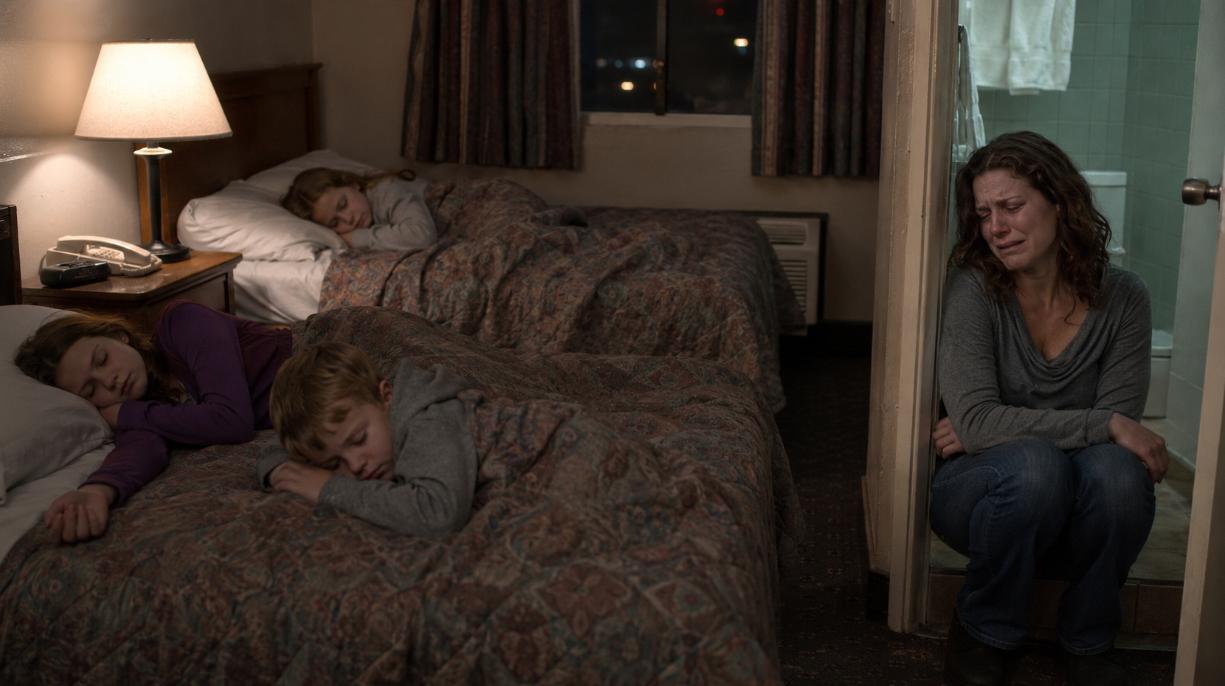
It had two beds, a vending machine that ate Kayla’s dollar, and curtains thick enough to block the parking lot lights. The kids treated the first night like an adventure. Kayla declared she would sleep in the middle because she was “the important one.” Arlo jumped between beds until Saren told him sharply to stop because “Mom is tired.”
I laughed then. Not much. Just enough that the room felt less airless.
After they fell asleep in a pile of limbs and blankets, I sat on the bathroom floor with the shower running so they would not hear me cry. I cried quietly, one hand pressed against my mouth, because there is a particular humiliation in realizing you are a grown woman with children and still want your parents.
The motel was supposed to be for two nights. It became four. Then eight. Then almost a month.
Money disappeared fast. Gas. Food. Laundry. Arlo’s daycare. A retainer payment to my lawyer. New shoes for Arlo because his toes had started curling in the old ones. One night, I ate crackers for dinner and told the kids I was not hungry because I had a late lunch.
Saren watched me from the other bed.
“You didn’t,” she said.
I looked at her.
“Didn’t what?”
“Have lunch.”
She was nine. She should have been worried about spelling tests and library books, not whether her mother had eaten.
The next morning, I went to work early with motel shampoo still drying in my hair. My supervisor, Terrell, called me into her office. Terrell was sharp, direct, and kind in a way that did not waste time pretending not to notice pain.
“You’re in trouble,” she said.
I opened my mouth to deny it, then stopped.
“Yes.”
She did not ask for details. She asked what I needed.
“Hours,” I said. “Full-time, if there’s any way.”
Terrell looked at me for maybe three seconds, then opened a drawer and pulled out a form. “Benefits start after thirty days. The pay isn’t glamorous, but it’s steady. You’ll need to train on two additional systems.”
“I’ll learn tonight.”
“I know you will.”
That was the first door someone opened.
A week later, I found a two-bedroom apartment in a neighborhood that was not fancy but safe. The kitchen had one drawer that stuck so badly we named it “the enemy.” The bathroom tiles were beige in a way that felt personally offensive. But the lock worked. The bus stop was two blocks away. The kids’ school was close enough that Saren could stay in the same class.
On move-in day, Kayla picked bright yellow curtains.
“They look like sunshine yelling,” Saren said.
“They’re perfect,” Kayla replied.
I hung them crooked, stood back, and cried again.
This time, not because I had lost everything.
Because we had a window.
Chapter 4: Receipts
Caspian underestimated me in one very specific way.
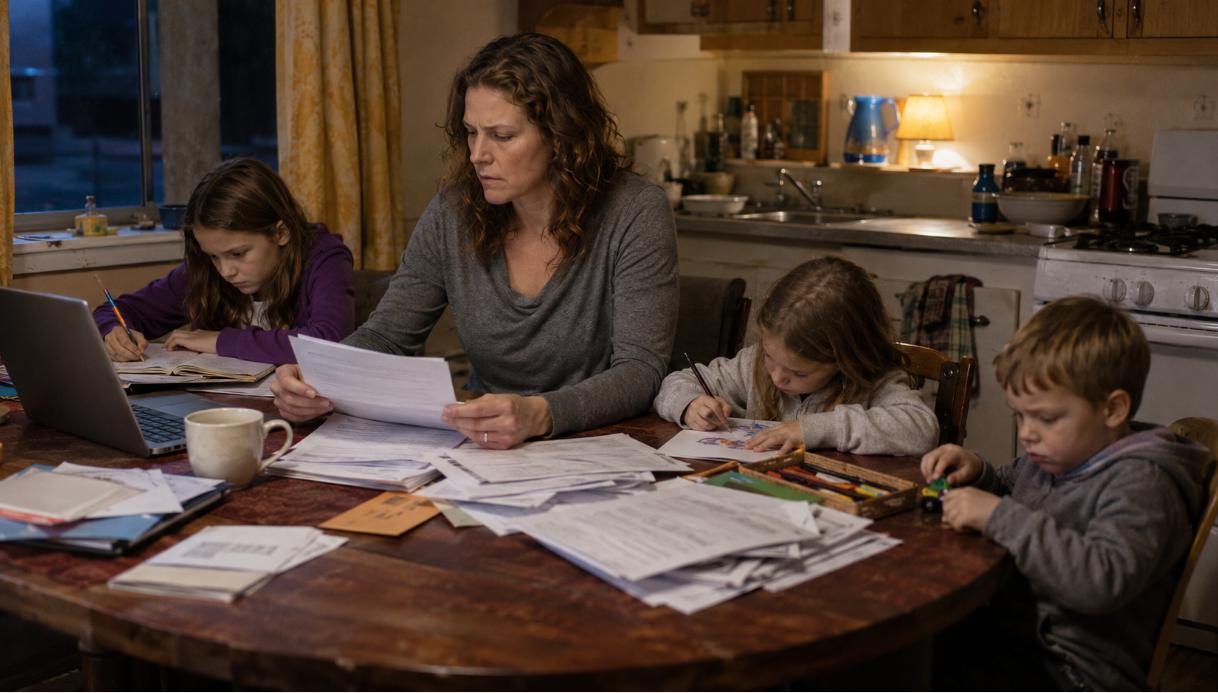
He thought because I had handled the invisible work of our family, that work did not count. He had never noticed the calendars, the appointment logs, the email chains with teachers, the daycare sign-ins, the pediatric records, the pharmacy receipts, the dentist reminders, the permission slips, the notes from school, the lunch account deposits, or the birthday invitations I answered while he sat beside me scrolling through his phone.
Invisible work leaves paperwork if you know where to look.
My lawyer, Naomi Price, knew where to look.
Caspian’s first custody proposal was insulting. Equal physical custody, though he had never managed more than a weekend alone with all three children. He wanted the marital home awarded to him “temporarily for stability.” He wanted reduced child support because, according to his attorney, my decision to leave had created unnecessary financial disruption.
Naomi read the proposal in silence.
Then she looked at me over her glasses and said, “Do you have records?”
I almost laughed.
“I work in medical records.”
For the next three weeks, I built the file that would save us. School pickup logs showing my signature almost every day for years. Pediatric forms listing me as the parent present at nearly every visit. Emails from teachers addressed only to me because Caspian never replied. Daycare messages. Dental records. Texts where he asked what grade Kayla was in because he was filling out a form. Flight confirmations from business trips that overlapped birthdays, fevers, school conferences, and holidays.
Then Caspian made a mistake.
He submitted a statement claiming I had “emotionally destabilized the children” by moving them into “temporary housing” instead of accepting available family support.
Available family support.
Naomi called me after reading it.
“Did your parents offer housing?”
“No.”
“Did they know you needed it?”
“Yes.”
“Can anyone confirm that?”
I thought of the porch. My father’s face. Landis’s smile. Bryony’s lecture. My children behind me.
“My oldest daughter heard it,” I said quietly.
Naomi paused.
“We do not want to put your child in the middle unless necessary. But we can document the motel stay, the timeline, and your attempts to obtain safe housing. We can also request statements if your family is willing.”
They were not willing.
My mother called three days later, voice tight. “Caspian’s attorney contacted us. We don’t want to be dragged into this.”
“You were already in it when you closed the door.”
“That’s not fair, Coralie.”
I laughed once, sharp and tired. “No. It wasn’t.”
Bryony sent a long text telling me this was exactly why she had said I was being impulsive. Landis did not respond at all. My father left a voicemail saying he loved the children but did not want to “take sides.”
Naomi used none of them.
She did not need to.
The records were enough.
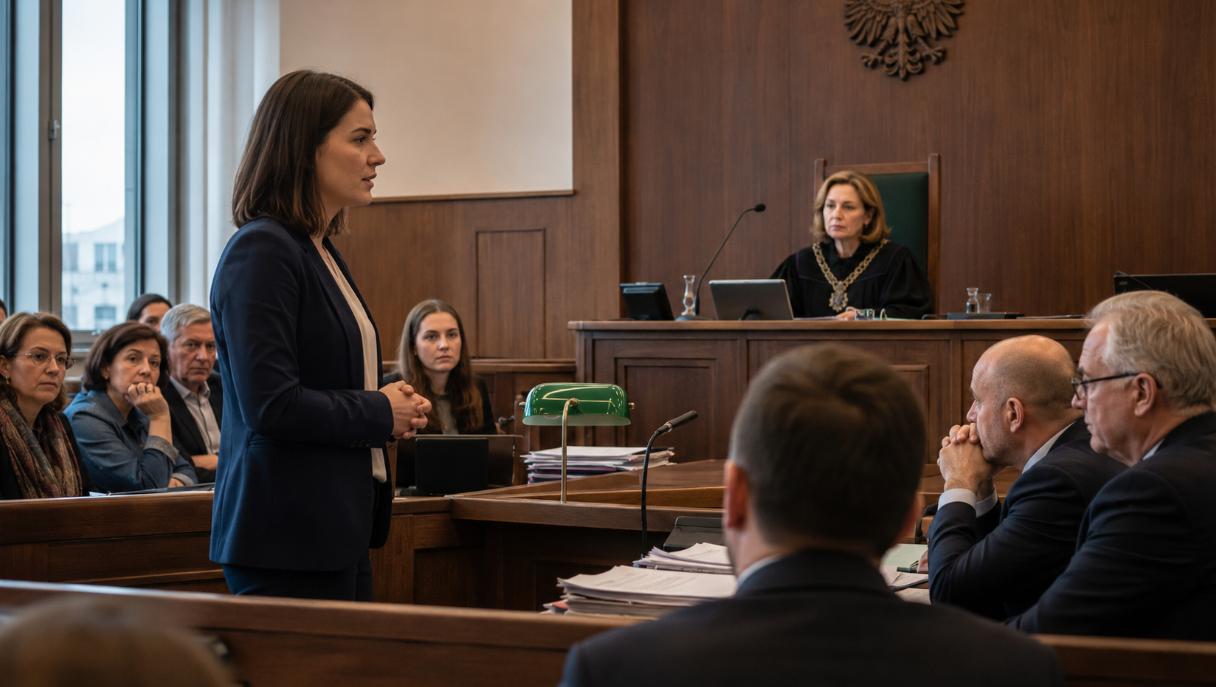
At the custody hearing, Caspian sat in a navy suit beside his attorney, looking wounded and reasonable. He spoke about wanting to be present. He spoke about stability. He spoke about how much the children needed both parents.
Then Naomi began laying out the file.
Not dramatically. Not cruelly. Just one document at a time.
School records. Medical records. Travel schedules. Texts. Daycare logs. A decade of parenting reduced to evidence because the man who had not done the work had decided to claim half the credit.
The evaluator’s report was polite but clear. I had been the primary parent. The children were settled in their new school and apartment. Caspian’s proposed schedule did not match his actual work demands or past involvement. Stability did not mean returning to a house where their mother had been betrayed and then forced out.
I was awarded primary physical custody. Caspian received every other weekend, two weeks in summer, and a child support amount his attorney tried very hard to reduce.
They failed.
When Naomi called me after the order was final, I was standing in our tiny kitchen stirring boxed macaroni and cheese.
“You won,” she said.
I looked at Kayla drawing horses at the table, Arlo wearing pajamas backward, and Saren pretending not to listen from the couch.
“No,” I said. “We survived.”
Chapter 5: The Phone Calls
News travels in small towns even when no one admits they are carrying it.
My mother called two weeks after the custody order.
“We heard everything worked out,” she said.
I stood in the hallway outside my apartment because the kids were doing homework inside and I did not want them hearing my voice change.
“Did you?”
“Coralie, don’t be like that. We were worried about you.”
“No, Mom. You were worried I was embarrassing you.”
She sighed, the old familiar sigh that had trained me for years to make myself easier. “We thought you and Caspian could work things out. Marriage is complicated.”
“Cheating is complicated. Being homeless with three children is not.”
“You weren’t homeless.”
I looked at the yellow curtains in the living room, glowing under the cheap lamp. “I was in a motel because my parents had no room.”
There was silence.
Then she said, “We made the best decision we could at the time.”
That was not an apology. It was a locked door dressed in better clothes.
“I need time,” I said.
“Family doesn’t do this.”
I almost smiled.
“Family did this first.”
Bryony began texting after that. Her first message was long and soft, full of phrases like “I’ve been reflecting” and “I hope you understand where I was coming from.” She said her words on the porch had come out wrong.
I read the message twice.
Then I wrote back: I appreciate you reaching out. I need more time.
She sent another message two weeks later.
Then another.
Each one more aware that she had misjudged the ending.
Landis never reached out. That, too, was an answer.
My father sent a card at Christmas. Thinking of you, he wrote. I put it on the fridge because the kids recognized his handwriting. Their relationship with him was theirs to understand slowly, not mine to poison all at once.
But I did not call.
I was done begging people to make room.
Six months after the custody order, Terrell recommended me for a department lead position. The raise was not life-changing in the way movies imagine, but it changed my life anyway. It meant a better apartment. A real emergency fund. New shoes without panic. Groceries without counting every item twice.
We moved into a three-bedroom in the same school district.
The kitchen drawers opened. All of them. I almost cried at that too.
Kayla painted one bedroom wall with chalkboard paint and covered it with horses that looked like dogs with long necks. Arlo taped glow-in-the-dark stars to his ceiling in random clusters he insisted were “space maps.” Saren arranged her books by subject, then by author, then by what she called “emotional importance.”
One evening, while I stirred pasta sauce, Saren leaned against the counter.
“Mom,” she said, “I think we’re going to be okay.”
She was ten by then.
I kept stirring because if I looked at her too quickly, I would cry.
“Yeah,” I said. “I think so too.”
Justice does not always come with a courtroom gasp. Sometimes it is a lease in your own name. A savings account growing slowly. Children sleeping in beds you paid for. Pancakes on a Sunday morning in a home built from no one’s permission but your own.
Chapter 6: The Showcase
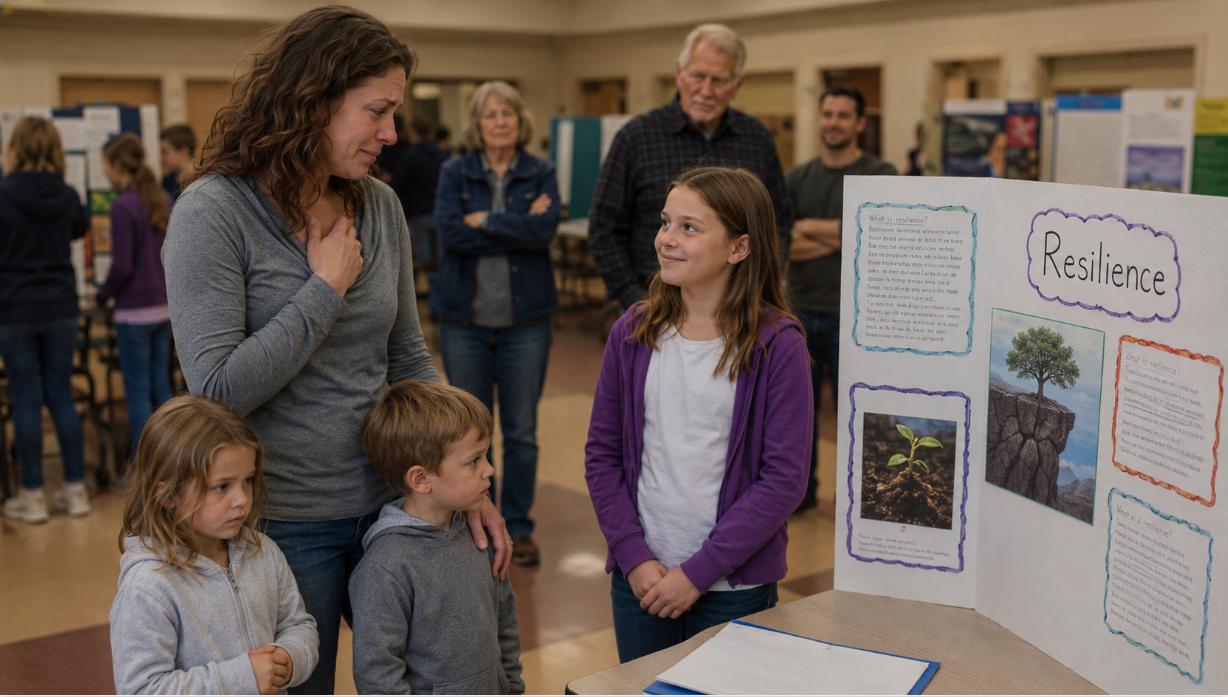
Last month, Saren’s school hosted a family showcase.
The cafeteria smelled like paper, markers, and burnt coffee. Parents moved from table to table, nodding at display boards about volcanoes, local history, recycling, and famous inventors. Arlo tried to touch everything. Kayla declared the lemonade “suspicious.”
Saren’s project was about resilience.
She had researched the psychology of recovery, the science of stress, the difference between support systems and self-reliance. Her handwriting was neat across the top of the board. She had made charts, definitions, and a section titled “What Helps People Keep Going.”
At the bottom, in smaller letters, she had written one sentence herself.
Resilient people don’t wait to be rescued. They figure out the next step.
I read it twice.
Saren stood beside the board watching me carefully.
“I wrote that part,” she said. “Not from a source.”
“I can tell.”
“Is it good?”
I looked at my daughter, ten years old, serious-eyed, already understanding things it took me half my life to learn.
“It’s very good.”
She nodded, satisfied. “I know.”
That was when I saw my mother.
She stood near the cafeteria entrance beside my father and Bryony. Landis was not with them. My mother’s eyes moved from Saren’s board to me, then to the children, then back to me. She looked older than she had on the porch. Or maybe I had stopped looking at her like a child.
Bryony approached first.
“Coralie,” she said softly. “The project is beautiful.”
“Thank you.”
My mother came closer, hands clasped in front of her. “We didn’t know about this until Bowen saw the school newsletter.”
I nodded.
An awkward silence opened between us.
Finally, my mother said, “Your father and I have been wanting to talk.”
“Then talk.”
Her eyes flickered. She was not used to my voice being that steady.
“We regret how things happened.”
I waited.
She looked at my father. He cleared his throat.
“We should have helped you,” he said.
There it was.
Small. Late. Imperfect.
But something.
Bryony’s eyes filled. “I said awful things. I thought I understood marriage because I was married. I didn’t. I’m sorry.”
For a moment, the old Coralie almost rushed forward. The one who wanted peace quickly. The one who would have made everyone comfortable by accepting less than she needed.
But that woman had slept on a motel bathroom floor and gotten up anyway. That woman had built files and paychecks and a home. That woman had learned that forgiveness offered too quickly can become another room where you disappear.
“I hear you,” I said.
My mother looked relieved too soon.
“But I’m not ready to pretend it didn’t happen.”
Her face fell.
“I don’t know what that means.”
“It means you can start by showing up for the kids without asking me to erase the porch.”
My father nodded slowly.
“That’s fair.”
It was not healing. Not yet.
But it was honest.
Across the room, Saren was explaining her project to Arlo, who looked bored but loyal. Kayla had found the suspicious lemonade again. My children were laughing under fluorescent lights in a school cafeteria, alive and safe and loud.
For so long, I had imagined justice as the moment my family realized they were wrong. I thought I needed to see shame on their faces to feel free.
But standing there, I understood something else.
Their regret was not the reward.
This was.
My children settled. My name on a lease. My paycheck. My boundaries. My daughter writing about resilience because she had watched it happen at our kitchen table.
My parents had closed the door.
Caspian had broken the marriage.
My siblings had judged me from inside a house with empty rooms.
And still, somehow, my life had not ended there.
It had begun.
I do not tell this story because I want sympathy. I have a working dishwasher now, three children who argue over cereal like it is a constitutional matter, a job I earned, and curtains that no longer look like survival but like choice.
I tell it because somewhere, a woman is standing at her own version of that door.
Maybe with children. Maybe with bags. Maybe with no one behind her at all. She is asking for help from people who should love her, and the door is closing, and it feels like the end of everything.
It is not.
It may be the beginning of the part where you stop asking for space and start building your own.
On the night my parents turned us away, I whispered three words to myself.
Watch what happens.
Eighteen months later, I know exactly what happened.
I became the woman my children needed.
And, finally, the woman I needed too.