CHAPTER ONE: THE WILL
The room smelled like cedar, old paper, and the faint coffee someone had brought in before the reading began. I remember noticing that because everything else felt strangely unreal. I was sitting near the window in a chair I had pulled over myself, while my uncle Desmond, my aunt Patricia, and my cousin Renata sat around the attorney’s desk. My grandmother’s will was being read three days after her funeral, and everyone seemed to have arrived with a general idea of what they expected to hear. I had not.
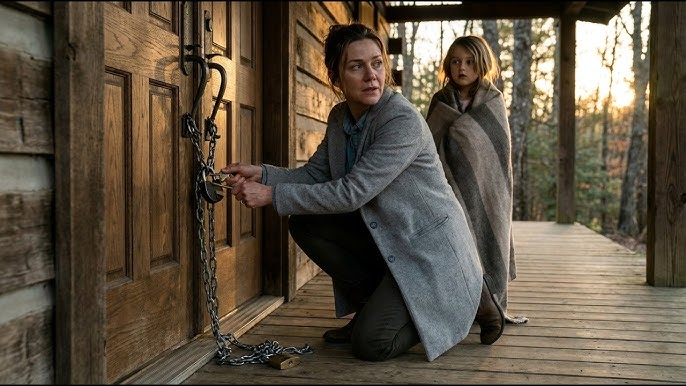
My grandmother, Ida Mae Callaway, had lived on the same farm for most of her life. It was not a huge estate by the standards of some families, but it was valuable land—forty-seven acres of lower pasture, another nine acres on the upper slope, mineral rights, the farmhouse, the barn, the stable, and everything inside them. My uncle Desmond had spent much of his life talking about the property as though it were a family asset waiting for the right person to manage it. I had heard him do it at Thanksgiving, at Christmas, and once during a birthday dinner when my grandmother was sitting three feet away.
Nobody expected my name to be read.
When the attorney, Mr. Beach, said, “Nora Lynn Callaway, as sole beneficiary,” the room went completely quiet. My cousin Renata made a small sound that she tried to disguise as a cough. My aunt Patricia straightened in her chair. My uncle’s expression barely changed, but I knew him well enough to recognize that he was doing the most thinking of anyone in the room.
I was thirty-one years old.
I worked Tuesday through Saturday at a garden supply store in Harwick. I drove a ten-year-old truck with a heater that only worked properly on the highest setting. I had a little over four thousand dollars in savings, and I had spent the last four years driving forty minutes each way to visit my grandmother several times a week.
I had never gone there expecting an inheritance.
I had gone because she was my grandmother.
That was all.
CHAPTER TWO: THE FARM
The farm had been part of my life for as long as I could remember. When I was little, I thought the lower pasture was enormous, even though I could walk across part of it in less than an hour. I knew which porch step creaked, which kitchen window stuck in the winter, and where my grandmother kept the good biscuits that she claimed were “for company” even though she always gave me one.
As I got older, I became one of the few family members who continued visiting regularly.
During the last four years of her life, I drove there three times a week whenever I could. I changed her sheets, took her to the eye doctor, picked up prescriptions, fixed small things around the house, and sat with her in the evenings. Sometimes we talked for hours. Sometimes we barely spoke at all.
In September, we would sit on the porch while the air cooled and the light turned gold over the pasture. My grandmother talked about the farm the way older people sometimes talk about places that have held too much of their lives to ever be ordinary. She remembered where the old fence had been before the new one. She remembered which fields had flooded in the 1950s. She remembered people I had never met and stories I had heard so many times that I could almost see them.
My uncle Desmond rarely came unless there was a family event.
My aunt Patricia visited occasionally.
Renata had not spent much time there since she was a child.
None of that seemed important to me at the time.
I never kept score.
But after the will was read, everyone suddenly began remembering how much the farm meant to them.
Desmond challenged the will within days.
He questioned whether my grandmother had been mentally capable when she signed it. He suggested that I may have influenced her. He implied that the rest of the family had been excluded from decisions they should have been part of.
The problem was that the will had been signed sixteen months earlier.
There had been two witnesses.
There had been a notary.
And the medical records showed that my grandmother had been alert and fully capable at the time.
The challenge went nowhere.
My attorney, Claire Stroud, explained it to me in simple terms.
“Your grandmother knew exactly what she was doing,” she said.
I believed that.
I just did not yet understand how much she had been doing.
CHAPTER THREE: THE PROMISE
A few weeks after the will reading, I found myself standing in my grandmother’s bedroom, looking at the same shelves she had used for decades. Her clothes were mostly gone. The room felt strangely empty without her, even though the furniture was still there.
I remembered something she had said to me two years earlier.
It had been late at night.
She was eighty-seven at the time, and I had been helping her get settled into bed. I was about to turn off the light when she asked me to sit down.
Then she told me about a tin box.
She said it was in the top of her closet.
Inside was a map and a key.
She made me promise that if anything happened to her, I would find it.
At the time, I thought she was simply tired.
My grandmother had always been practical, but that night she seemed unusually serious.
“There is something down by the stable,” she told me. “Something that doesn’t belong to the family.”
I remember laughing a little because I thought she was being mysterious.
She did not laugh.
“When the time comes, you’ll want to look.”
Now, two years later, I stood on the same stepstool and reached for the tin box.
It was exactly where she had said it would be.
Inside was a survey map, an old photograph of the lower pasture, a handwritten list of names I did not recognize, and a small brass key attached to a leather tag.
On the tag, in my grandmother’s blue handwriting, were four words:
Stable floor. South corner.
I sat down on the edge of the bed.
For a long time, I simply held the key.
Then I remembered something else.
My grandmother had not been confused that night.
She had been waiting.
CHAPTER FOUR: UNDER THE FLOOR
The stable was about fifty yards from the farmhouse. It had been built sometime in the 1920s and had probably looked ordinary even when it was new. By the time I inherited the property, the siding had faded to silver and the roof needed work. The floor was a combination of old boards and packed earth, covered with years of dust, hay, and dirt.
I had walked across that floor my entire life.
I had never noticed anything unusual.
I went to the south corner with the map in my hand.
The location was marked with a small handwritten notation.
I moved aside some old boards and began scraping away the dirt.
At first, I found nothing.
Then my fingernail caught on metal.
There was a small ring set into the floor.
I pulled it upward and found a hidden hasp beneath it.
Under the hasp was a brass lock.
I took the key from the tin box.
It fit perfectly.
The lock opened without resistance.
Beneath the floor was a narrow set of stone steps leading into darkness.
I went back to the farmhouse for a flashlight.
My grandmother had always kept a heavy one near the kitchen door for power outages. She replaced the batteries every October, whether they needed replacing or not.
I checked it twice.
Then I went down.
The room beneath the stable was larger than I expected.
It was roughly twelve feet by fourteen feet, with walls made of tightly fitted limestone. The air was cool and completely dry. There was no smell of mold, no standing water, and no sign that the space had been disturbed in years.
The shelves were built directly into the stone walls.
And they were full.
There were framed oil paintings wrapped in canvas.
Bronze sculptures packed in wooden cases.
Crates of books.
A flat metal case filled with works on paper.
At the far end of the room was a metal strongbox.
I stood there with the flashlight in my hand, trying to understand what I was looking at.
Then I did the only thing that made sense.
I went back upstairs.
I closed the hatch.
And I called someone who knew more about history than I did.
CHAPTER FIVE: WHAT MY GRANDMOTHER HAD BEEN WAITING FOR
Her name was Gloria Marsh.
She worked with the County Historical Society and had attended the reading of my grandmother’s will. Before she left that day, she had handed me her business card.
On the back, my grandmother had written a note.
When you’re ready, talk to Gloria. She knows the history.
Gloria arrived three days later with a camera, a clipboard, and the kind of calm expression that made me realize she had probably seen many strange things in old houses.
She photographed everything before touching anything.
The paintings.
The sculptures.
The books.
The cases.
The walls.
The floor.
Then she went back upstairs and sat at my grandmother’s kitchen table.
She was quiet for a long time.
Finally, she said, “Nora, this is important.”
That was not the word I had been expecting.
She explained that the collection appeared to have been hidden in the chamber since 1940.
The documentation pointed to my great-grandmother, Bertha Callaway.
Before she married into the Callaway family, Bertha had been Bertha Schreiber, the daughter of a Dresden art dealer named Ernst Schreiber.
He had spent the 1930s moving artworks out of Germany.
Some of the pieces came from his own inventory.
Others had belonged to Jewish families whose property was being seized, sold, or simply disappearing under the increasingly dangerous conditions of the time.
Ernst understood what was happening.
He used his position as an art dealer to move works out of the country.
Some were shipped through legitimate commercial channels.
Others were hidden among ordinary goods.
The collection arrived in pieces over the course of eighteen months.
The final shipment reached the farm in February 1940.
A few months later, Ernst was arrested.
He did not survive the war.
Bertha remained in America.
She married a tobacco farmer named Douglas Callaway.
She raised a family.
She lived on the land.
And she told nobody what was beneath the stable.
Not her husband.
Not her children.
Not anyone.
CHAPTER SIX: THE SECRET THAT LASTED DECADES
In 1987, when Bertha was eighty-six and seriously ill, she finally told her youngest daughter, Ida Mae.
She made Ida promise to keep the collection safe.
Not forever.
Only until the right person came along.
Ida kept that promise for thirty-two years.
She never told her children.
She never told my uncle Desmond.
She never told my aunt Patricia.
She never told anyone.
Then, two years before her death, she told me.
I had always wondered why.
I was not the oldest grandchild.
I was not the most successful.
I was not the person with the most money or the most education.
I was simply the person who showed up.
That answer became clearer over the next few months.
A specialist in wartime provenance named Dr. Hendrik Vogel came to examine the collection. He spent two hours in the chamber, taking notes and comparing the markings on the pieces with existing records.
When he came upstairs, he made tea.
Then he told me what my grandmother had left me.
Not a fortune.
A responsibility.
The collection appeared to contain works taken from at least seven Jewish families in Dresden and Leipzig.
Several paintings matched descriptions in restitution databases.
Families and descendants had been searching for some of the pieces for decades.
Dr. Vogel looked at me across the kitchen table.
“Your great-grandmother did not take these,” he said. “She preserved them.”
He paused.
“She kept records so they could eventually be returned.”
Then he looked toward the stable.
“Your grandmother waited until there was someone she trusted to finish the job.”
I thought about the will.
I thought about my uncle’s anger.
I thought about the way my grandmother had looked at me that night when she made me promise.
For the first time, I understood that she had not simply left me the farm.
She had chosen me for something.
CHAPTER SEVEN: THE PEOPLE WHO HAD BEEN WAITING
The legal process began with paperwork.
There was no dramatic announcement.
There were forms, records, photographs, provenance documents, and correspondence with international organizations.
A cultural property attorney named Marcus Webb helped me submit the information to restitution agencies in Europe and to the Commission for Looted Art.
The response was faster than I expected.
The records were unusually complete.
My great-grandfather had documented what he could.
My great-grandmother had preserved those records.
My grandmother had protected the collection.
And now, decades later, the people who had been searching finally had something to work with.
The first family to contact me was the Blum family.
Their attorney called ten days after the documents were submitted.
Samuel Blum was seventy-six.
His grandmother had filed a claim in 1958.
She had been told that the paintings were probably destroyed.
She died in 1979 without ever knowing what had happened to them.
His father died in 2003.
Samuel had continued filing the claim for more than twenty years.
He told me he never expected to see the paintings again.
I held the phone with both hands while he talked.
I told him what I knew.
I told him about the chamber.
The stone walls.
The dry air.
The canvas wrapping.
The wooden crates.
The fact that his family’s paintings had been sitting beneath an old stable in Virginia for more than eighty years.
For a while, neither of us said anything.
Then Samuel said something I have never forgotten.
“She must have been afraid,” he said, referring to my great-grandmother.
“But she was more afraid of doing nothing than of doing the wrong thing.”
He paused.
“That’s a very specific kind of courage.”
I thought about that for a long time.
Because courage does not always look like a person standing in front of danger.
Sometimes it looks like someone quietly hiding something precious and waiting for decades for the right person to come along.
CHAPTER EIGHT: WHAT MY UNCLE WANTED
My uncle Desmond learned about the collection three weeks later.
He drove to the farm on a Wednesday morning.
I had not invited him.
He was wearing a good coat and carrying a folder.
That immediately told me he had already spoken to an attorney.
He said he had consulted a cultural property lawyer in Richmond.
Then he suggested that he might have a co-ownership interest in the collection because the items had been preserved on family land for generations.
I listened.
When he finished, I looked toward the stable.
“Desmond, those things don’t belong to you.”
He frowned.
“They were kept here by our family.”
“That doesn’t make them ours.”
I explained what the documentation showed.
The works had belonged to Jewish families who lost them in Germany before the war.
The records had been submitted to international restitution agencies.
There was nothing for him to claim.
He looked toward the stable again.
Then he said, “Your grandmother could have told the family about this years ago.”
“Yes,” I said.
He looked at me.
“She chose me.”
That was the end of the conversation.
His attorney eventually advised him that the claim had no legal basis.
The challenge went nowhere.
For the first time since the will reading, Desmond had nothing left to argue.
The land was mine.
The collection was not.
And that distinction mattered.
CHAPTER NINE: RETURNING WHAT NEVER BELONGED TO US
One of the most important discoveries involved two paintings by a Jewish artist named Arthur Wasserstein.
Only a small number of his works were known to survive.
Two of them were in the chamber.
The estimated value was substantial.
I was asked what I wanted to do.
The answer was simple.
“They go back to the family.”
There was never any question in my mind.
The transfers began in October.
Samuel Blum came to the farm with his daughter, his son-in-law, and a nephew who studied art history.
They went down into the chamber together.
Samuel stood in front of the shelves where his family’s paintings had been kept.
Then he placed his hand against the stone.
“My grandmother spent twenty years asking whether these paintings were somewhere or nowhere,” he said.
He looked around the room.
“She died without knowing.”
Then he turned to me.
“I want you to understand what it means that the answer was somewhere.”
I did understand.
At least, I thought I did.
But there are some things you understand differently when you hear them from the person who has been waiting for them.
By the following spring, six of the eleven families had been located.
Nine transfers were completed or nearing completion.
Some families had no surviving descendants.
Those works were donated to a memorial museum in Washington, where they would be preserved with the names of the families they had once belonged to.
The chamber slowly emptied.
One shelf at a time.
One family at a time.
CHAPTER TEN: WHAT REMAINED
Fourteen months after I first found the hatch, the last transfer was completed.
I went down into the chamber alone.
The shelves were empty.
The paintings were gone.
The sculptures were gone.
The books were gone.
The cases were gone.
The room looked completely different without the things that had filled it for more than eighty years.
For a moment, I expected to feel sad.
Instead, I felt calm.
The room had done what it was meant to do.
My great-grandmother had hidden the collection to protect it.
My grandmother had protected the secret.
I had helped return the pieces to the families who had spent decades searching for them.
There was nothing left to keep.
The chamber was simply a room again.
I kept the farm.
I repaired the stable roof.
I fixed the eastern fence.
I expanded the kitchen garden and began selling some of the produce at a local farmers market.
My life was not suddenly transformed into something glamorous.
I still had the same old truck.
I still worked.
I still worried about bills.
I still forgot where I had put my keys.
But the farm felt different.
Not because I owned more.
Because I finally understood what it had carried.
CHAPTER ELEVEN: THE FAMILY CAME BACK
My father came to visit for the first time after everything was over.
He had never been especially close to the farm.
He had always said it belonged to my grandmother’s generation.
But one afternoon, he stood inside the chamber and ran his hand along one of the empty stone shelves.
Then he said, “People can hold a lot more than you think when they have to.”
I knew he was not only talking about the collection.
I think he was talking about my grandmother.
About my great-grandmother.
Maybe about me.
He helped me repair the stable roof.
It took us two weekends.
We did not talk much while we worked.
We did not need to.
Renata came later.
She brought eggs and a loaf of good bread.
We planted beans together in the east garden.
At one point, she stopped and looked toward the farmhouse.
“I wasted a lot of years measuring things wrong,” she said.
I knew what she meant.
She had spent years thinking the farm was something to inherit.
I had spent years thinking it was simply somewhere my grandmother lived.
Neither of us had understood the full value of showing up.
I handed her another seed packet.
“The fact that you’re here now matters,” I said.
She nodded.
And we kept planting.
CHAPTER TWELVE: WHAT MY GRANDMOTHER REALLY LEFT ME
Every September, the evenings become quiet in the same familiar way.
The light settles low over the upper pasture.
The air cools.
The old farmhouse begins to smell faintly of cedar and dried lavender again.
I sit on the porch in the chair I have always used.
I do not sit in my grandmother’s chair.
I never felt the need to.
She left me something more important than a piece of furniture.
She left me the ability to take my own place in the history of the land.
The chamber beneath the stable is empty now.
The names have been spoken.
The records have been returned.
The families have been found.
The silence that held everything for so long has finally lifted.
Sometimes I think about the night my grandmother showed me the map.
I was thirty years old.
She was eighty-seven.
I thought she was simply an old woman telling me a strange story about a hidden room.
Now I understand that she was trusting me with the last part of her life.
She knew the collection could not remain hidden forever.
She also knew that finding the right person was not the same as finding the closest relative.
It was not about who had the strongest claim to the land.
It was about who would understand that some things are not yours simply because you find them.
That was the lesson my grandmother left me.
The farm is mine now.
The house is mine.
The land is mine.
But the things beneath the stable never were.
And maybe that is why the will mattered so much.
My grandmother did not leave me a treasure.
She left me a responsibility.
She trusted me to understand the difference.
Every fall, when the evening light turns gold across the pasture, I think about the people who waited decades for answers.
I think about my great-grandmother, who saw what was coming and chose to protect what she could.
I think about my grandmother, who kept a secret for thirty-two years.
And I think about the small brass key inside the tin box.
For most of my life, it had been nothing more than a piece of metal attached to an old leather tag.
Then one day, I used it.
And beneath the floor of an old stable, I found a room that had been waiting for someone to open it.
The room is empty now.
But the land remembers.
And so do I.