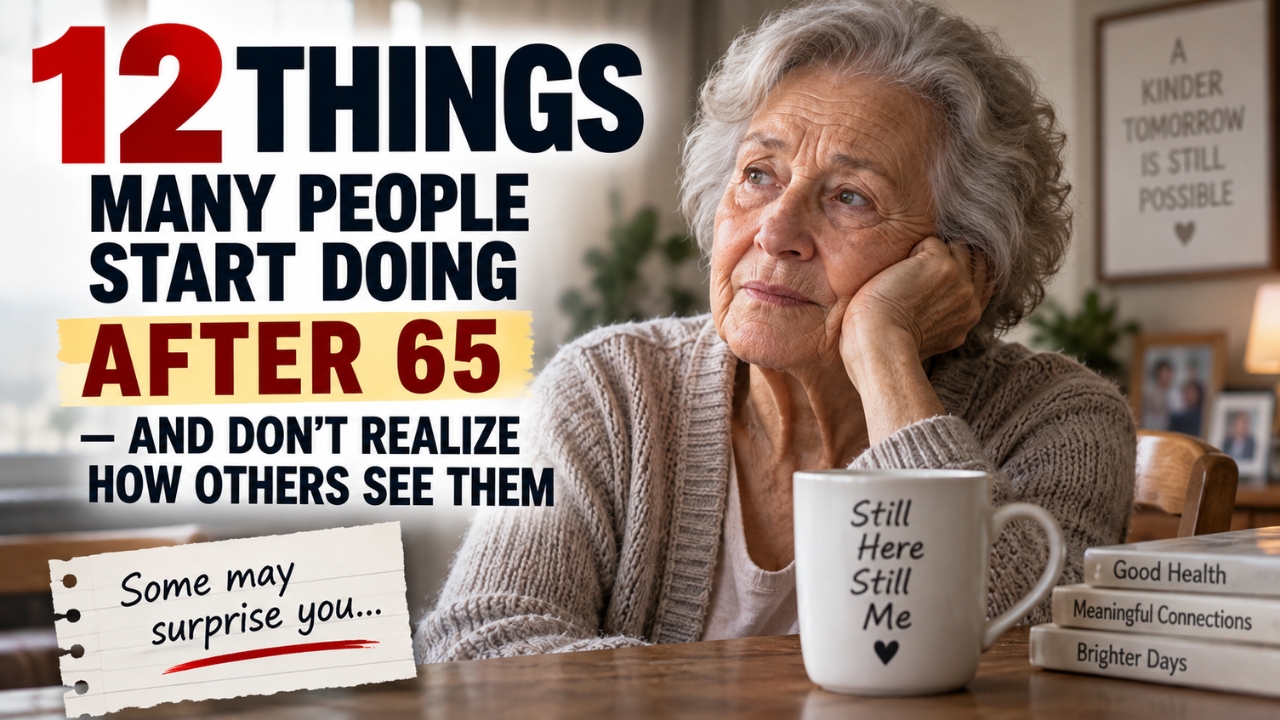
Growing older changes more than our bodies.
It can change how much patience we have, how comfortable we feel around other people, how willing we are to try something new, and even how we respond when someone offers to help.
Some of these changes are easy to notice.
Others happen so gradually that we barely see them in ourselves.
A complaint becomes a daily habit.
A preference for staying home turns into weeks without seeing anyone.
“I don’t need help” becomes the automatic answer to everything.
And one day, we may wonder why people call less often, why conversations feel shorter, or why life seems smaller than it used to.
This is not about blaming older adults.
Most of these habits can develop for understandable reasons: stress, grief, physical discomfort, fear of losing independence, changing routines, or simply living in a world that feels very different from the one we grew up in.
But understanding a habit gives us a chance to change it.
Here are 12 behaviors that can quietly affect relationships and quality of life as we get older — often without us realizing how they look from the outside.
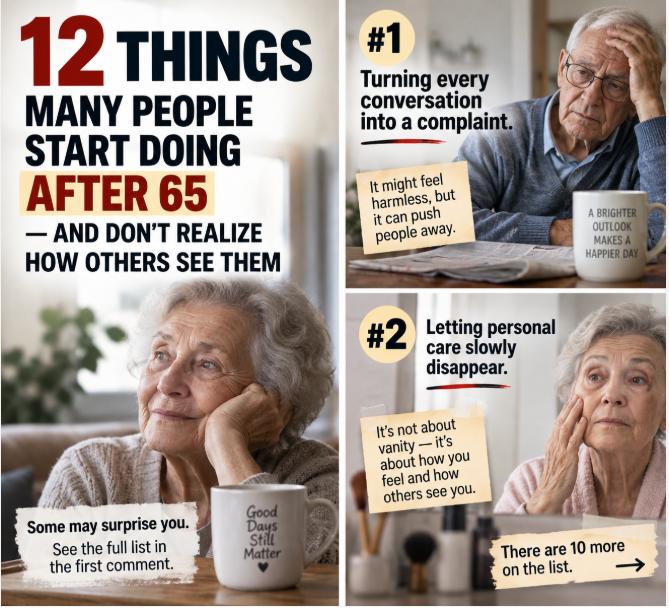
1. Turning Every Conversation Into a Complaint
Everyone complains sometimes.
The weather is terrible.
Your knee hurts.
The grocery store moved everything again.
The neighbor is too loud.
None of that is unusual.
The problem begins when almost every conversation starts with what is wrong.
Imagine your daughter calls and asks:
“How are you doing?”
And before she can say anything else, the next ten minutes become a list of aches, bad news, irritating people, high prices, and everything wrong with the world.
You may simply be telling the truth.
But the person on the other end can slowly begin to associate calling you with feeling emotionally drained.
That is something many people do not notice.
A useful question is:
**“Did I also talk about something good today?”**
It does not have to be profound.
The tomatoes are finally growing.
You saw an old friend.
You enjoyed breakfast.
You watched something funny.
You do not have to pretend life is perfect.
Just make sure frustration is not the only thing people hear from you.
2. Letting Personal Care Slowly Disappear
There is a big difference between no longer caring about fashion and no longer caring for yourself.
After retirement, it can be easy to think:
“Who am I dressing up for?”
Maybe you stop fixing your hair.
You wear the same old clothes every day.
You stop using the perfume or aftershave you once liked.
You stop making an effort because no one important is coming over.
But sometimes personal care affects more than appearance.
Getting dressed, brushing your hair, putting on a shirt you like, shaving, or wearing a favorite piece of jewelry can help create a sense that the day still matters.
This is not about trying to look younger.
It is not about impressing strangers.
It is about continuing to treat yourself as someone worth caring for.
Sometimes the simple act of getting ready in the morning changes how we carry ourselves for the rest of the day.
3. Refusing Anything New Before Even Trying It
“I don’t need that.”
“That’s too complicated.”
“We never needed these things before.”
Sound familiar?
Technology can be frustrating.
Apps change.
Passwords are annoying.
Phones seem to have a new button every week.
So it is understandable that some older adults decide they want nothing to do with it.
But sometimes rejecting the technology also means missing the connection that comes through it.
Family photos may arrive in a group text.
Grandchildren may communicate through video calls.
Invitations may be sent online.
A friend may want to send you pictures from a trip.
You do not need to become a technology expert.
You only need enough knowledge to stay connected to the parts of life you care about.
Instead of saying:
“I can’t do that.”
Try:
**“Show me one thing at a time.”**
Curiosity keeps the world from becoming smaller.
4. Keeping Everything Because “I Might Need It Someday”
A drawer becomes two drawers.
A closet becomes three closets.
Old magazines stay because there might be an interesting article inside.
Boxes remain unopened for ten years because something important might be in them.
Possessions often become more emotional as we age.
A dish may remind us of our mother.
An old jacket may remind us of our spouse.
A birthday card may carry a memory we do not want to lose.
So letting go can feel like throwing away part of our life.
But there is a difference between keeping meaningful things and allowing possessions to take over the home.
Clutter can make cleaning more difficult.
It can make moving around less comfortable.
And sometimes it becomes embarrassing enough that we stop inviting people inside.
You do not have to empty your house in a weekend.
Start with one drawer.
Keep what genuinely matters.
Let go of what is simply taking up space.
Memories do not disappear because an old stack of newspapers does.
5. Losing Patience Over Small Things
The cashier is slow.
Someone is driving five miles under the speed limit.
A restaurant order takes too long.
A younger person cannot figure something out quickly enough.
Suddenly, irritation comes out much stronger than the situation deserves.
This can happen when we are tired, uncomfortable, stressed, worried, or simply overwhelmed.
But the person receiving that frustration does not know what kind of day we are having.
They only remember how we treated them.
One useful habit is surprisingly simple:
**Wait five seconds before reacting.**
Ask yourself:
“Will this matter tomorrow?”
Often, it will not.
Patience does not mean letting people walk over you.
It means choosing which situations deserve your energy.
6. Talking So Much That Other People Stop Feeling Heard
After six or seven decades of life, you have stories.
A lot of them.
You have experiences younger people have never had.
You have made mistakes, survived difficult years, raised families, worked jobs, lost people, learned lessons, and watched the world change.
Naturally, you have things to say.
But sometimes sharing wisdom quietly turns into dominating every conversation.
Your daughter tells you about a problem at work.
Before she finishes, you tell her what she should do.
Your grandson mentions school.
You immediately tell him how much harder school was in your day.
A friend starts telling you about her health.
Five minutes later, the conversation is about your health.
This usually is not intentional.
But people feel close to us when they feel heard.
A good rule is:
**Ask one more question before giving your opinion.**
“What happened next?”
“How did that make you feel?”
“What are you thinking of doing?”
Sometimes listening is more valuable than advice.
## 7. Refusing Help Because It Feels Like Losing Independence
Someone offers to carry a heavy bag.
“No, I’ve got it.”
Your daughter offers to drive you somewhere.
“I can drive myself.”
A neighbor offers to move something heavy.
“I don’t need anybody.”
Independence matters deeply as we age.
Nobody wants to feel helpless.
Nobody wants to feel as though their children are suddenly parenting them.
So refusing help can feel like protecting dignity.
But there is another way to see it.
Accepting reasonable help does not erase independence.
Sometimes it preserves it.
If someone carries the heavy box, you still made the decision.
If someone drives at night because your vision is not as comfortable after dark, you are still in control of your life.
And when people offer help because they care about you, occasionally saying “yes” allows them to express that care.
You do not need to surrender your independence.
You only need to stop treating every offer of help as a threat to it.
8. Saving So Carefully That You Stop Living
Many people over 65 grew up with very different attitudes about money.
You saved because you had to.
You avoided debt.
You repaired things instead of replacing them.
You learned that money could disappear quickly.
Those lessons can be valuable.
But sometimes caution becomes fear.
A person may have enough money for dinner with friends but refuse because it costs too much.
They may turn down a weekend trip they can comfortably afford.
They may postpone every enjoyable purchase because:
“What if I need the money later?”
Financial security is important.
But there is also a point where money is supposed to support life.
The answer is not reckless spending.
It is balance.
Pay your bills.
Protect your future.
Keep an emergency cushion.
But if your finances allow it, give yourself permission to enjoy some of what you spent decades working for.
Money can provide security.
Experiences provide memories.
There is room for both.
9. Treating Younger People Like They Know Nothing
“Back in my day…”
Sometimes those words introduce a wonderful story.
Other times they are the beginning of a lecture.
Younger generations do many things differently.
They communicate differently.
They work differently.
They date differently.
They use technology differently.
Their problems are not identical to the problems people faced 40 years ago.
That does not make their problems imaginary.
One of the fastest ways to lose a younger person’s attention is to make them feel that everything they care about is foolish.
Suppose your grandson shows you an app he is excited about.
You can say:
“That stuff is ruining your generation.”
Or you can say:
**“Show me what you like about it.”**
Those two responses lead to completely different relationships.
Wisdom is powerful.
But curiosity makes wisdom easier for other people to hear.
10. Carrying Old Anger Into Every New Day
Someone betrayed you twenty years ago.
A sibling said something unforgivable.
An old friend disappointed you.
A marriage ended badly.
A child made choices you still struggle to understand.
Some wounds do not disappear simply because time passes.
But there is a difference between remembering a painful event and continuing to relive it.
Sometimes old resentment begins showing up in conversations that have nothing to do with the original problem.
A family dinner becomes another opportunity to bring up what happened in 1998.
A phone call becomes a reminder of who failed you.
Eventually, other people may start avoiding subjects — or avoiding you — because they know where the conversation will end.
Forgiveness does not mean pretending something was acceptable.
And it does not always mean rebuilding a relationship.
Sometimes it simply means deciding that the past will not be allowed to control every day that remains.
That can be one of the greatest gifts we give ourselves.
11. Saying “It’s Just Old Age” to Every Health Change
“I’m 72. Of course I’m tired.”
“My balance isn’t what it used to be. That’s normal.”
“My shoulder has hurt for six months, but what do you expect at my age?”
Growing older does bring physical changes.
But age should not automatically become the explanation for every new symptom.
Persistent pain, unusual fatigue, repeated dizziness, changes in balance, unexplained weight changes, or other ongoing symptoms are worth paying attention to.
That does not mean every ache is serious.
It means your body still deserves attention at 75 just as it did at 45.
One of the most useful things an older adult can do is notice changes early and discuss persistent or concerning symptoms with a healthcare professional instead of automatically dismissing them.
Getting something checked is not admitting weakness.
It is taking yourself seriously.
12. Waiting for Everyone Else to Keep the Relationship Alive
This one may be the easiest habit to miss.
The phone has not rung.
The children have been busy.
An old friend has not called in weeks.
So you think:
“If they wanted to talk to me, they would call.”
Then another week passes.
Then another.
Eventually, both people may be sitting at home wondering why the other one disappeared.
Relationships rarely survive on pride.
Sometimes you have to be the person who calls first.
Send the message.
Invite someone for coffee.
Ask your neighbor how she is doing.
Tell your daughter:
“I was thinking about you.”
This does not make you needy.
It makes you involved in your own relationships.
One of the biggest dangers of aging is not simply being alone.
It is gradually becoming passive about connection.
The world may not knock on your door as often as it once did.
Sometimes you have to open the door yourself.
## The Point Isn’t to Become a Different Person
Maybe you recognized yourself in one of these habits.
Maybe three.
Maybe none.
That is not a reason to feel ashamed.
And these behaviors are certainly not unique to older people. Younger adults complain, interrupt, hold grudges, avoid doctors, resist change, and isolate themselves too.
The difference is that later in life, relationships and independence can become especially precious.
Retirement changes social circles.
Friends move away.
Families become busy.
Physical limitations may make getting out harder.
That means small habits can have a larger effect than we realize.
The good news is that most of the changes on this list do not require a dramatic reinvention of your life.
You can complain a little less.
Ask one more question.
Accept one offer of help.
Learn one new feature on your phone.
Clear one drawer.
Call one friend.
Spend a little money on something that genuinely brings you joy.
Schedule an appointment instead of ignoring something that has been bothering you.
Small changes count.
## Try This Simple Question
At the end of the day, ask yourself:
**“Did anything I did today make my world smaller?”**
And then ask:
**“What could make it slightly bigger tomorrow?”**
Maybe tomorrow you walk outside.
Maybe you call somebody.
Maybe you ask your granddaughter to show you how video calling works.
Maybe you apologize for snapping at someone.
Maybe you put on the shirt you always save for a “special occasion.”
Maybe the special occasion is simply being alive today.
Growing older does not mean becoming quieter, lonelier, angrier, or disconnected.
And it does not mean you have to become someone completely different.
Sometimes aging well is simply noticing which habits are closing doors — and choosing, one small decision at a time, to open a few of them again.