Chapter 1: The ATM
The first time my son realized he could no longer touch my retirement money, he came home looking like a man who had seen a ghost.
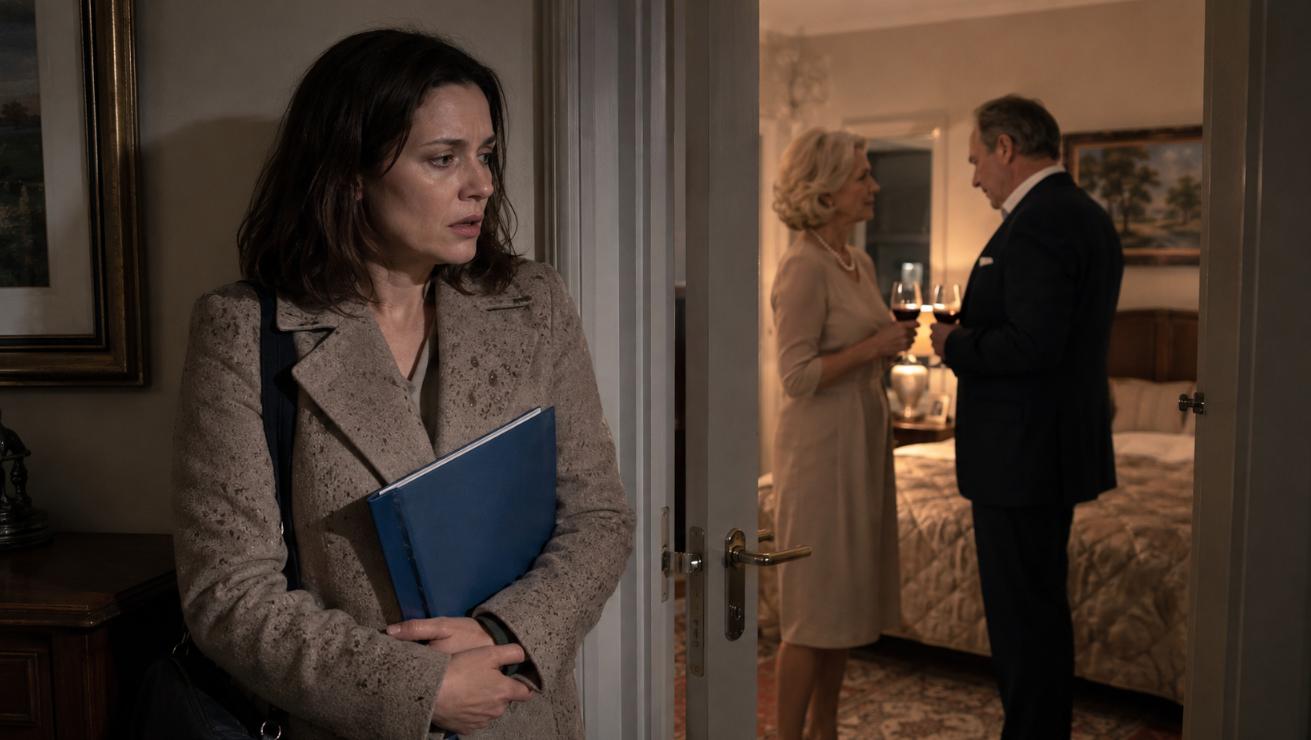
It was a Thursday afternoon in November, cold enough that the windows fogged along the edges, and I was sitting at the kitchen table with a cup of black coffee I had reheated twice. I heard the front door slam, then my daughter-in-law Nancy’s sharp voice in the hallway. She was whispering, but not quietly enough.
“He changed something, Eugene. I told you the card didn’t work.”
My son stepped into the kitchen with his coat still on. His face was red, not from the cold, but from anger he had not yet decided how to disguise.
“Dad,” he said, “have you lost your mind?”
I looked up from my coffee.
“Good afternoon to you too.”
Nancy came in behind him, clutching her purse against her side. Three years earlier, she had called me “Gerald” with soft concern in her voice. Now she looked at me like I was a broken appliance that had suddenly started making noise.
“We nearly had a heart attack at the ATM,” Eugene snapped.
I did not ask which ATM.
I did not ask why they were using my card.
I had already asked those questions in silence for three years.
Instead, I reached beside my chair, lifted the folder I had prepared, and placed it on the kitchen table. It landed with a soft, heavy sound.
Forty-seven pages.
Bank statements. ATM withdrawals. Restaurant charges. Jewelry stores. Electronics. Online purchases. Transfers I had never approved but had been too ashamed, too fogged by grief, and too dependent on my own son to question.
Eugene’s eyes dropped to the folder.
“What is that?”
“The answer,” I said.
Nancy laughed once, but it came out thin.
“Gerald, if this is about grocery money—”
“It is not about groceries.”
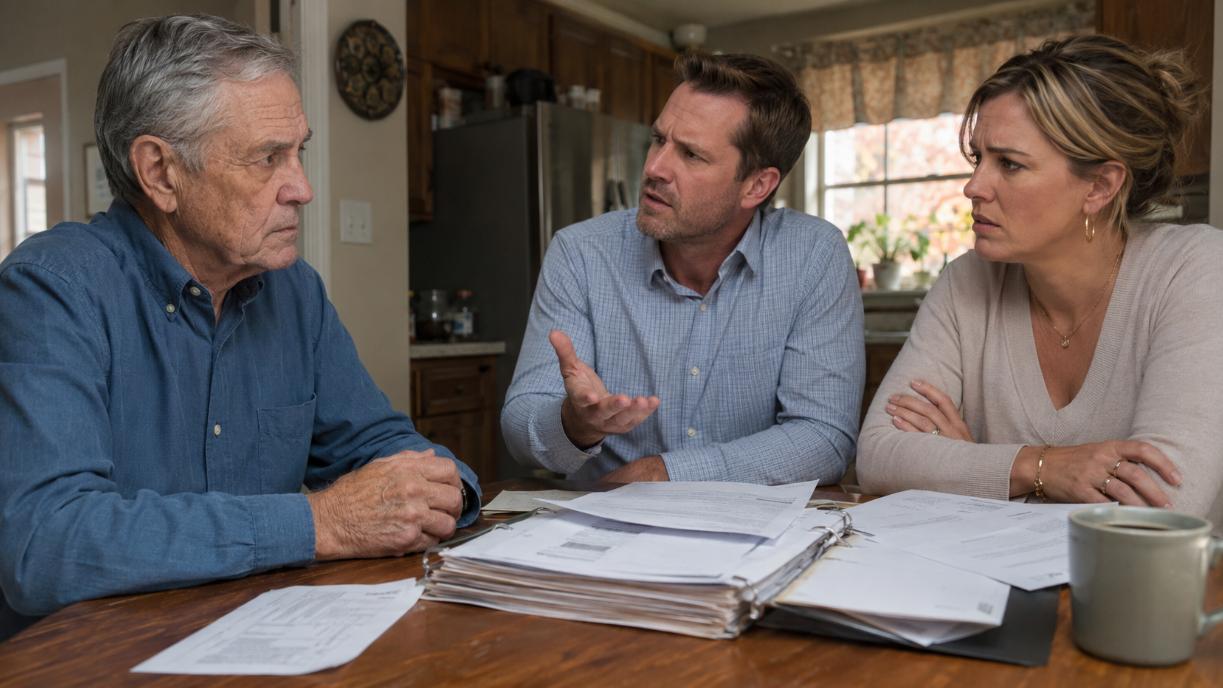
I opened the folder to the first page and slid it toward them.
“This is three years of my pension and Social Security. This is every dollar you took while telling me you were helping me. This is every dinner you ate without me, every purse you bought, every hotel weekend, every electronic gadget, every withdrawal from an account that had my name on it.”
Eugene’s face changed.
Just slightly.
Enough.
He recognized the statements before he recognized his mistake.
“Dad,” he said, lowering his voice, “let’s not do this dramatically.”
That almost made me laugh.
For three years, he had moved through my house, slept in my bedroom, spent my money, and treated me like a confused old man who should be grateful for scraps of his own life.
Now that I had paper proof, he wanted calm.
I turned to the last section of the folder.
“And this,” I said, “is the medical evaluation you arranged with Dr. Coleman. This is the assisted living brochure you hid in your dresser. And this is the guardianship petition you planned to file next week.”
Nancy went white first.
Eugene followed.
Neither of them spoke.
For the first time in years, my house was quiet in a way that did not belong to grief.
It belonged to truth.
Chapter 2: After Dorothy
My name is Gerald Fisher. I am sixty-two years old, and for most of my life, I believed hard work and family were enough to protect a man.
I was wrong.
For thirty-five years, I worked as an electrician at Midwest Industrial outside Milwaukee. I started at twenty-seven, young enough to think my knees would never hurt and my back would never complain. By the time I retired, I had moved up to supervisor and knew that plant better than some men knew their own homes.
My wife Dorothy used to joke that I could hear a bad wire through a wall.
She was a nurse at St. Mary’s Hospital before she retired. Practical, warm, sharp when she needed to be. She kept our bills in perfect order, remembered every birthday, and could make a room feel safe just by walking into it.
We were married thirty-five years.
Not perfect years. No marriage is. But good years. Real years. Years with coffee before sunrise, arguments about paint colors, Christmas lights I always put up crooked, and roses she planted along the back fence because her mother had loved roses too.
We had one son, Eugene.
Dorothy adored him. I did too. He was smart, ambitious, a little slicker than I ever was, but I told myself that was just the modern world. He liked business books, expensive shoes, motivational podcasts. He always talked about building something bigger.
Dorothy and I had simpler dreams.
An RV trip across the country. Yellowstone. The Grand Canyon. Maybe a month in Arizona during winter if our knees got worse. We had a map in the hallway closet where Dorothy marked places with little red stickers.
Then, in April 2021, she died in the backyard.
She had been watering her roses.
I found her with the hose still running, water pooling around her shoes.
One minute, she was Dorothy Fisher, my wife, my best friend, the woman who knew exactly how I took my eggs.
The next, she was gone.
Grief does not arrive like sadness.
It arrives like damage.
I stopped sleeping in our bedroom because her side of the bed looked too empty. I stopped answering calls from Vernon Walsh, my old work buddy, because I had no words for people who wanted to know how I was. I stopped going to the VFW. I stopped fixing things around the house.
Every room had her in it.
Her coffee cup on the shelf. Her reading glasses on the nightstand. Her gardening gloves hanging by the back door. The indentation on the couch where she used to sit with her blanket folded over her knees.
Six months after the funeral, Eugene and Nancy showed up with suitcases.
“Dad,” Eugene said, putting an arm around my shoulders, “we’re worried about you.”
I looked at him, wanting desperately to believe that someone was.
Nancy nodded, her face soft with concern.
“This is a big house, Gerald. What if you fall? What if something happens at night?”
Eugene said they could move in temporarily. They had been having trouble with rent. He had lost his sales manager position. Nancy was only working part-time. It would help everyone, he said.
They would cook. Clean. Keep me company. Help me get through the hardest season of my life.
I should have asked why their suitcases were already packed.
I should have asked why my grief suddenly solved their rent problem.
But lonely men make bad decisions when the house is too quiet.
So I said yes.
That same evening, Eugene carried their bags into the master bedroom.
My bedroom.
Dorothy’s bedroom.
“The guest room is easier for you, Dad,” he said. “Smaller. Warmer. More practical.”
I wanted to argue.
Instead, I moved into Dorothy’s old sewing room, where a twin bed had been placed against the wall.
That was the first room they took from me.
It would not be the last.
Chapter 3: Helping Me
At first, I thought having them there was good for me.
Nancy cooked dinners, though never the way Dorothy did. Eugene mowed the lawn once. He fixed a leaking faucet and made a show of replacing two light bulbs in the hallway. They talked during meals. The house no longer felt like a tomb.
I told myself Dorothy would have wanted our son close.
By the second month, the balance began to shift.
“Dad, you’re up early anyway,” Eugene said one morning. “Could you start breakfast?”
Then laundry.
Then vacuuming.
Then cleaning the bathrooms.
Soon, I was making every meal, folding their clothes, ironing Eugene’s shirts, sweeping the porch, taking out the trash, and doing yard work while they went out for dinner.
When I sat in my old chair, Eugene was already there with his laptop.
When I turned on the evening news, Nancy changed it to a reality show.
When Vernon called, Eugene answered and told him I was resting.
“He means well,” I told myself.
That became the lie I used to survive.
Two months after they moved in, Eugene sat me down at the kitchen table with a folder of forms.
“Dad, I’ve been thinking about your finances,” he said.
My stomach tightened.
Dorothy had always handled the online banking. I knew how to work with wires, breakers, industrial panels. But passwords and automatic payments and phone verification codes made me feel stupid. Since Dorothy died, I had missed two utility notices and paid one bill twice.
Eugene knew that.
He laid out the papers carefully.
Power of attorney. Bank authorization. Financial management forms.
“All temporary,” he said. “Just so I can help pay bills and keep things organized. You don’t need that stress right now.”
Nancy leaned against the counter.
“We just want to make things easier for you, Gerald.”
I looked at the forms.
The print was small.
The language was thick.
“You’re not taking my money,” I said.
Eugene looked hurt.
“Dad. Come on. I’m your son.”
That was the sentence that beat me.
I signed.
Within weeks, my Social Security and pension were under Eugene’s control. My monthly retirement income came to about $2,200. It was not wealth, but it was mine. Or it had been.
After that, I had to ask for money like a child.
Twenty dollars for coffee with Vernon?
“Didn’t you just go out last week?”
Fifty dollars for work boots?
“Those old boots are fine.”
A few dollars to buy Dorothy’s favorite flowers for the backyard?
“Dad, you need to stop living in the past.”
But Nancy came home with shopping bags.
Eugene had a new watch.
A flat-screen television appeared in the living room.
“Household expense,” Eugene said.
The house was mine.
The TV was theirs.
Nancy posted photos online. Restaurants. Spa days. Jewelry. New outfits. Weekends away. Smiling beside plates of food that cost more than I used to spend on groceries for a week.
Once, she showed me a necklace.
“Isn’t it gorgeous?”
The tag still hung from it.
$1,200.
More than half my monthly retirement income.
“That’s a lot of money,” I said carefully.
Her smile disappeared.
“We work hard taking care of you, Gerald. We deserve nice things too.”
Taking care of me.
I was cooking their meals, cleaning their toilets, and sleeping in a twin bed in my own house while they spent the money Dorothy and I had saved for our old age.
Still, I said nothing.
Grief had made me weak.
Shame kept me quiet.
And they knew it.
Chapter 4: The Folder
The folder was in Eugene’s dresser.
I was not snooping at first. He had borrowed my old electrical tool kit months earlier and never returned it. I needed the small voltage tester because a basement outlet had started sparking. Eugene and Nancy were both out, so I went into the master bedroom and opened the dresser drawer where he usually tossed things he did not care enough to put away properly.
The room still smelled faintly of Dorothy’s lavender sachets, though Nancy had replaced almost everything else.
Her curtains.
Her lamps.
Her framed prints.
My wife had been erased slowly, the way I had.
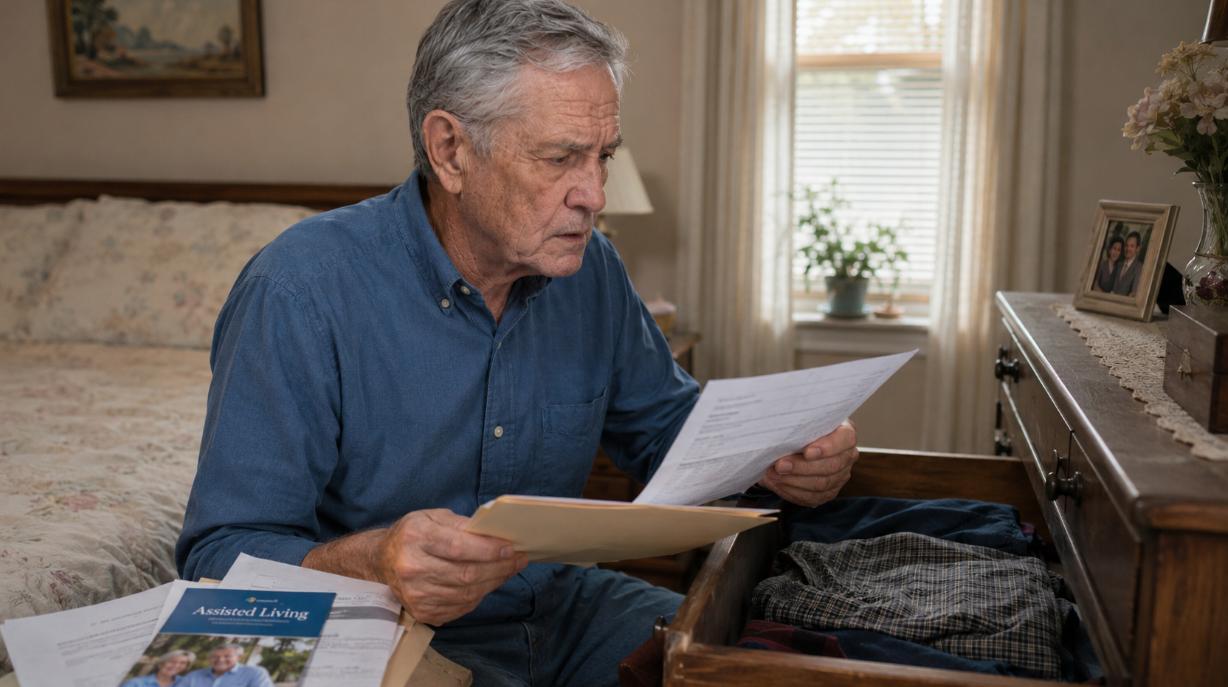
I found the tool kit in the closet. But when I opened the bottom drawer, I saw a manila folder tucked under a sweater.
The tab read: Sunset Meadows Assisted Living.
My hands went cold.
I pulled it out and sat on the edge of the bed that had once been mine.
Inside was a brochure. Smiling elderly people in wheelchairs. A dining room with long tables. A nurse helping someone with a walker. The kind of place people called “lovely” when they did not plan to live there.
The monthly cost started at $3,800.
My pension was $2,200.
I turned the page.
That was when I saw my name.
Gerald Fisher.
Medical evaluation.
Signed by Dr. Richard Coleman.
The evaluation said I showed signs of cognitive decline. Confusion. Memory loss. Inability to manage daily activities. It recommended full evaluation for assisted living placement.
I read it once.
Then again.
Three weeks earlier, Eugene had taken me to a clinic on the east side. He said it was a Medicare checkup. I had a bad cold that day and had taken strong medication before we left. My head was foggy. The doctor asked me simple questions while I fought to stay awake.
What year is it?
Who is president?
Where do you live?
I answered. Maybe not sharply. Maybe slowly.
But I answered.
Now that appointment had become evidence against me.
The next paper was a petition for guardianship, already filled out in Eugene’s handwriting.
Eugene Fisher requests appointment as legal guardian and conservator for Gerald Fisher, who is unable to manage his own affairs due to cognitive decline.
A filing date was listed.
November 15.
Less than a month away.
The last page was an email between Eugene and Dr. Coleman.
Thanks for agreeing to help with my father’s evaluation. As we discussed, he has been declining rapidly since my mother passed. I found a good facility that can provide the care he needs, but I’ll need proper documentation to move forward with guardianship.
Dr. Coleman’s answer was brief.
Happy to help. I’ll document the cognitive issues we discussed. The evaluation will support your guardianship petition.
I sat very still.
For three years, I had wondered whether I was losing myself.
Now I understood someone had been taking me apart piece by piece and calling it concern.
They were going to put me away.
Take legal control.
Keep the house.
Keep the money.
Turn me into a patient file while they lived in the bedroom where Dorothy and I had spent our marriage.
For the first time since my wife died, grief was not the strongest thing in me.
Anger was.
Clean. Bright. Useful.
I put every page back exactly where I found it. Closed the drawer. Returned the room to normal.
That night at dinner, I watched them.
Eugene checked his expensive watch.
Nancy scrolled through photos of a lunch she had posted online.
They talked about renovations.
Not repairs.
Renovations.
“What do you think, Dad?” Eugene asked suddenly.
“About what?”
He smiled.
“Nothing. You looked far away.”
“I was just thinking.”
“Don’t think too hard,” Nancy said lightly.
They laughed.
I did not.
The next morning, I called Vernon Walsh.
When he answered, he sounded shocked.
“Gerald? I’ve been trying to reach you for months.”
“I know,” I said.
“You all right?”
I looked toward the hallway, listening for Eugene and Nancy.
“No,” I said. “But I’m going to be.”
Chapter 5: Forty-Seven Pages
Vernon came that afternoon.
He was seventy, broad-shouldered, gray-haired, and still had the same steady eyes he had at the plant when a machine went down and everyone else panicked. He parked around the corner and came in through the back door like I asked.
When I showed him the folder, he did not interrupt.
He read every page.
By the time he finished, his jaw looked carved from stone.
“Gerald,” he said, “this is criminal.”
The word should have frightened me.
Instead, it steadied me.
We photographed everything: the assisted living brochure, the medical evaluation, the guardianship petition, the email from Eugene to Dr. Coleman. Vernon helped me save copies to a flash drive and email them to an account Eugene did not know existed.
Then he called his nephew Brad.
Brad Coleman was a paralegal at an elder law firm downtown. No relation to the doctor, thankfully. He specialized in financial exploitation cases, and when Vernon explained what we had found, Brad agreed to meet.
Before that, I needed the bank.
The next morning, I told Eugene I wanted to take a walk.
“You shouldn’t go alone,” he said.
“I need air.”
He studied me.
For a second, I thought he would refuse, as if I needed permission to step outside my own house.
Then he waved a hand.
“Take your phone.”
At First National Bank, Carol Stevens recognized me immediately. She had helped Dorothy and me refinance the house years earlier.
“Gerald,” she said. “It’s been a long time.”
“Yes.”
I sat across from her desk and placed my hands in my lap so she would not see them shake.
“I need every transaction on my accounts for the last three years. And I need to open a new account only I control.”
Carol’s expression changed.
She did not ask many questions. Good bankers do not need every detail to recognize trouble.
The printer ran for a long time.
When it stopped, she placed a thick stack of paper in front of me.
“Forty-seven pages,” she said quietly.
I read them right there.
Three years of my retirement money, printed in black and white.
Restaurants I had never entered.
Stores I had never visited.
Online purchases I had never made.
ATM withdrawals I had never received.
Total missing: just over $65,000.
Balance remaining: $347.
I stared at that number.
Three hundred forty-seven dollars.
After thirty-five years of work.
After a lifetime of paying the mortgage, raising a son, burying a wife, and trusting family.
Carol slid a tissue box closer without saying anything.
I did not take one.
“Move what’s left,” I said.
“All of it?”
“All of it.”
She helped me redirect my pension and Social Security into the new account. She ordered me a debit card. Then she handed me a business card for an elder abuse attorney her bank worked with.
“Gerald,” she said, “you don’t have to accept this.”
I placed the card in my wallet beside Dorothy’s picture.
“No,” I said. “I don’t.”
Brad came to the house two days later while Eugene and Nancy were out.
He was young, maybe thirty, but serious in the way I trusted. He reviewed everything at my kitchen table: statements, photographs, emails, the guardianship documents.
“This is strong,” he said.
“How strong?”
“Strong enough that your son should be very afraid.”
That sentence stayed with me.
Not because I wanted Eugene afraid.
Because for three years, I had been the only one afraid.
Brad explained my options. Criminal charges. Civil restitution. Protective orders. Revoking financial authority. Blocking the guardianship petition before it could be filed.
“Do you want him prosecuted?” Brad asked.
I looked toward the living room where Eugene’s new television sat on my old stand.
He was still my son.
That was the worst part.
“I want my money back,” I said. “I want them out of my house. And I want him to know that if he ever tries this again, I won’t protect him from the consequences.”
Brad nodded.
“Then we prepare a civil agreement with a criminal hammer behind it.”
It sounded harsh.
It sounded necessary.
The next week, my new debit card arrived.
I activated it in my small room, sitting on the twin bed under the window that faced the neighbor’s fence. The balance was small. The card was plain. Nothing about it looked powerful.
But when I held it, I felt something I had not felt since Dorothy died.
Control.
Chapter 6: The Living Room
The confrontation happened on Monday morning.
Eugene was in my living room with his laptop balanced on his knees. Nancy sat beside him, scrolling through her phone. They looked comfortable, as if the house already belonged to them.
Brad arrived at nine.
Vernon came with him.
I had dressed carefully in the blue button-down Dorothy always said made me look respectable. I stood in the doorway until Eugene noticed me.
“Dad, who’s this?”
“This is Brad Coleman,” I said. “He works with an elder law attorney.”
Nancy looked up.
“Elder law?”
Brad set his briefcase on the coffee table.
“Mr. Fisher asked me to review some financial and legal documents.”
Eugene closed his laptop slowly.
“What documents?”
I sat in the chair that used to be mine, the one Eugene had taken over. That morning, I took it back.
Brad opened his briefcase.
The first stack was the bank statements.
The second was photographs of the assisted living folder.
The third was the medical evaluation.
The fourth was the guardianship petition.
Eugene did not move.
Nancy sat very still.
Brad began in a calm, professional voice.
“Over the last three years, approximately $65,000 was removed from Gerald Fisher’s accounts for purchases and withdrawals unrelated to his care or household necessities. Additionally, we have documentation suggesting an attempt to support a guardianship petition using a questionable medical evaluation obtained under misleading circumstances.”
Nancy’s mouth opened.
No sound came out.
Eugene recovered first.
“Dad, this is insane. We’ve been taking care of you.”
“Were you?” I asked.
His eyes flashed.
“You were falling apart after Mom died.”
“Yes,” I said. “I was grieving. That isn’t the same as being incompetent.”
“You signed the forms.”
“I signed because I trusted my son.”
He looked away.
Just for a second.
That second told me he knew exactly what he had done.
Nancy started crying.
“Gerald, we never meant—”
I turned to her.
“You spent twelve hundred dollars on a necklace with my pension money and told me you deserved nice things because you were taking care of me.”
Her tears stopped.
Brad placed another document on the table.
“This is a proposed civil resolution. Full restitution of $65,000 plus interest. Monthly payments of $1,100 for five years. Eugene and Nancy vacate the property within thirty days. Permanent revocation of all access to Mr. Fisher’s finances. Written withdrawal of any guardianship efforts. Any violation triggers immediate referral for criminal prosecution.”
Eugene stood.
“This is my father. You can’t threaten me in my own family.”
Vernon finally spoke.
“It’s not your family you should be worried about. It’s the district attorney.”
Eugene looked at him with contempt.
“This doesn’t concern you.”
Vernon stepped closer.
“I worked next to your father for thirty-five years. I watched him take overtime so you could have what you needed. I watched him carry grief after your mother died. And now I’m watching him do the hardest thing a father can do—admit his son became someone he has to protect himself from. So yes, Eugene. It concerns me.”
The room went silent.
Brad slid a pen across the table.
“You should have your own attorney review this,” he said. “But you should also understand the evidence is already copied, preserved, and ready to file.”
Eugene stared at the pen.
Then at me.
“Dad,” he said, softer now, “you’re really going to do this?”
I looked at my son and saw every age he had ever been.
A boy with scraped knees.
A teenager asking for gas money.
A young man in a graduation gown.
A grown man who had planned to have me declared incompetent so he could take what Dorothy and I built.
“Yes,” I said. “I am.”
It took four hours.
Phone calls. Anger. Accusations. More tears from Nancy. More attempts from Eugene to make me feel guilty.
But by early afternoon, they signed.
When Brad packed his briefcase, Eugene stood near the door with his face gray.
“You’ll regret this,” he said.
I looked around the living room. Dorothy’s house. My house. The house I had nearly lost without even leaving it.
“No,” I said. “I already regret waiting this long.”
Chapter 7: My Own Key
They moved out three weeks later.
Not with dignity.
Not quietly.
But they left.
Nancy complained about the apartment they had to rent across town. Eugene packed his things in angry silence. The new television went with them only after Brad confirmed it had been purchased with my funds and deducted from their restitution schedule.
I let it go.
Some battles are worth winning.
Some objects are not worth carrying.
The day they left, I stood in the driveway and watched their car pull away. Eugene did not look back. Nancy did, but only once, and not with regret.
When the taillights disappeared, I went inside and locked the door.
For the first time in three years, I was alone in my own house.
The silence frightened me at first.
Then it softened.
I walked down the hallway to the master bedroom. The bed had been stripped. The closet was empty. Nancy’s perfume still hung faintly in the air, but underneath it, if I imagined hard enough, I could smell Dorothy’s lavender sachets.
I sat on the edge of the bed.
Our bed.
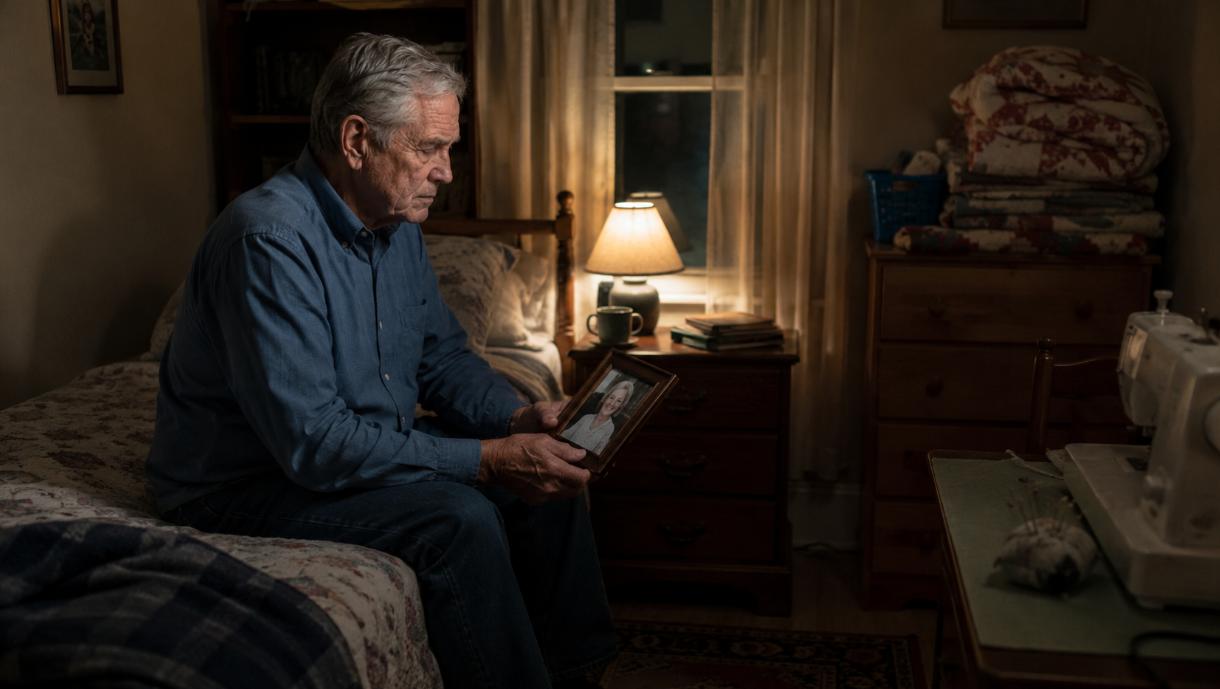
Then I took Dorothy’s photograph from the dresser drawer where I had hidden it and placed it back on the nightstand.
“I’m sorry,” I whispered.
Not because I had failed her.
Because I had forgotten, for a while, that the life we built deserved defending.
The first restitution payment came on December 1.
$1,100.
Right on time.
I did not celebrate.
I deposited it, paid bills from my own account, and made myself eggs for dinner because that was what I wanted.
Small choices feel enormous after someone has taken them from you.
I changed the locks. Revoked every authorization. Closed old accounts. Blocked online access. Brad helped me file protective notices in case Eugene ever tried to revive the guardianship idea.
Vernon came by twice a week at first.
Then we started fishing again.
At the senior center, I joined a woodworking group. My first project was crooked and ugly, but it was mine. My granddaughter Joyce began driving down from Chicago every other weekend. Not because I needed watching, she said, but because she missed me.
Real family does not make you smaller so they can feel safe.
Real family helps you stand taller.
Eugene and I speak rarely now.
When we do, it is polite. Measured. Boundaried.
He is my son. I will not pretend that love disappeared because trust did. Love is complicated that way. It can survive disappointment, but it cannot replace accountability.
Nancy does not call.
That is fine.
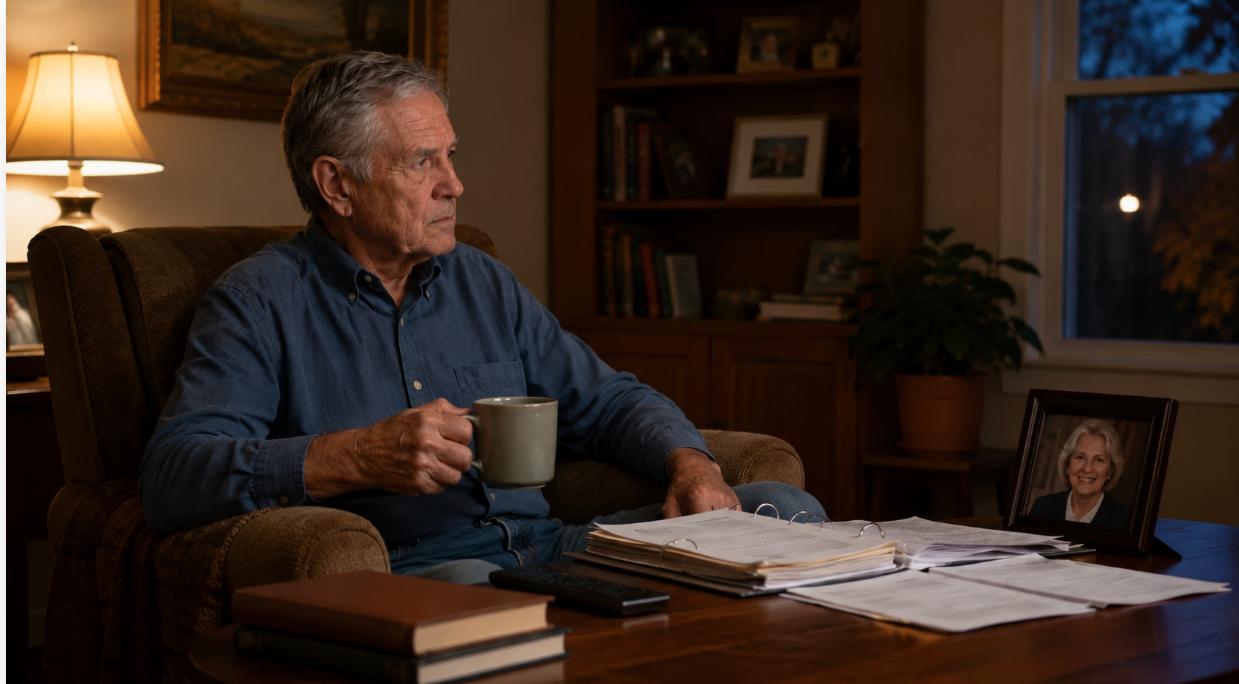
Sometimes I sit in my chair in the evening—the chair I took back—and watch the news with a cup of coffee. Dorothy’s quilt rests over my knees. The house creaks the way old houses do, not haunted, just alive.
I still miss my wife every day.
There are mornings I turn to tell her something and remember she is gone. There are evenings when the empty side of the bed feels like a wound.
But grief is mine again.
That may sound strange, but for three years, even my grief had been used against me. They turned it into proof I could not manage my life. Proof I needed supervision. Proof I should surrender money, rooms, choices, dignity.
Now I grieve Dorothy honestly.
Without someone reaching into my pocket while I cry.
To any man or woman reading this who recognizes part of your life in mine, listen to me.
Do not sign what you do not understand.
Do not let loneliness make every offer of help look like love.
Do not confuse someone managing your life with someone caring for it.
And never believe that your retirement money becomes your children’s inheritance before you are finished living.
I was sixty-two years old when I learned to fight again.
Not with fists. Not with shouting.
With bank statements.
With phone calls.
With help from a friend.
With one new debit card in my own name.
People think dignity is something loud.
It is not.
Sometimes dignity is changing your pension deposit and saying nothing until the people stealing from you discover the ATM no longer works.
Sometimes dignity is taking back your bedroom.
Sometimes it is placing forty-seven pages on a coffee table and watching the truth do what your voice could not.
My son thought grief had made me weak.
He was wrong.
Grief made me quiet.
But quiet men can still wake up.
And when they do, they remember where every wire in the house is hidden.