You come through the front door, set your keys on the counter, and hear a soft sound from the hallway.
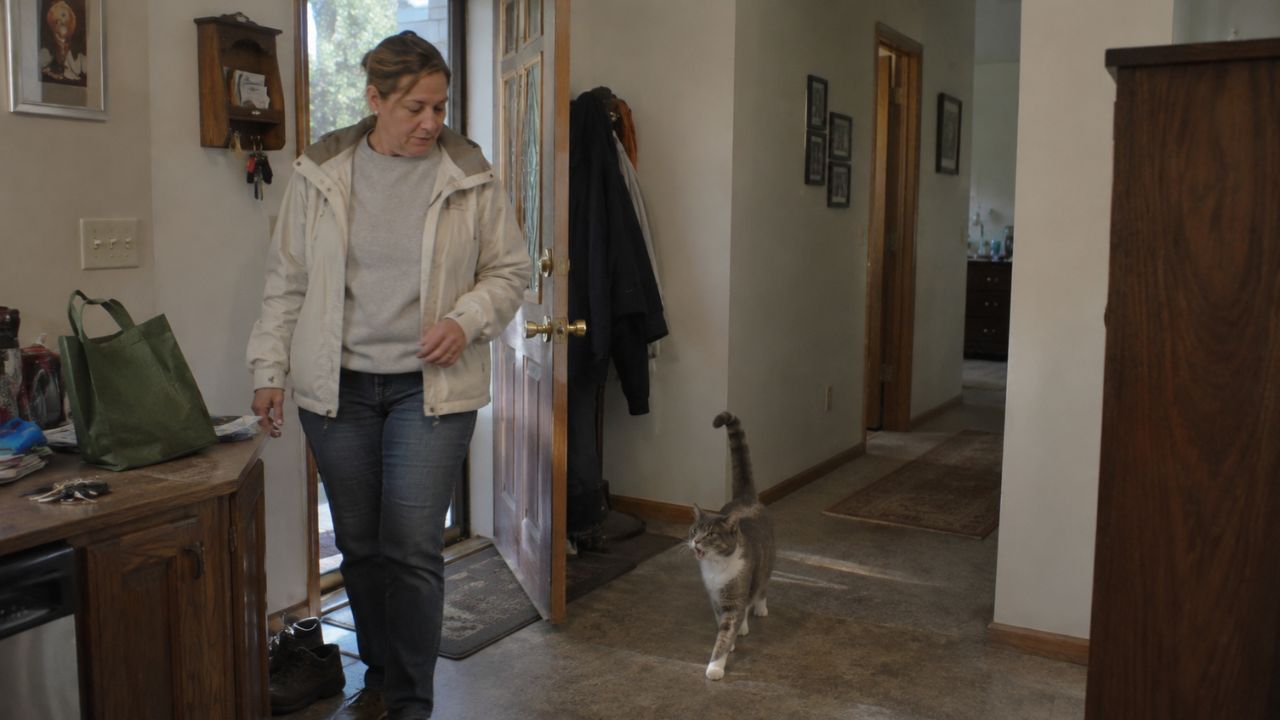
Your cat appears with their tail held upright, the tip curved slightly forward. They do not leap into your arms or make a dramatic entrance. They simply walk toward you, pause nearby, and offer a quiet trill.
A moment later, their eyes soften and slowly close.
These gestures are easy to overlook. They can seem like ordinary parts of sharing a home with a cat, but together, they may reveal something meaningful. Your cat feels comfortable enough to approach, communicate, and relax in your presence.
Feline happiness is not always obvious. Some cats climb into laps and demand attention. Others express security through small routines that are easy to miss unless you know what to notice.
No single behavior proves that a cat is happy, healthy, or securely bonded. The individual cat and situation always matter. But when several relaxed behaviors appear consistently, they can offer a reassuring glimpse into how safe your cat feels at home.
1. Their Eyes Become Soft Around You
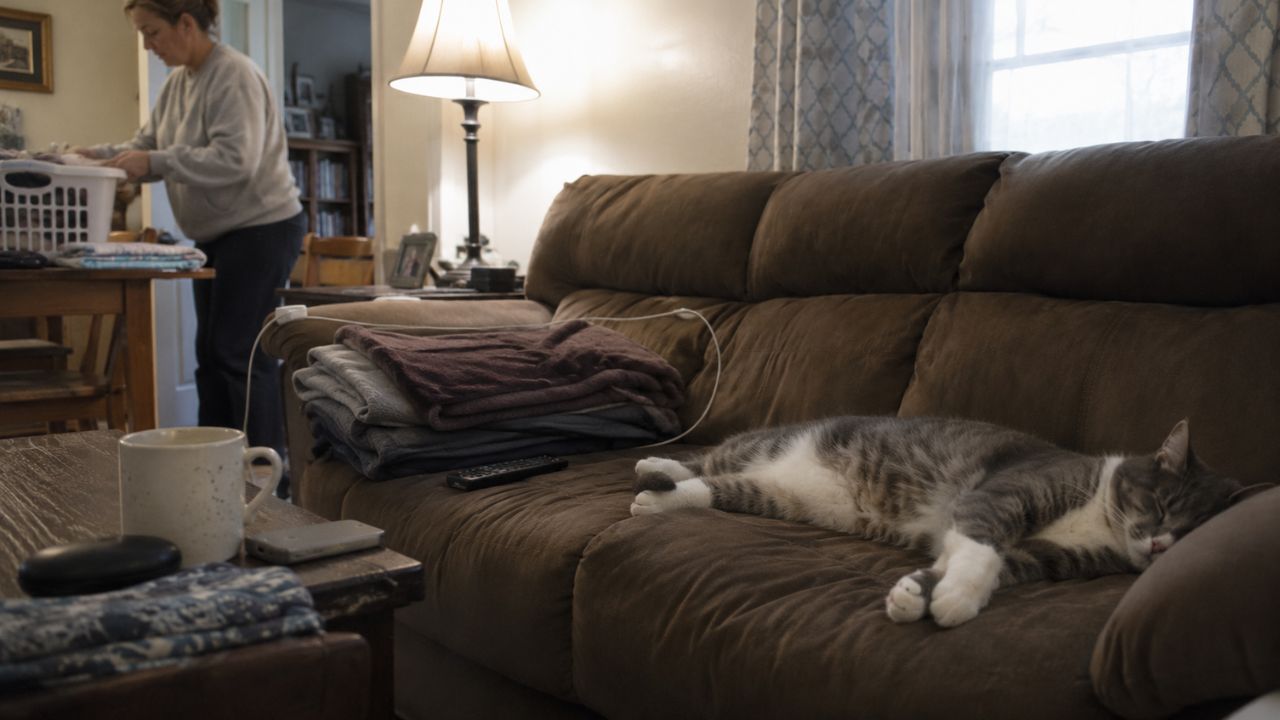
Your cat is resting on the arm of the sofa when your eyes meet from across the room.
Instead of holding a hard, unbroken stare, they look at you through loose eyelids. Their face remains relaxed. Then their eyes slowly close before opening again.
Research suggests that cats may respond positively when familiar humans use slow blinking during calm interactions. Some people call it a feline smile, although cats do not necessarily experience or use the gesture exactly as humans do.
What matters is the complete picture.
Soft eyes paired with relaxed ears, loose muscles, and an easy posture usually communicate something different from enlarged pupils, flattened ears, tense limbs, or an intense stare. A slow blink by itself is not definitive proof of love.
Still, when your cat regularly looks at you this way while resting comfortably, it may suggest they do not feel the need to remain on guard.
You can try slowly closing your own eyes for a moment and then looking slightly away. Your cat may return the gesture—or simply continue relaxing, which can be meaningful in its own quiet way.
2. They Approach With Their Tail Held High
One of the warmest feline greetings can happen so quickly that many people barely notice it.
You walk into the kitchen, and your cat comes toward you with their tail upright. Sometimes the tip bends forward like a small question mark. They may rub against your leg, make a soft sound, or follow you into the next room.
In a relaxed context, an upright tail can be a friendly social signal. Cats often use this posture when approaching familiar individuals with positive intentions.
That does not mean every raised tail automatically communicates happiness. A cat’s surroundings, facial expression, speed of movement, and overall tension must also be considered.
But a calm approach, loose body, soft face, and vertical tail often form a welcoming picture.
Your cat may not greet you as loudly as a dog would. Their version may last only a few seconds before they walk away. That does not make the greeting less sincere.
Sometimes the smallest welcome is the one a cat has chosen especially for you.
3. They Sleep Deeply in Everyday Spaces
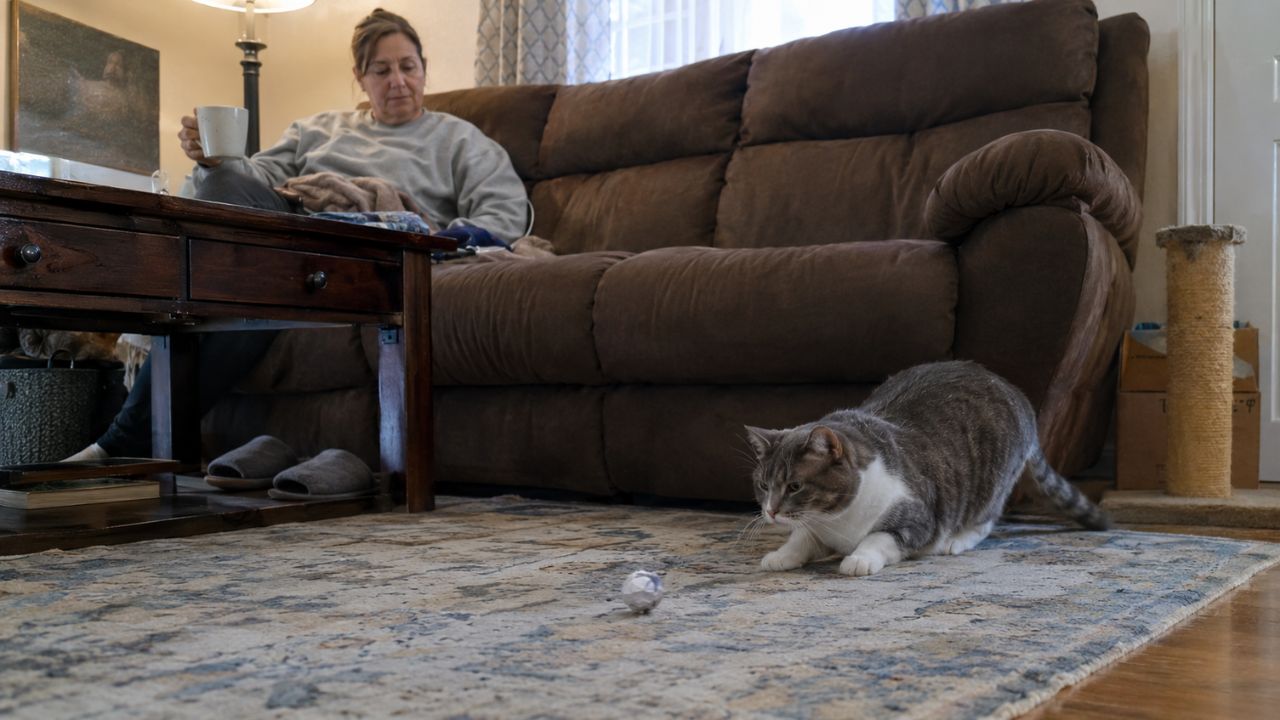
Cats are skilled at finding quiet, protected places to rest. That is why it can be meaningful when your cat chooses to sleep in the middle of ordinary family life.
They may curl up on the sofa while the television plays. Someone walks through the room, dishes clink in the kitchen, and the washing machine hums nearby. Yet your cat remains settled.
Their paws loosen. Their body becomes heavy. Their whiskers or feet may twitch as they dream.
Because sleep leaves an animal vulnerable, the ability to rest deeply may suggest that the environment feels reasonably predictable and secure. Some cats stretch onto their sides or sleep with part of the belly exposed when they are especially relaxed.
That exposed belly is not automatically an invitation to touch it. Your cat may feel safe enough to rest in a vulnerable position while still preferring that your hand stay away.
The important sign is not one particular sleeping pose. It is your cat’s ability to settle, remain asleep, and recover calmly after normal household sounds.
A cat who can truly rest is a cat who does not feel responsible for watching every movement around them.
4. Their Grooming Looks Comfortable and Familiar
A normal grooming routine often appears so ordinary that people rarely think about it.
Your cat finishes breakfast, jumps onto a favorite chair, and begins washing one front paw. They move over the chest and shoulder without seeming frantic. A few minutes later, they settle down for a nap.
Regular, unhurried grooming can be part of normal self-care and comfort. It helps cats maintain their coat, manage familiar scents, and settle themselves throughout the day.
A tidy coat alone does not prove that everything is perfect. Cats may groom differently depending on age, coat type, mobility, weight, health, and personality.
Some older cats need help reaching certain areas. Long-haired cats may require regular brushing even when they groom normally. Others naturally spend more time cleaning themselves than their housemates do.
What matters most is the cat’s usual pattern.
Excessive licking, bald patches, damaged skin, neglected fur, or a sudden change in grooming habits should be discussed with a veterinarian. These changes can have several possible causes and should not be dismissed as simple moodiness.
And that loose flap beneath many cats’ bellies—the primordial pouch—is usually a normal anatomical feature. Its presence does not mean a cat is poorly cared for, nor does it automatically mean they are overweight.
5. Mealtime Feels Predictable, Not Frightening
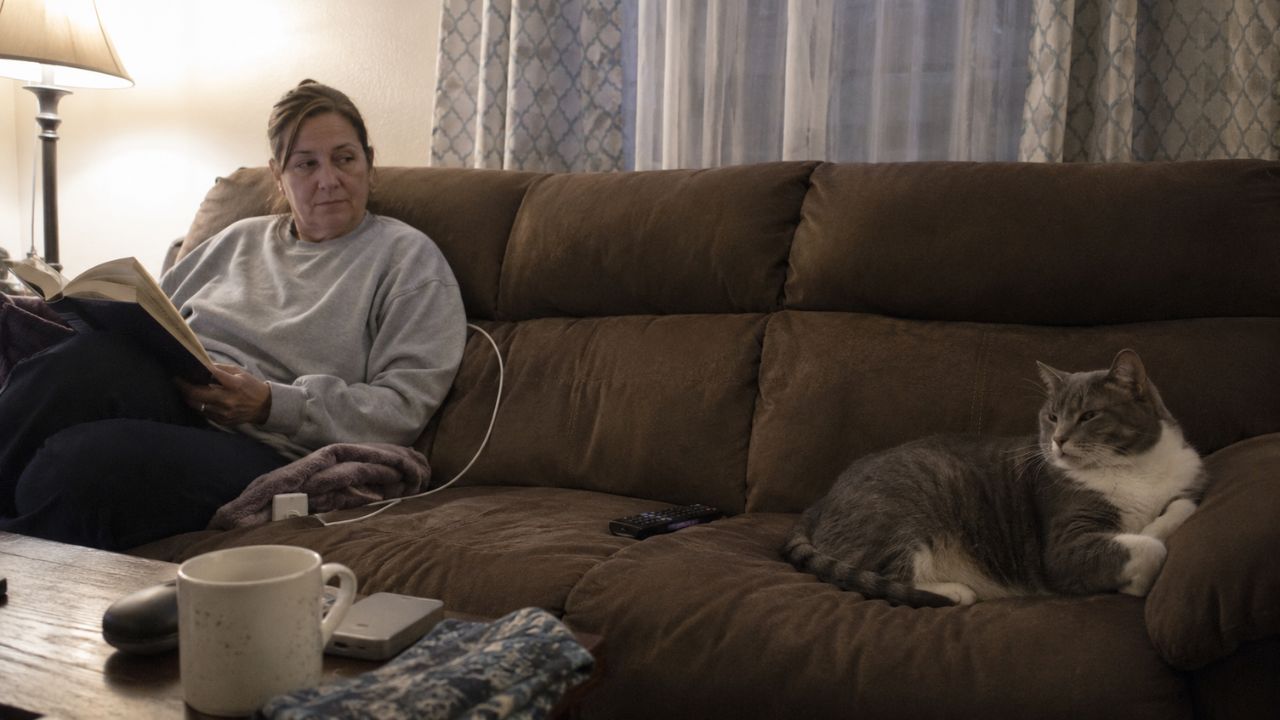
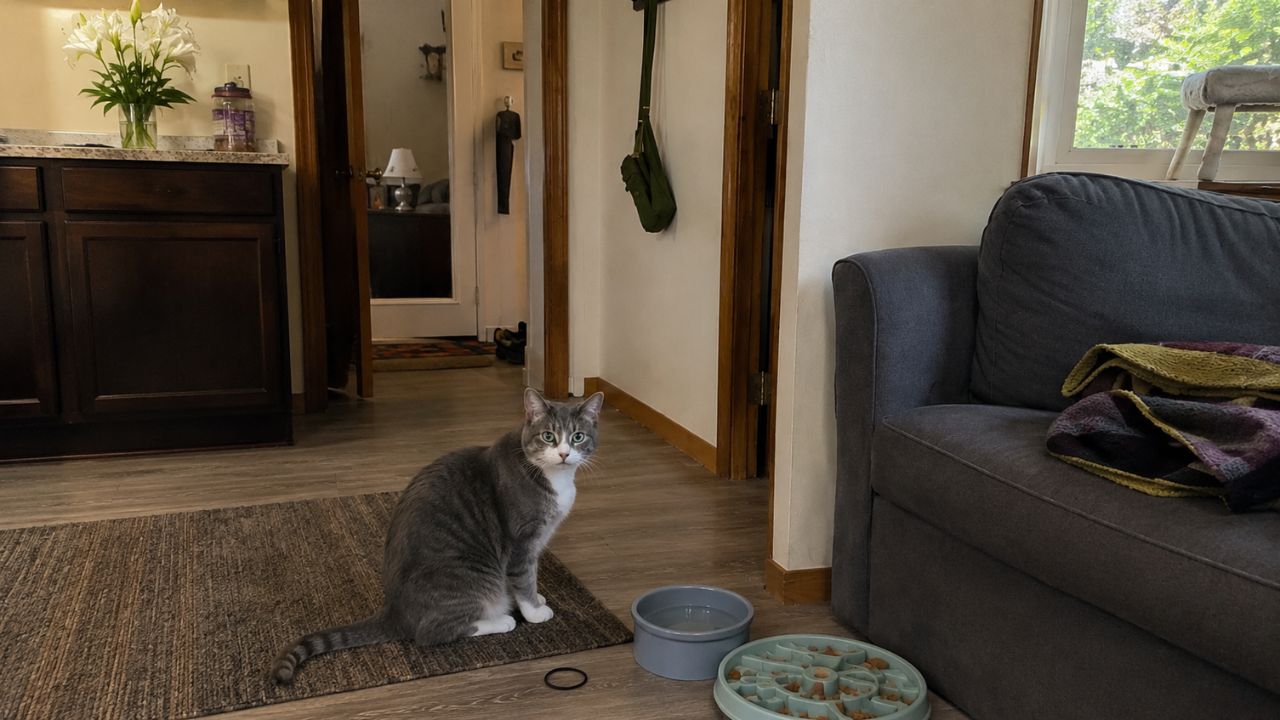
Your cat hears the familiar sound of a can opening and walks toward the feeding area.
They may meow, weave around your ankles, or wait beside the bowl. When the food arrives, they eat in their usual way and leave when they are finished.
A relatively stable mealtime routine can be reassuring. It may suggest that your cat knows where food will appear and does not feel pressured to defend the feeding space.
A clean bowl, access to fresh water, and a reasonably quiet place to eat can support that sense of predictability. In multi-cat homes, separate feeding areas may help cats who are uncomfortable eating too close to one another.
Eating quickly does not automatically mean a cat feels insecure. Speed can be influenced by habit, food preference, previous experiences, competition, or medical factors.
One meal rarely tells the whole story. The pattern over time matters more.
A sudden increase or decrease in appetite, unusual thirst, difficulty chewing, vomiting, or increasing anxiety around food should be discussed with a veterinarian. These changes can have many causes and cannot be interpreted through body language alone.
For a cat, knowing that food and water will appear reliably is one of the quiet foundations of feeling safe.
6. Curiosity Still Appears in Their Day
A paper ball rolls across the floor, and your adult cat suddenly drops into a crouch.
Their eyes widen. The back legs wiggle. A moment later, they pounce as though catching that crumpled receipt is the most important task of the day.
Play requires more than energy. It also requires enough confidence to focus on something beyond immediate safety.
A cat who stalks a wand toy, watches insects through a window, explores a cardboard box, or suddenly races through the hallway may be comfortably engaged with the environment.
Not every content cat plays frequently. Older cats may prefer shorter, gentler sessions. Some personalities are naturally more reserved, and health, surroundings, toy choice, and time of day all affect interest.
Curiosity can also be subtle.
Your cat may sniff a grocery bag, inspect a visitor’s shoes, watch a feather toy without chasing it, or choose a different window for the afternoon. These small acts can suggest that the world still feels interesting enough to explore.
Sometimes a cat’s playful side appears only when the house becomes quiet. That does not mean the earlier hours were unhappy. It may simply be when they feel most comfortable letting their guard down.
7. They Have Their Own Way of Talking to You
Many cats develop a private collection of sounds for the people they live with.
There may be a short meow used near the kitchen, a quiet trill when you enter the room, or a chirping sound as they jump onto the sofa. Over time, you begin to recognize these sounds even if no one else understands them.
This kind of communication may suggest that your cat has learned you are responsive. They make a sound, glance toward you, and wait to see what happens.
Purring often becomes part of these social moments, especially when a cat is resting, kneading, or receiving gentle attention. But purring is not always proof of happiness.
Cats may also purr when uncertain, physically uncomfortable, or attempting to calm themselves. The sound should always be considered alongside posture, breathing, facial expression, location, and the events happening around it.
A purring cat with relaxed paws and soft eyes is giving a different message from a purring cat who is hiding, holding the body stiffly, or acting unusually.
The sound matters, but the full situation tells the story.
8. They Leave—and Keep Choosing to Return
A secure relationship does not always look like constant closeness.
Your cat may spend an hour watching birds from a bedroom window. Later, they disappear into a closet for a nap. Just when you begin wondering where they are, they return and settle a few feet from your chair.
They may not climb into your lap. They may not ask to be touched. They simply choose to share the room with you.
For some cats, this is an important expression of trust.
They feel comfortable enough to move independently through the home while remaining socially connected to a familiar person. They do not need to monitor you every second, because they trust that the relationship will still be there when they return.
A cat does not have to follow you from room to room to feel bonded. Sometimes confidence appears in the freedom to leave.
And sometimes affection appears in the decision to come back.
The Cat Who Never Sat in Her Owner’s Lap
One woman spent months worrying that her cat did not feel attached to her.
The cat rarely climbed into her lap. She spent the first part of each evening near a bedroom window or resting alone in the hallway.
Online, the woman saw videos of cats sleeping on their owners’ chests, wrapping paws around arms, and following people everywhere. Her own cat seemed distant by comparison.
Then she noticed a pattern.
Every night, at almost the same time, the cat left the window and entered the living room. She settled at the opposite end of the sofa, turned her back toward the woman, and went to sleep.
Occasionally, she looked over her shoulder and slowly blinked.
The woman had been waiting for a dramatic display of affection and had missed the quiet one happening every evening. Her cat was repeatedly choosing to rest nearby, with her body relaxed and her back exposed.
It was not indifference. It was simply her version of closeness.
A cat does not need to behave like someone else’s cat to feel safe, loved, and bonded.
Look for Patterns, Not a Perfect Checklist
These eight behaviors should never be treated like a scorecard.
Some secure cats rarely vocalize. Some never expose their bellies. Others do not slow blink often or prefer sleeping in hidden spaces because that suits their personality.
Consider what is normal for your individual cat. Look at the complete body posture, the situation in which the behavior occurs, and whether anything has changed over time.
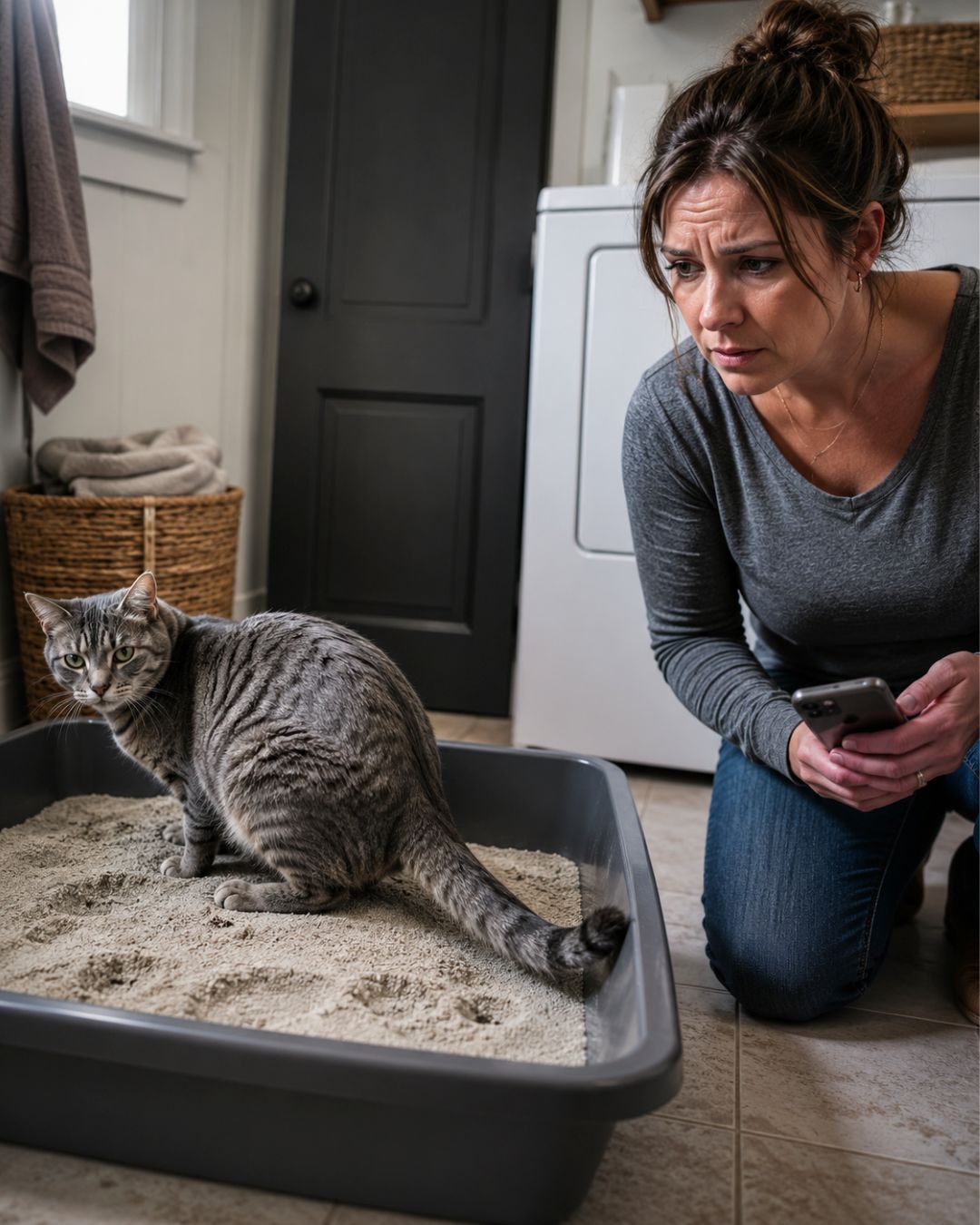
Sudden changes in appetite, sleep, grooming, play, litter box habits, social behavior, or tolerance of touch may deserve a conversation with a veterinarian.
The goal is not to diagnose your cat from one gesture. It is to become familiar enough with their normal patterns that meaningful changes are easier to notice.
The Quiet Shape of a Cat Who Feels Safe
Feline well-being often lives inside moments that seem too ordinary to matter.
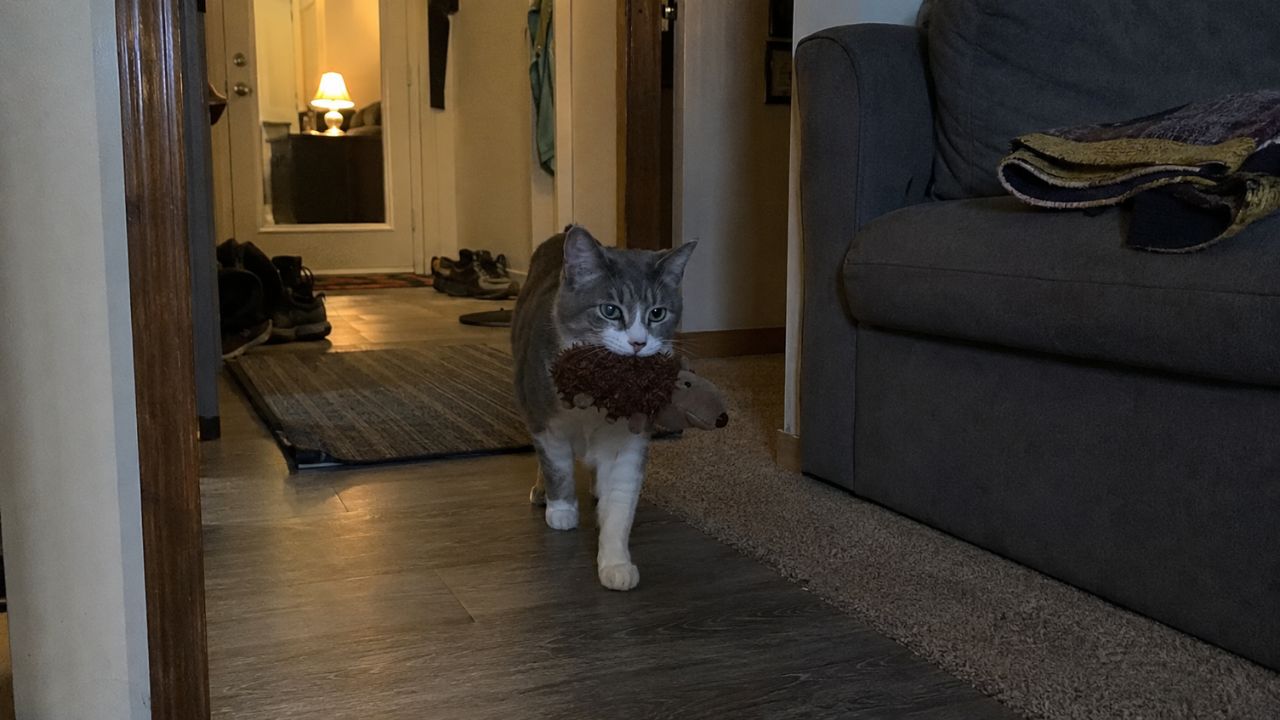
It is your cat sleeping through the sound of dishes being put away. It is the upright tail that appears when you open the door. It is a soft blink from across the room or a toy left beside the chair where you sit each evening.
It is the cat who walks away without fear and later returns because they want to share the room again.
Caring for a cat is not about producing an animal who is constantly affectionate, endlessly playful, or dependent on human attention.
It is about building a home where that cat feels safe enough to rest, explore, communicate, play, and remain fully themselves.
The clearest sign of good care may not be a cat who needs you every moment. It may be a cat who feels secure enough to move through their world freely—and keeps choosing their way back to you.
What quiet habit tells you that your cat feels safe at home?