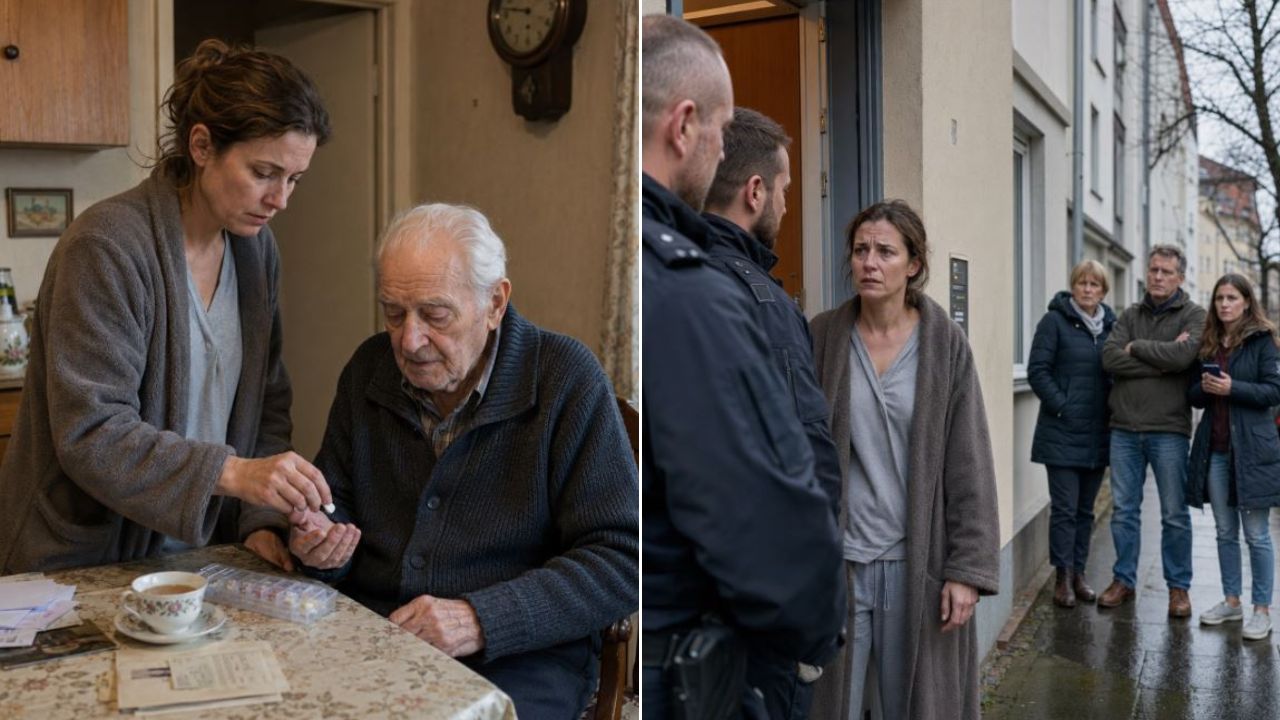
My siblings sold Mom’s house while she was still in the hospital.
They didn’t tell her.
They didn’t tell me.
They waited until the doctors said she might have trouble remembering things. Then they called a realtor, cleaned out the living room, signed papers, and put the only home our mother had ever loved under contract.
I found out on a Tuesday afternoon, while I was folding laundry in my small apartment across town.
Someone knocked on my door.
When I opened it, a man in a navy coat stood there holding a leather folder. He looked polite, nervous, and slightly confused, like he already knew he had stepped into something that wasn’t his business.
“Are you Grace Miller?” he asked.
“Yes.”
“I’m sorry to bother you. My name is Warren Blake. I’m buying the house on Maple Street.”
For a second, I just stared at him.
“The house on Maple Street?” I repeated.
“Yes. Your mother’s house.”
My stomach tightened.
“My mother is in the hospital.”
His face changed.
“I was told she had moved into long-term care.”
“She hasn’t.”
He shifted the folder from one hand to the other.
“I’m supposed to pick up the spare keys from you. Your brother said you had them.”
I did have the spare keys.
Mom had given them to me after Dad died.
“Just in case,” she said, pressing them into my palm. “Not because I’m helpless. Because everybody needs one person who can get in when the door won’t open.”
I looked at the man standing in front of me.
“I think you need to show me what you’re talking about.”
He opened the folder.
Inside was a purchase agreement.
There it was.
The address.
The price.
The closing date.
My brother Daniel’s signature was on the seller disclosure.
My sister Ellen’s signature was on the addendum.
Mine was nowhere.
And Mom’s name had been signed in shaky blue ink at the bottom of the authorization page.
But it wasn’t her signature.
Mom’s handwriting had always leaned slightly to the right, neat and proud, the kind of handwriting that belonged on church envelopes and birthday cards. This signature looked uncertain. Uneven. Like someone had either guided her hand or copied it badly.
I felt the room tilt.
“Who gave you this?” I asked.
“My realtor received it from the listing agent,” Warren said carefully. “Your brother handled most of the communication.”
“Did you meet my mother?”
“No.”
“Did you speak to her?”
“No. I was told she was too ill.”
Too ill to speak.
But apparently not too ill to sell the house she had refused to leave for forty-two years.
The house on Maple Street was not grand. It had yellow siding that faded every summer. The porch railing needed repainting. A crack ran through the concrete path from the mailbox to the front steps. The kitchen floor squeaked near the stove no matter how many times Dad tried to fix it.
But that house was Mom’s whole life.
It was where she brought all three of us home from the hospital.
It was where Dad built the bookshelves in the den and accidentally made one shelf shorter than the others.
It was where Mom taped paper snowflakes to the windows every Christmas, even after we were grown.
It was where she made chicken and biscuits every Sunday, standing at the stove with aching knees, waving away help because “a person needs something to do with her hands.”
When Dad died, everyone told her to sell.
Daniel said the house was too much for her.
Ellen said it was “emotionally unhealthy” to stay surrounded by memories.
Mom listened quietly, then folded her hands on the kitchen table and said, “I don’t need a new life. I need the one we built.”
That ended the discussion.
At least, I thought it had.
I handed the papers back to Warren Blake.
“I’m sorry,” I said. “But I can’t give you the keys.”
He nodded slowly.
“I had a feeling something wasn’t right.”
“Why?”
He hesitated.
“Your brother said your mother was eager to sell. But when I walked through the house, it didn’t feel like someone had chosen to leave.”
I could barely breathe.
“What do you mean?”
“The closet still had her winter coats. There were tomatoes ripening on the kitchen windowsill. A coffee mug was beside the sink. The house didn’t look empty. It looked interrupted.”
Interrupted.
That was exactly the word.
Mom’s life had not ended.
It had been interrupted by a stroke, a hospital bed, and two children who saw weakness as an opening.
I thanked Warren and closed the door with trembling hands.
Then I drove straight to the hospital.
Mom was in room 412, sitting up in bed with a tray of untouched soup in front of her. The late afternoon sun came through the blinds and laid pale stripes across her blanket. Her silver hair had been brushed back by one of the nurses. Her left hand rested stiffly on the sheet.
She looked smaller than she had a month ago.
But her eyes were still clear.
“Gracie,” she said, and tried to smile.
I pulled the chair close to her bed and took her hand.
“Mom,” I said gently, “did you sign papers to sell the house?”
Her forehead wrinkled.
“My house?”
“Yes.”
She stared at me as if I had asked whether she had signed away the sky.
“No.”
I swallowed hard.
“Daniel and Ellen said you agreed.”
Mom’s fingers tightened around mine.
“I told them to water my tomatoes.”
That sentence broke my heart in a way I was not prepared for.
She looked toward the window, though the hospital room faced a parking lot, not her garden.
“Are they still red?” she asked.
“The tomatoes?”
She nodded.
“I don’t know,” I said. “I haven’t been there since last week.”
Her eyes filled with tears, but she did not cry. Mom had never been a woman who cried easily. She had buried her husband, paid off the mortgage, raised three children, and once driven herself to urgent care with a broken wrist because she “didn’t want to bother anyone during dinner.”
But now her mouth trembled.
“Did they take Dad’s chair?”
I froze.
“I don’t know.”
“The blue one,” she whispered. “By the window.”
“I know which one.”
“He used to fall asleep there during baseball.”
“I know.”
She closed her eyes.
“I want to go home, Grace.”
“I know, Mom.”
“No,” she said, opening her eyes again. “Listen to me. I know I’m not the same as I was. I know my hand doesn’t work right. I know I may need help. But I am still here.”
“I know.”
“Do they?”
I had no answer.
That evening, I called Daniel from the hospital parking lot.
He answered on the fourth ring.
“Grace, I’m busy.”
“Why is there a buyer coming to my apartment asking for keys to Mom’s house?”
Silence.
Then a sigh.
“Of course he went to you.”
“You sold her house?”
“We put it under contract.”
“While she’s in the hospital.”
“She can’t live there anymore.”
“She said she didn’t sign anything.”
Daniel’s tone hardened.
“She doesn’t remember half of what she says.”
“She remembers her tomatoes.”
“Don’t be dramatic.”
“Did you forge her signature?”
Another silence.
Then he said, very quietly, “Be careful what you accuse people of.”
“I am being careful.”
“No, you’re being emotional. Ellen and I are handling the practical side of this. You show up with flowers and casseroles and act like that makes you the good daughter.”
I gripped the steering wheel.
“I show up because Mom asked for me.”
“She asks for everybody.”
“She asked if you took Dad’s chair.”
He didn’t answer.
“Daniel?”
“That chair was old.”
My stomach dropped.
“What did you do?”
“We moved some furniture out so the house would show better.”
“You had no right.”
“We are trying to get ahead of a difficult situation.”
“She is not a situation. She is our mother.”
He exhaled sharply.
“You always make everything about feelings.”
“And you always make everything about money.”
The line went dead.
I called Ellen next.
She answered with a soft, tired voice, the one she used when she wanted to sound reasonable.
“Grace, I know you’re upset.”
“Did you sign papers for Mom’s house?”
“We all knew this day was coming.”
“No. We didn’t.”
“Mom is eighty-two. She had a stroke. She cannot manage that property.”
“That is not the same as selling it without her consent.”
Ellen lowered her voice.
“You don’t understand the burden, Grace. Daniel and I have been talking to facilities, insurance people, realtors—”
“I was at the hospital every day.”
“That’s different.”
“How?”
“You’re good at sitting with her. We’re good at making decisions.”
There it was.
The division they had created in their minds.
I was the emotional one.
They were the responsible ones.
But responsibility does not sneak behind a hospital curtain with paperwork.
Responsibility does not tell an old woman she is signing one thing while taking away another.
The next morning, I started with the county records office.
I took a personal day from work, packed a folder, and drove through heavy rain to the courthouse. My hair was soaked by the time I reached the records counter.
The clerk, a woman with red glasses and a name tag that said MARLENE, looked up the property.
“No deed transfer recorded yet,” she said.
“So the sale isn’t final?”
“No. Looks like closing is scheduled for Friday.”
Friday.
Three days away.
“Is there any way to put a hold on it?”
“Not from here. You’ll need legal authority or a court order.”
Legal authority.
I wrote that down.
Then I went to the bank where Mom kept her mortgage papers, though the mortgage had been paid off for years. The bank could not tell me much without Mom present, but a kind older teller remembered her.
“Mrs. Miller?” she said. “She used to bring lemon cookies in December.”
“That’s her.”
“She okay?”
“She had a stroke.”
The teller’s face softened.
“I’m sorry, honey.”
I asked whether Mom had recently requested any house documents.
The teller couldn’t answer directly, but she looked at the copy of the purchase agreement and frowned.
“You should call the notary,” she said.
So I did.
The notary’s name was printed at the bottom of the authorization page: Carol Hensley.
When I called, she sounded professional at first.
Then I mentioned my mother’s name.
There was a pause.
“I remember that appointment,” she said.
“Why?”
“Because I felt uneasy afterward.”
My hand tightened around the phone.
“What happened?”
“She was in a wheelchair. A son and daughter were with her. They said she had trouble speaking but understood everything.”
“Did she speak?”
“A little.”
“What did she say?”
Carol was quiet for several seconds.
“She kept asking when she could go home.”
I closed my eyes.
“Did anyone explain that she was signing documents to sell that home?”
“Her son said they had already discussed it as a family.”
“They hadn’t.”
“I’m sorry.”
“Did you ask my mother directly?”
“I did.”
“And?”
“She looked at your sister before answering.”
That told me everything.
I drove back to the hospital and asked Mom if she remembered a notary.
She stared at the blanket for a long time.
“Ellen brought a woman,” she said slowly. “Daniel said it was for insurance.”
“Insurance?”
“That’s what he said.”
“What did you sign?”
“I don’t know. My hand was tired. Ellen held the paper still.”
I had to look away so she wouldn’t see my face.
Mom whispered, “Did I do something wrong?”
“No,” I said immediately. “You didn’t do anything wrong.”
“They talk so fast now,” she said. “Like I’m not in the room.”
I squeezed her hand.
“You are in the room, Mom.”
She looked at me then, and for a moment I saw the woman who used to stand in the kitchen doorway with flour on her cheek, telling us to wash our hands before supper.
“Go to the house,” she said.
“I will.”
“Look in the red box.”
“What red box?”
“My recipe box.”
“In the kitchen?”
“Behind the sugar.”
“What am I looking for?”
Her eyes were tired, but steady.
“You’ll know.”
That night, I went to Maple Street.
The house looked strange in the dark.
No porch light.
No curtains in the front window.
A realtor’s lockbox hung from the door handle like a warning.
I used my spare key.
The house smelled faintly of dust, lemon cleaner, and absence.
Dad’s blue chair was gone.
For a moment, I just stood in the living room, staring at the empty square in the carpet where it had always been. I remembered Dad sitting there with the newspaper folded across his lap, pretending not to sleep while the game played on TV. I remembered Mom touching the back of that chair after he died, as if some warmth might still be there.
They had taken it.
Maybe sold it.
Maybe donated it.
Maybe dumped it because, to them, old things were only old things.
I walked into the kitchen.
The windowsill was empty.
The tomatoes were gone too.
That small absence made me angrier than the chair.
Because the tomatoes were alive.
Because Mom had asked them to water them.
Because even that was too much care for them to give.
I opened the cabinet beside the stove.
Flour.
Sugar.
Tea bags.
And behind the sugar, exactly where Mom said it would be, was the old red recipe box.
The lid was scratched. One corner was dented. The word RECIPES had faded almost completely from the front.
I set it on the kitchen table and opened it.
Inside were index cards covered in Mom’s handwriting.
Chicken and biscuits.
Lemon pound cake.
Dad’s chili.
Christmas stuffing.
Tucked between the cards were birthday candles, a dried four-leaf clover, Dad’s old fishing license, and a folded envelope.
On the front, in Mom’s careful writing, were the words:
FOR THE HOUSE, IF MY CHILDREN FORGET ME.
I sat down.
For several seconds, I couldn’t open it.
Because part of me already understood.
Mom had known.
Maybe not the exact day, not the exact betrayal, not the way Daniel and Ellen would do it.
But she had known the shape of it.
Inside the envelope was a notarized document dated three years earlier.
A living trust.
The house on Maple Street had been placed into the Eleanor Miller Family Trust.
The trustee was listed clearly.
Grace Anne Miller.
Me.
Not Daniel.
Not Ellen.
Me.
There was another page attached.
A letter.
Dear Grace,
If you are reading this, then something has happened that I hoped would not happen.
I have watched your brother and sister grow impatient with my age. I have heard the way they talk about the house when they think I am not listening.
They say it is too much for me.
Maybe one day it will be.
But too much for me is not the same as theirs to take.
This house is not just wood and paint. It is where your father kept his promises. It is where I learned to be brave after he died. It is where I still know who I am.
If they ever try to take it before I am gone, do not fight loud.
Fight right.
Your loving mother,
Mom
I read the letter twice.
Then I put my head down on the kitchen table and cried.
Not softly.
Not gracefully.
I cried for Mom sitting in that hospital bed wondering if her tomatoes were still red.
I cried for Dad’s missing chair.
I cried for every old person who had ever been spoken over, rushed, managed, dismissed, or treated like an estate before they were even gone.
Then I took photos of every page.
I put the original documents in my purse.
And I called Mr. Harris.
He was the attorney who had helped Mom and Dad years ago. His office was above a pharmacy downtown, and he still used a flip calendar on his desk.
He answered the phone at 8:07 the next morning.
“Mr. Harris, this is Grace Miller. Eleanor Miller’s daughter.”
“I know who you are, Grace.”
“I found the trust.”
He was quiet.
Then he said, “I wondered when she would send you looking.”
“You knew?”
“I prepared it.”
“Why didn’t you tell me?”
“Because your mother asked me not to unless it became necessary.”
“It’s necessary.”
“I’ll be at the title company by noon.”
“What do I do?”
“Bring the original documents. Bring your identification. And Grace?”
“Yes?”
“Do not argue with your siblings before I get there.”
That was the hardest instruction he could have given me.
Because Daniel was already calling.
Ellen too.
By 10 a.m., I had seven missed calls.
At 10:14, Daniel texted:
Whatever you think you’re doing, stop.
At 10:22, Ellen texted:
You are going to destroy this family over a house.
I looked at her message for a long time.
Then I typed back:
No. You tried to sell this family out of one.
The title company was in a glass building near the highway.
Daniel and Ellen were already there when I arrived. Daniel wore a gray suit and looked furious. Ellen wore pearl earrings and the wounded expression she always used when she wanted someone to feel guilty.
“What is this?” Daniel demanded.
I didn’t answer.
Mr. Harris arrived five minutes later carrying a leather folder.
He was seventy, maybe older, with silver hair and the calm walk of a man who had seen greed wear many costumes.
“Good morning,” he said.
Daniel frowned.
“Why is Mom’s old lawyer here?”
Mr. Harris looked at him over his glasses.
“Because your mother is alive.”
No one spoke.
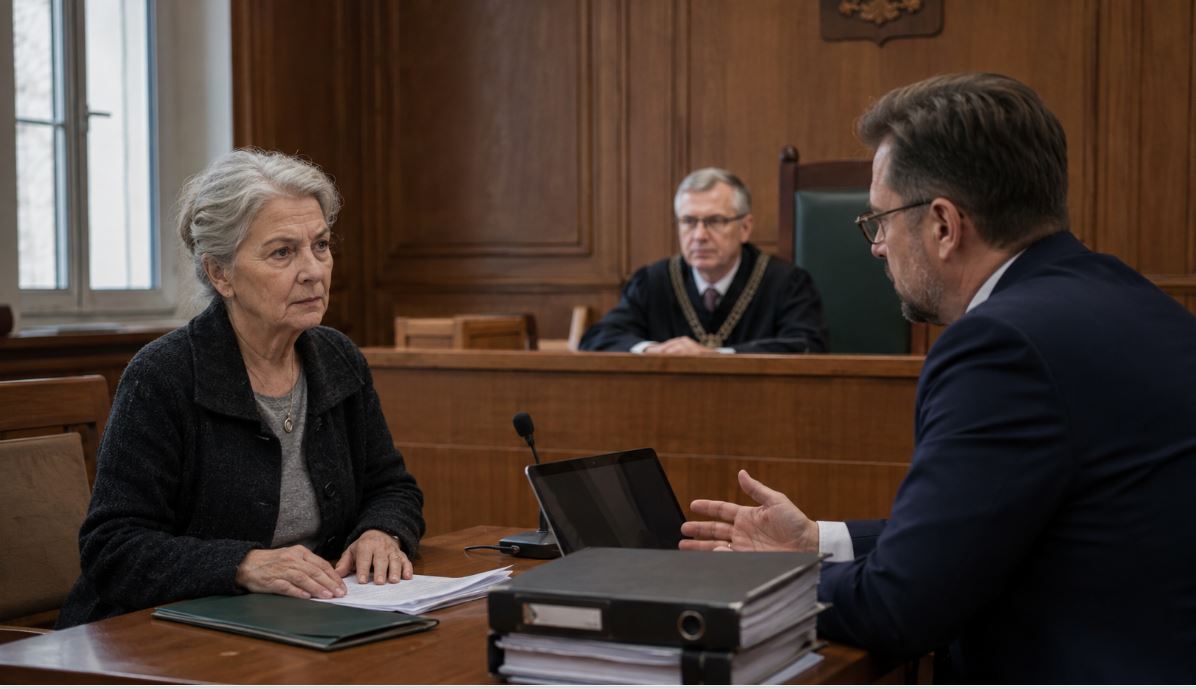
The title agent led us into a conference room. Warren Blake’s attorney joined by speakerphone. The listing agent looked like she wanted to disappear.
Mr. Harris placed the trust document on the table.
“The property at 116 Maple Street is not legally owned by Eleanor Miller individually,” he said. “It is held by the Eleanor Miller Family Trust. My client, Grace Miller, is the acting trustee under the conditions currently met by Mrs. Miller’s medical incapacity.”
Daniel leaned forward.
“That’s ridiculous.”
“It is notarized, witnessed, and valid.”
“She didn’t tell us about any trust.”
Mr. Harris looked at him.
“I imagine she had her reasons.”
Ellen’s face had gone pale.
“But Mom signed the sale authorization.”
“Under questionable circumstances,” Mr. Harris said. “While hospitalized. After a stroke. With no independent counsel present. And apparently under the impression she was signing insurance paperwork.”
The room went silent.
The title agent looked down at the file.
Warren’s attorney spoke through the phone.
“My client will be withdrawing from the purchase immediately.”
Daniel slammed his hand on the table.
“You can’t do that.”
The attorney replied, “We can, and we are.”
The sale died right there.
Not with shouting.
Not with a dramatic confession.
Just paper meeting paper.
Truth meeting greed.
Mr. Harris then slid another document across the table.
“This is a formal notice that no further attempt may be made to sell, transfer, remove, or dispose of Mrs. Miller’s property without trustee authorization.”
Daniel laughed bitterly.
“So Grace gets control of everything.”
I finally spoke.
“No. Mom gets protection from everyone.”
Ellen started crying.
“You always make us the villains.”
I looked at her.
“You sat beside Mom while she signed papers she didn’t understand.”
“I thought we were helping.”
“Then why didn’t you tell me?”
She had no answer.
Daniel stood up.
“You have no idea what it’s like carrying responsibility.”
I stood too.
“You sold Dad’s chair.”
His face twitched.
“You are really bringing up a chair?”
“Yes. Because Mom asked about it from her hospital bed. Because that chair mattered to her. Because you didn’t even ask.”
“It was junk.”
“It was Dad’s.”
He looked away.
That was all the confession I needed.
Over the next week, Mr. Harris moved quickly.
The sale was formally canceled.
The title company flagged the property.
The trust was activated.
A letter went to the realtor.
Another went to Daniel and Ellen.
Mom’s doctors provided documentation of her condition at the time of the questionable signing. The notary submitted a written statement describing the appointment.
There were enough facts on paper that Daniel stopped threatening lawsuits.
Ellen sent one long email about how misunderstood she felt.
I did not answer.
I spent my evenings at the hospital, reading Mom cards from church friends and telling her small bits of good news.
“The house is safe,” I told her.
She closed her eyes.
“Did they take the tomatoes?”
I hesitated.
“Yes.”
Her mouth trembled.
Then she whispered, “We’ll plant more.”
That was Mom.
Not “we lost.”
Not “they hurt me.”
Just:
We’ll plant more.
Two months later, Mom came home.
She could not climb the stairs anymore, so we moved her bed into the dining room where the morning light came through the lace curtains. We put a small table beside her with her Bible, her glasses, and the red recipe box.
The neighbors brought casseroles.
The church ladies brought flowers.
Mr. Alvarez from the bank sent lemon cookies because Mom had once brought them to him every Christmas.
Warren Blake, the buyer, sent a note apologizing again, though he had done nothing wrong.
I found Dad’s blue chair at a secondhand furniture store three towns over.
The owner said a donation truck had brought it in.
I bought it back for forty dollars.
When I carried it into the house, Mom put her hand over her mouth.
For the first time since the stroke, she cried.
Not because the chair was valuable.
Because someone had gone looking for what mattered to her.
I placed it by the front window.
Exactly where it had always been.
In late September, Daniel and Ellen came to the house.
They did not call first.
I saw their car pull into the driveway and felt my whole body tense.
Mom was sitting in her wheelchair near the window, a blanket over her lap, a cup of tea cooling beside her.
“Do you want me to tell them to leave?” I asked.
She shook her head.
“No. Let them in.”
They stepped into the living room like strangers.
Daniel looked older somehow. Ellen held a bouquet of white lilies wrapped in paper.
Mom looked at the flowers.
Then at them.
“Lilies?” she said.
Ellen blinked.
“They’re pretty.”
“They’re funeral flowers.”
Ellen’s eyes filled.
“That’s not what I meant.”
Mom’s voice was soft, but clear.
“You both seem to have trouble knowing when someone is still alive.”
Daniel flinched.
No one moved.
Then Mom pointed toward Dad’s chair.
“You sold that too.”
Daniel looked down.
“I didn’t think—”
“No,” Mom said. “You didn’t.”
Ellen began to cry.
“Mom, we thought we were doing the right thing.”
Mom studied her daughter for a long moment.
“The right thing does not need to be hidden from the person it is supposedly helping.”
Ellen covered her mouth.
Daniel said nothing.
Mom turned her wheelchair slightly so she could see both of them.
“I am old,” she said. “I am tired. I need help now. I do not deny any of that.”
Her voice shook, but she kept going.
“But I am not a problem to solve behind my back. I am not a signature. I am not a house. I am not a bank account. I am your mother.”
Daniel’s eyes reddened.
For once, he had no argument ready.
Mom looked toward the front window.
Outside, the new tomato plants sat in clay pots on the porch. I had planted them the week after she came home. Small green tomatoes hung beneath the leaves, not ripe yet, but growing.
“I heard you tried to sell my home,” Mom said.
Neither of them answered.
Then she pointed toward the porch.
“Those tomatoes are not ready either. But nobody is throwing them away.”
Ellen sobbed then.
Daniel wiped his face with one hand.
Mom took a slow breath.
“I have changed my papers,” she said.
Daniel looked up.
“I am not saying this to punish you. I am saying it so there is no more confusion. Grace will manage the house and my care. The house will be used for what I need while I am living. After I am gone, whatever remains will be divided according to the trust.”
Ellen whispered, “Do we still get anything?”
Mom looked at her.
“You still have a mother. Start there.”
That sentence sat in the room heavier than any legal document.
Daniel finally stepped forward.
“I’m sorry,” he said.
Mom watched him carefully.
“For what?”
He swallowed.
“For selling the house.”
“And?”
“For not asking you.”
“And?”
His face tightened.
“For treating you like you were already gone.”
Mom nodded once.
Then she looked at Ellen.
Ellen could barely speak.
“I’m sorry, Mom.”
Mom did not open her arms.
She did not make it easy.
Forgiveness, in her house, had never meant pretending something didn’t happen.
“You may visit,” she said. “You may help. You may sit with me. You may bring dinner. You may drive me to appointments.”
She paused.
“But you may not manage me like furniture again.”
Daniel gave a broken laugh that was almost a sob.
“No, ma’am.”
Mom looked toward me.
“Grace, put the lilies by the back door.”
Ellen looked wounded.
But Mom continued.
“They can stay there until they learn how to look less like goodbye.”
For the first time in weeks, I almost smiled.
That fall, Mom grew stronger.
Not young again.
Not fully recovered.
But stronger.
She learned to walk from the dining room to the kitchen with a cane. She learned to button her sweater with one good hand. She sat at the table and told me exactly how much cinnamon to put in the apple cake because, according to her, I had “a reckless relationship with spices.”
Daniel came every other Sunday.
At first, he stood awkwardly in the doorway like a boy waiting to be punished. Then Mom handed him a grocery list and told him to make himself useful.
Ellen came on Wednesdays and read aloud from the local paper. Sometimes Mom corrected her pronunciation just to irritate her.
They were not magically healed.
Families rarely are.
But they were no longer allowed to pretend that what they had done was practical.
It had been betrayal.
And everyone in the room knew it.
One evening in October, I found Mom sitting by the window, looking at the tomato plants on the porch.
The first ripe one had turned red.
Small, bright, stubborn.
I picked it and brought it inside.
Mom held it in her palm like a jewel.
“Still here,” she said.
“The tomato?”
She looked at me.
“The house. Me. You.”
I sat beside her.
For a while, neither of us spoke.
The sun was setting behind Maple Street, turning the windows gold. Dad’s chair sat in its old place. The kitchen floor squeaked when I got up to make tea. Somewhere outside, a neighbor’s dog barked.
Everything ordinary.
Everything precious.
Mom looked toward the front door, then toward the red recipe box on the table.
“You know,” she said, “I never wanted the house because of the walls.”
“I know.”
“I wanted it because people remember who they are here.”
I took her hand.
She squeezed back, weaker than before, but still there.
A week later, she asked me to drive her to Mr. Harris’s office.
Daniel and Ellen met us there.
Mom wore her blue sweater, the one I had found folded in a box marked DONATE. She had asked me to wash it twice because she said betrayal had a smell.
Mr. Harris read the updated trust aloud.
Everything was clear.
Everything was legal.
Everything was protected.
When he finished, Mom signed her name slowly.
Her hand shook.
But this time, nobody guided it.
Nobody rushed her.
Nobody spoke over her.
She signed every letter herself.
Then she set down the pen and looked at all three of us.
“I am not dead yet,” she said.
Daniel stared at the table.
Ellen cried quietly.
I smiled through tears.
Mom turned to Mr. Harris.
“And neither is my house.”
That was the last time my siblings ever treated her like an empty room.
And every summer after that, as long as she lived, we planted tomatoes on the porch.
Not because tomatoes mattered to anyone else.
But because they mattered to her.
And in the end, that was what saved everything.