The sound usually begins when the house goes quiet.
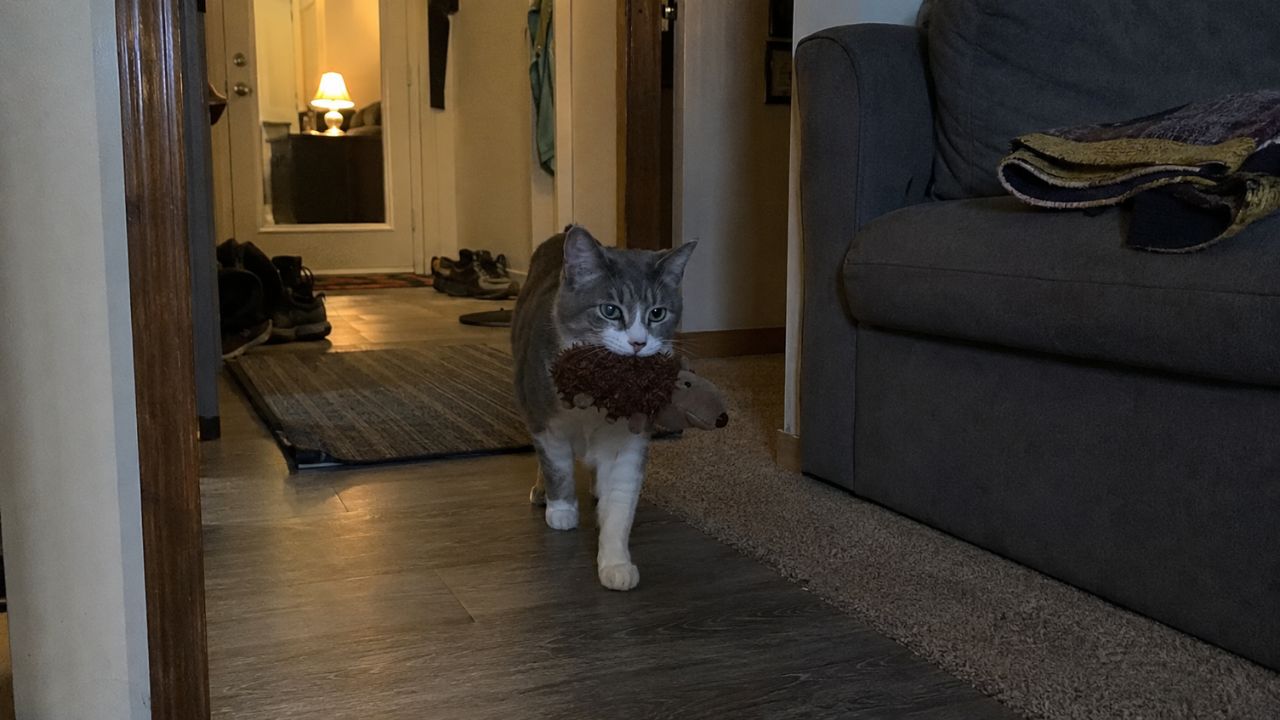
Your cat picks up the same stuffed toy, carries it from room to room, and starts making a long, mournful cry.
Then you appear.
The crying stops.
The toy drops.
For a moment, your cat looks almost as though they have been caught doing something private.
Most owners smile and dismiss it as another strange feline habit.
But when a 12-year-old cat named Ella began doing this, one detail changed the meaning of the entire ritual.
The strangest part was not the toy.
It was what happened just before she picked it up.
Ella’s Strange Nighttime Ritual
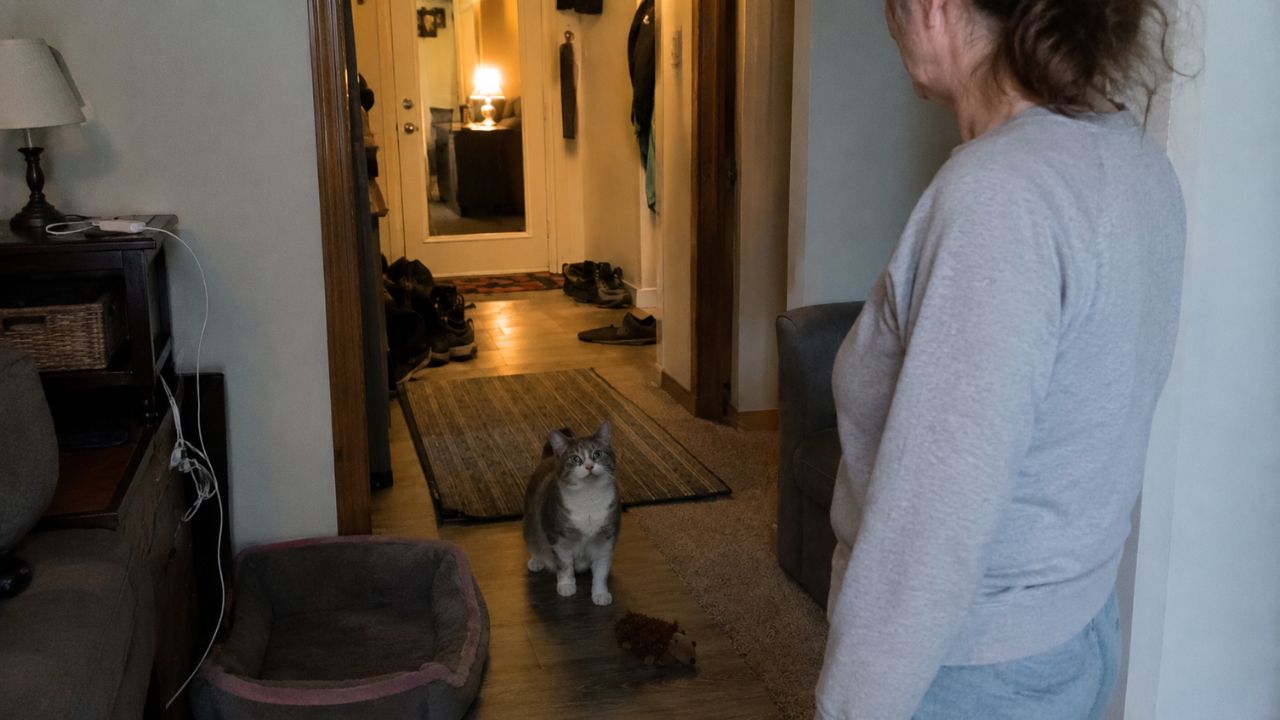
Ella’s owner, Jennifer Lynn, had watched the same scene unfold again and again.
Ella would find her favorite stuffed hedgehog, pick it up carefully, and begin walking through the house.
She was not tossing it.
She was not chasing it.
She was carrying it.
And calling out.
The sound was louder than an ordinary meow and often continued as Ella moved from one room to another.
Then someone would appear.
Ella would stop.
Sometimes she would drop the hedgehog immediately, as though the moment had been interrupted.
At first, Jennifer wondered whether Ella was proudly carrying her “prey.”
Maybe she was treating the toy like a kitten.
Maybe she simply wanted attention.
Any of those explanations could have made sense.
But the behavior seemed to follow one pattern.
It happened most often after the family left home or after the lights went out at night.
That timing was what caught cat behavior expert Jackson Galaxy’s attention.
The First Few Minutes May Reveal Everything
Galaxy suggested that the answer might become clearer if Jennifer watched what happened after the family left.
Not when Ella knew someone was nearby.
Not after the family returned.
But during the first 10 to 15 minutes after the door closed.
That short window can reveal far more than many owners realize.
Does the cat settle down?
Do they go to a favorite sleeping place?
Or do they begin walking through the house?
Do they wait beside the door?
Do they search different rooms?
Do they pick up a familiar object and begin crying?
Owners usually know how their cats behave when people are present.
They rarely see what happens when the house suddenly becomes empty.
A home camera cannot diagnose a behavioral condition, but it can expose a pattern that would otherwise remain invisible.
A few brief meows may mean very little.
But repeated pacing, searching, or vocalizing shortly after an owner leaves may suggest that the cat is struggling to settle.
In Ella’s case, that was the possibility Galaxy wanted Jennifer to consider.
Why the Toy May Not Be the Real Clue
Cats carry toys for many harmless reasons.
For some, it is part of a hunting sequence.
They “catch” an object, pick it up, and move it as though transporting prey.
Some cats vocalize after catching a toy, almost as if announcing their success.
Others carry soft toys in a way that resembles maternal behavior.
A familiar toy may also feel comforting because it carries the scent of the home or has become connected to play, affection, and safety.
So the hedgehog itself did not necessarily mean something was wrong.
The deeper clue was that Ella carried it during moments of separation.
The toy may have been part of the hunt.
It may have been a comfort object.
Or it may have become something Ella reached for when the house no longer felt the same.
That distinction matters.
A cat carrying a toy during play is one thing.
A cat carrying the same toy while searching an empty house and crying is something else entirely.
Could Ella Have Been Looking for Her Family?
Cats are often described as independent.
That description can be misleading.
Many cats form strong attachments to their people, their routines, and the familiar sounds of home.
They know when someone wakes up.
They know when food is usually served.
They recognize the sound of keys, shoes, bags, and doors.
For some cats, those routines create a sense of safety.
When the routine suddenly changes, they may become unsettled.
They cannot ask where everyone went.
They do not know how long the silence will last.
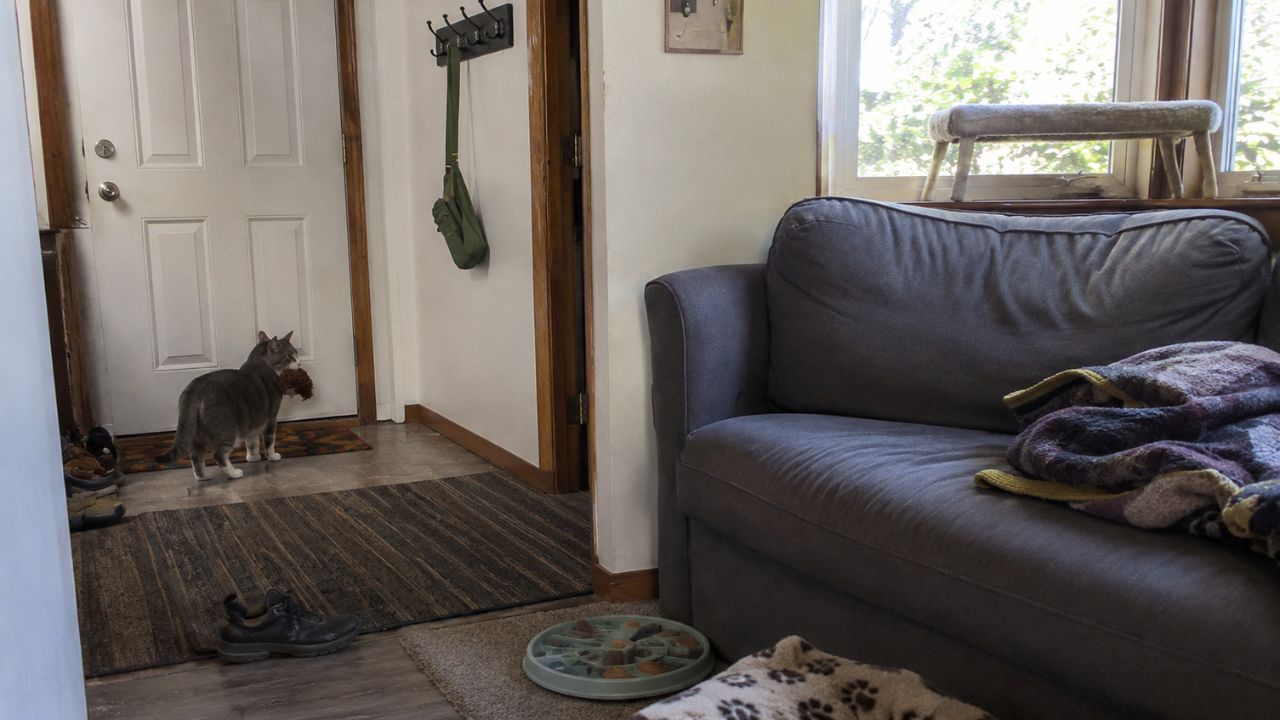
They may wait near the door, move through different rooms, vocalize, or carry something familiar with them.
Galaxy suggested that Ella’s ritual could be connected to separation-related anxiety.
That does not mean every cat who cries with a toy has anxiety.
No single behavior proves it.
But the pattern becomes more meaningful when several signs appear together.
Signs the Behavior May Be Harmless
The behavior is more likely to be a normal feline habit when:
- It happens during or immediately after play
- The cat appears relaxed
- The vocalizing lasts only briefly
- The cat settles quickly afterward
- Eating, sleeping, grooming, and litter box habits remain unchanged
- The behavior has existed for a long time without becoming more intense
Some cats are simply dramatic after catching a toy.
They may carry it proudly through the house.
They may bring it to their owner as though presenting a prize.
They may even make loud, unusual sounds while doing it.
In those cases, the behavior may be odd, entertaining, and completely harmless.
Signs Owners Should Watch More Closely
The behavior deserves more attention when:
- It begins soon after the owner leaves
- The cat paces or searches the house
- The crying continues for an extended period
- The cat waits anxiously near doors or windows
- The cat becomes unusually clingy when the owner returns
- Appetite, grooming, sleep, or litter box habits change
- The behavior appears suddenly in an older cat
One sign alone may not mean much.
Several signs appearing together tell a different story.
The key is not just what the cat does.
It is when the behavior begins, how long it lasts, and what else changes around it.
Why Cats Cry More Around Humans
Cats use many forms of communication, including posture, scent, movement, touch, and sound.
Adult cats often meow more frequently at humans than at other adult cats.
Over time, many cats learn which sounds produce a response.
One meow may bring food.
Another may make someone open a door.
A more urgent cry may cause a person to come closer.
That is why owners should pay attention to context rather than the sound alone.
A loud meow beside an empty food bowl may be a request.
A loud cry while walking through a silent house may carry a different message.
The sound may not be saying, “Look at my toy.”
It may be saying, “Where did everyone go?”
Small Changes May Help
If a cat becomes anxious around departures, small changes in routine may reduce the buildup.
Cats quickly learn the signals that predict someone is about to leave.
The sound of keys.
A coat being picked up.
Shoes being put on.
A bag being moved.
When those events always happen in the same order, an anxious cat may begin reacting before the person even reaches the door.
Owners can make those signals less predictable.
They might pick up the keys and remain at home.
They may put on shoes long before leaving.
Frequently used coats or bags can be moved to another location.
The goal is not to confuse the cat.
It is to weaken the connection between one familiar signal and the sudden disappearance of the owner.
Enrichment can also help.
A short play session before departure may reduce restlessness.
Puzzle feeders or treat hunts can give the cat something engaging to do.
A window perch, rotating toys, or a comfortable resting place with a familiar scent may make the environment feel less empty.
Some cats also respond well to soft background sound.
The best approach depends on the individual cat.
Do Not Accidentally Reward the Crying
When a cat calls and someone immediately responds every time, the vocalizing may become part of a learned routine.
The cat cries.
The person answers.
The cat cries again.
This does not mean an owner should ignore a frightened or distressed animal.
It means attention should not be given only during the loudest moments.
Calm behavior should also receive affection, play, and reassurance.
That helps prevent crying from becoming the fastest way to bring someone back into the room.
Ella’s Age Made One Detail Especially Important
Ella was 12 years old.
That meant her vocalizing could not be viewed only as a behavioral issue.
Older cats may become louder because of pain, hearing changes, thyroid disease, high blood pressure, cognitive decline, or other medical problems.
A sudden change in vocalization should always be taken seriously, especially when it appears in a senior cat.
A veterinary visit is particularly important if the crying is new, worsening, or accompanied by:
- Nighttime yowling
- Confusion or disorientation
- Weight loss
- Increased thirst
- Appetite changes
- Restlessness
- Litter box accidents
- Signs of pain
- Sudden personality changes
Medical causes should be ruled out before the behavior is treated as purely emotional.
If anxiety remains a concern, a veterinarian or qualified feline behavior professional may recommend environmental changes, behavior work, or, in some cases, medication.
Your Cat May Be Saying More Than You Think
Ella may have been hunting.
She may have been comforting herself.
Or she may have been calling for the people who made the house feel safe.
The stuffed hedgehog could not provide the full answer.
The timing could.
That is what makes this behavior so easy to misunderstand.
A cat carrying a toy may look playful.
A loud meow may sound dramatic.
But when the ritual begins only after the house becomes empty, it may be worth looking beyond the toy.
Sometimes the sound owners dismiss as another strange cat habit is the clearest message their cat knows how to give.